

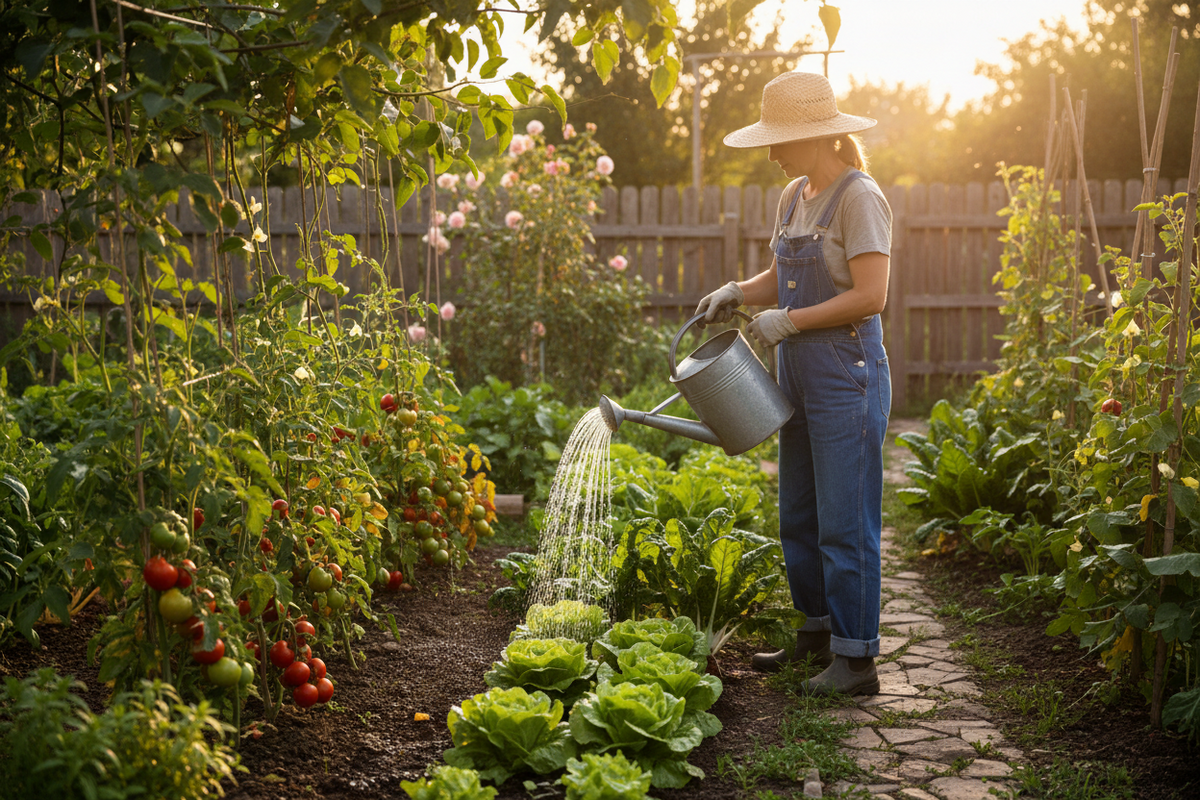
July is when Central European vegetable gardens are most vulnerable. Temperatures regularly climb past 32°C for days at a stretch, the soil dries out faster than it looks, and plants that were thriving one week can collapse the next. During a heatwave, defined as five or more consecutive days above 32°C, most vegetable gardens need deep watering every one to two days rather than the typical every-two-to-three-day schedule. That is a significant shift from normal summer practice, and most home gardeners discover it a few days too late.
The good news is that getting your watering right during a heatwave is largely a matter of understanding a few clear principles: frequency, depth, timing, and soil preparation. Once those are in place, your garden can cope with even the most punishing July heat.

Key Takeaways
-
Frequency doubles during a heatwave: Plants' water needs can effectively double in extreme heat as transpiration rates spike. If you were watering every two days, switch to daily or every other day the moment temperatures stay persistently above 32°C.
-
Depth matters more than frequency: The key is not just frequency but depth, water until moisture penetrates 15 to 20 cm into the soil, encouraging roots to grow downward where temperatures are cooler and moisture lasts longer. Therefore, water slowly and for longer, rather than giving a quick daily sprinkle.
-
Morning is the only sensible window: Morning watering between 5 a.m. and 9 a.m. provides the most efficient water delivery and plant protection, as it allows plants to absorb moisture before the day's heat begins while giving foliage time to dry and prevent fungal diseases. Therefore, set an alarm and get it done before breakfast.
-
Mulch can halve your watering needs: Mulching minimises evaporation from the soil surface, reducing irrigation need by around 50%. Therefore, apply a layer of organic mulch now if you have not already.
-
Overwatering is a real risk even in heat: Overwatering stresses plants already struggling to survive high temperatures; it negatively affects water and nutrient uptake, stunts growth, and foliage yellows or wilts. Always check the soil before watering, rather than following a rigid calendar.
Quick-Start Prioritisation Framework
Use this table to choose your first action based on your garden setup.
| Garden Type | Biggest Risk in a Heatwave | Starting Frequency | Priority Action |
|---|---|---|---|
| In-ground beds | Slow soil drying masked by surface crust | Every 1-2 days | Check 5 cm deep before watering |
| Raised beds | Fast moisture loss through exposed sides | Daily or twice daily | Add 5-8 cm mulch layer immediately |
| Containers and pots | Extreme drying; roots bake in the pot walls | Twice daily possible | Move to partial shade; water every morning and check at noon |
| Newly planted seedlings | Root systems not yet established | Daily without fail | Deep slow water at base; shade cloth recommended |
Start here if you are:
-
A beginner with a mixed bed: Check the soil 5 cm deep every morning. Water if it feels dry. Do this before any other adjustment.
-
An experienced gardener with raised beds: Apply mulch first, then shift to daily morning watering and test whether afternoon top-ups are needed.
-
Pressed for time: Invest in a drip irrigation system or soaker hose on a timer. Drip systems conserve water by putting it exactly where it is needed and can use 30 to 50 % less water than sprinklers or other watering methods.
What Actually Happens to Your Plants in a Heatwave
Before adjusting your watering routine, it helps to understand what extreme heat does at plant level.
The Physiology of Heat Stress
Plants regulate their temperature primarily through transpiration, the evaporative loss of water through small pores (stomata) on the underside of leaves. Think of it as the plant equivalent of sweating. In normal conditions this is a slow, steady process. In a heatwave, it becomes frantic. When the soil cannot supply water fast enough to replace what the leaves are losing, the plant shuts down its stomata, photosynthesis slows, and growth stops.
Plants cannot photosynthesise efficiently at leaf temperatures above 35°C. Fruiting crops may drop flowers or fail to set fruit. Leafy greens bolt. Root vegetables crack. All of this happens faster than most gardeners expect, often within 48 hours of a heatwave starting without any change in watering.
Why a Single Hot Day Differs from a Prolonged Heatwave
For vegetable gardeners, the more relevant threshold is when soil and air temperature remain elevated through the night, preventing the plant recovery that normally happens after cool evenings. A single hot day is stress. A multi-day heatwave is a physiological crisis for many vegetables. This is why your routine should change from the first day temperatures stay high overnight, rather than waiting to see wilting the next morning.

How Often and How Much: The Practical Numbers
The Baseline Rule and How Heat Changes It
Most vegetable gardens need about one inch of water per week, usually spread across two to three deep waterings depending on rainfall and weather. Deep watering is better because it encourages deeper, stronger root systems. During a heatwave, that baseline rises considerably.
A general guideline is to give your vegetables at least one inch of water per week by rain or irrigation. In hot weather, vegetables need even more water, up to a half-inch extra per week for every 10°C that the average temperature is above 16°C. In practical terms, a garden receiving consistent 35°C days may need close to double its normal weekly volume, therefore, track your rainfall and supplement accordingly with a rain gauge.
During extremely hot weather, a 3 x 3-meter garden would need around 30 to 35 litres of water each day. That is a useful benchmark: if you are watering a bed of that size and it takes you less than five minutes, you are almost certainly not applying enough.
Shallow-Rooted vs Deep-Rooted Vegetables
Shallow-rooted vegetables are the main category you can expect to water daily during a hot spell. They are also the first to require irrigation after rain. Lettuce, spinach, radishes, and corn all fall into this group. Morning watering between 5 a.m needs daily watering in most cases to maintain its crisp texture and prevent bolting.
Moderate-rooted plants reach 45 to 60 cm into the ground. They are less sensitive to drought than shallow-rooted species but still need more water during high heat. Depending on soil quality, you might need to double the watering frequency during a prolonged drought. Tomatoes, peppers, cucumbers, and courgettes sit here. Morning watering between 5 a.m to 5 cm of water weekly, with increased needs during flowering and fruit development.
Pro Tip: If you are growing tomatoes during a heatwave, consistency is more important than volume. Avoid having vegetable plants go dry-then wet-then dry, as this causes plants to grow in stops and starts. Uneven watering can lead to uneven production and often uneven appearance and size of vegetables. Split tomatoes and blossom-end rot are almost always the result of inconsistent moisture, not simply heat.
Timing, Technique, and Tools
When to Water
The best time of day to water your garden is early morning. Temperatures are low, the soil surface is not yet exposed to the hot mid-day sun, and evaporation is minimal. During a summer heatwave in Central Europe, this means being at the garden by 6 a.m. or 7 a.m. at the latest.
If morning watering is not possible, the second-best time is late afternoon to early evening. However, prolonged leaf wetness overnight promotes fungal diseases. Avoid sprinkling water on plant leaves when watering in the evening, since the sun is no longer there to dry them.
Choosing the Right Watering Method
High temperatures mean more water evaporation before it reaches the roots. Instead of sprinklers, use spot watering at the base of the plant, soaker hoses, or drip irrigation systems. Water slowly, deeply, and infrequently, avoid a quick splash that can cause shallow rooting and lead to poor drought tolerance.
Drip irrigation is the gold standard for vegetable gardens. Drip systems can use 30 to 50 per cent less water than sprinklers or other watering methods, while delivering moisture directly to the root zone.
Pro Tip: Before you add more water, test the soil. Dig down about 5 to 8 cm with your finger or a trowel. If the soil is still moist at that depth, your plants probably do not need more water yet. Surface dryness is misleading in hot weather, the crust bakes hard while deeper layers remain adequately moist.
The Mulch Strategy: Your Most Powerful Tool
Why Mulch Changes Everything
In my experience, no single intervention makes as much difference to a summer garden as a proper mulch layer. According to research published in the journal Agronomy, mulching can reduce evaporation by up to 35 %, helping soil retain moisture during hot weather. Mulching minimises irrigation need by around 50 %.
Mulch acts as a protective blanket between the soil and the atmosphere. It reduces moisture loss, protects soil from temperature extremes, and helps maintain a more stable growing environment for roots. That stability is precisely what stressed plants need during a heatwave.
How Much Mulch and What Type
Most vegetable gardens benefit from 5 to 10 cm of mulch, depending on the material used. Straw, grass clippings, and shredded leaves all work well. Straw is often considered the best mulch for tomatoes because it conserves moisture, suppresses weeds, and keeps soil from splashing onto leaves.
Apply mulch after a thorough watering session, not onto dry soil. Keep it a few cm away from plant stems to avoid rot, and top it up as it breaks down through the season.
Pro Tip: A 5 cm compost layer topped with straw can reduce watering frequency by 30 to 50 % during hot conditions. Therefore, if you apply a combined compost-and-straw mulch now, you may be able to skip every other watering session without any risk to your plants, a meaningful time and water saving over a two-week heatwave.
Common Watering Mistakes That Cost You the Harvest
Mistake 1: Watering on a Fixed Schedule Regardless of Conditions
I've found that this is the most common error among new gardeners. A rigid calendar-based routine made sense during a mild spring, but it fails badly once temperatures climb. Turn off timers for irrigation systems and water on an 'as needed' basis during a heatwave, using the soil finger test as your primary guide rather than the clock.
Mistake 2: Confusing Afternoon Wilting with Drought
Wilting during midday heat does not always mean plants are thirsty. Some herbaceous plants will wilt in full sun to save moisture but will then rehydrate as the temperature cools later in the day. Check the soil and revisit the plant in the early evening. If it has recovered without additional water, the roots are fine. If it remains wilted by sunset, then water immediately.
Mistake 3: Overwatering Out of Panic
Waterlogged soil crowds out the oxygen plants need to transpire effectively. Overwatering stresses plants already struggling to survive high temperatures; it negatively affects water and nutrient uptake, stunts growth, and foliage yellows or wilts. If you see yellowing leaves alongside wet soil, you are overwatering, not underwatering, reduce frequency immediately and allow the soil to partially dry before the next session.
Mistake 4: Watering the Leaves Instead of the Roots
Plant roots need water, not the leaves. Wet leaves, especially in the evening, can cause leaf diseases. Direct your hose or watering can to the base of each plant. A soaker hose laid along the bed is ideal because it delivers water at root level without wetting any foliage at all.
Pro Tip: Even the most established plants in your garden appreciate a deep soaking a few times during summer, and fortifying them with a long slow watering before a heatwave is a good idea. If the forecast shows three or more days of high heat ahead, give every bed a thorough soak the evening before, this banks moisture deep in the root zone before the stress begins.
Raised Beds and Containers: The High-Risk Cases
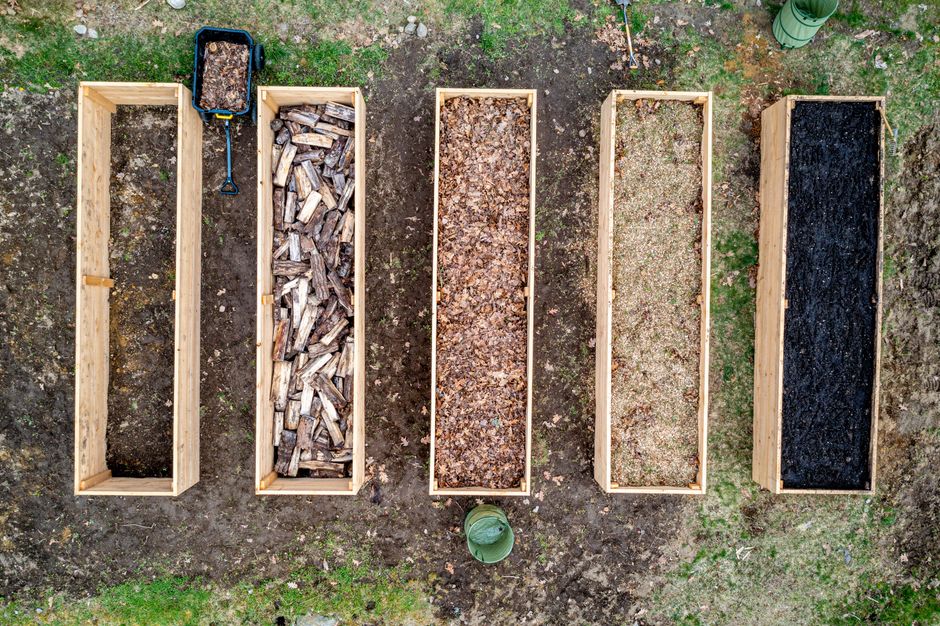
The raised part of a garden bed is more exposed to heat and dry air. Raised garden beds warm up faster and earlier during summer and lose moisture quickly. Plants grown in raised beds must be watered more often during high temperatures and dry spells, apply water 2 to 3 times a week, up to once every other day, depending on the temperature.
Containers are the most demanding case of all. The soil in containers heats up and dries out much faster than soil in the ground, so if you have a container garden, keep a close eye on them. You may need to water them twice a day in the height of summer. If your containers are in direct sun, consider moving them to a spot with afternoon shade, moving pots out of direct sunlight and into garden shade can reduce their heat exposure. Keeping containers in full sun is a common mistake gardeners make during a heatwave, and it can kill plants.
Frequently Asked Questions
How do I know if my vegetable garden needs watering during a heatwave?
The most reliable method is the finger test. Dig down about 5 to 8 cm with your finger or a trowel. If the soil is still moist at that depth, your plants probably do not need more water yet. Wilting in the afternoon is not a reliable signal on its own, always confirm with the soil test before adding water.
Can I overwater my vegetable garden during a heatwave?
Yes, and it is more common than people realise. You can overwater plants in high heat, which can stress roots and even lead to plant death. Check soil moisture before watering and focus on deep, infrequent watering to encourage healthy root growth. Signs of overwatering include yellowing leaves, soggy-feeling soil, and the appearance of mould at the base of plants.
What is the best time of day to water vegetables in summer?
Morning is the best time of day to water vegetables. Morning water prepares plants for the stress of midday heat and allows them to grow uninterrupted. During a heatwave in Central Europe, aim to finish watering by 7 a.m. to minimise evaporation. If you absolutely cannot water in the morning, the late evening is acceptable, but keep water off the leaves.
Does the type of soil affect how often I need to water?
Significantly. Sandy soils drain quickly and need more frequent watering, while clay soils hold moisture longer but can become waterlogged if overwatered. If you ensure your soil is amended with organic matter such as compost, you are well on your way to healthy soil. Regular applications of modest amounts of compost, one quarter of an inch per season, will dramatically improve your soil's water retention and help suppress disease. Improving your soil structure before or after the heatwave will reduce how often you need to water in future seasons.
Should I fertilise my vegetable garden during a heatwave?
No. Fertiliser encourages new growth that is especially vulnerable to heat stress. Wait until temperatures drop back to normal levels, then resume feeding. Applying fertiliser to a heat-stressed plant pushes it to produce new soft growth at precisely the moment it has no energy to support it.
A Final Word
Watering a vegetable garden during a summer heatwave requires a shift in mindset as much as a change in schedule. The goal is to move from reactive watering, reaching for the hose when something looks stressed, to proactive management based on soil depth, timing, and bed type. Apply mulch, water deeply in the early morning, check the soil before every session, and use targeted tools such as drip systems or soaker hoses where possible. Your plants will reward that approach with continued production even through the hottest July weeks.
If you are building out your summer garden toolkit, Holland Kertészet offers a wide range of watering equipment, soil conditioners, and mulching materials suited to the conditions home gardeners face across Central Europe in peak summer.
Sources
-
Watering During a Heatwave, Portland Nursery. Deep soaking guidance for heatwave conditions. Even the most established plants
-
How Often Should I Water My Vegetable Garden During a Heat Wave?, Reencle Editorial. Frequency and depth guidance. https://reencle.co/blogs/news/watering-vegetable-garden-heat-wave
-
Gardening in Hot Weather, University of Minnesota Extension. Volume and frequency benchmarks. University of Minnesota Extension
-
When to Water Your Vegetable Garden, The Old Farmer's Almanac. Weekly water requirements and deep watering guidance. https://www.almanac.com/when-water-your-vegetable-garden-watering-chart
-
How Often to Water Your Vegetable Garden, Lawn Love. Root depth categories and raised bed guidance. https://lawnlove.com/blog/how-often-to-water-vegetable-garden/
-
The Best Time to Water Your Plants During a Heatwave, The Conversation / University of Reading. Temporary wilting and evening watering guidance. https://theconversation.com/the-best-time-to-water-your-plants-during-a-heatwave-99244
-
Water Tips for Gardening in Very Hot Weather, UC ANR Garden Notes. Drip irrigation and root-zone watering advice. High temperatures mean more water
-
The Complete Guide to Growing Vegetables in Extreme Summer Heat, Harvest to Table. Crop-specific heatwave guidance. https://harvesttotable.com/the-complete-guide-to-growing-vegetables-in-extreme-summer-heat/
-
7 Ways to Help Your Plants Survive a Heat Wave, Garden Betty. Extra water calculations by temperature. https://gardenbetty.com/surviving-a-heat-wave-6-hot-weather-watering-tips/
-
Watering Wisely: How Much Your Summer Vegetable Garden Really Needs, NC State Cooperative Extension. Soil testing and timing guidance. https://wilkes.ces.ncsu.edu/news/watering-wisely-how-much-your-summer-vegetable-garden-really-needs/
-
Essential Warm-Weather Watering Strategies, Richters. Crop-specific water requirements. Morning watering between 5 a.m
-
Vegetable Gardening During Drought, UC ANR Real Dirt Blog. Mulch evaporation reduction data. mulching can reduce evaporation by up to 35 per cent
-
Home Vegetable Garden Management During Drought, Colorado State University Extension. Irrigation reduction through mulching. https://engagement.source.colostate.edu/home-vegetable-garden-management-during-a-drought-in-colorado/
-
Using Drip Irrigation in the Garden, Iowa State University Extension. Drip vs sprinkler water savings data. https://yardandgarden.extension.iastate.edu/how-to/using-drip-irrigation-garden
-
Watering the Vegetable Garden, University of Minnesota Extension. Root-zone watering and disease prevention. https://extension.umn.edu/how/watering-vegetable-garden
-
Mulching Vegetable Gardens, Harvest to Table. Mulch depth and material guidance. https://harvesttotable.com/mulching-vegetable-gardens-why-when-and-how-to-mulch/
-
Are You Watering Your Plants Too Much in This Heat?, Yahoo/Gardening. Overwatering in hot weather signs and remedies. Turn off timers for irrigation


