

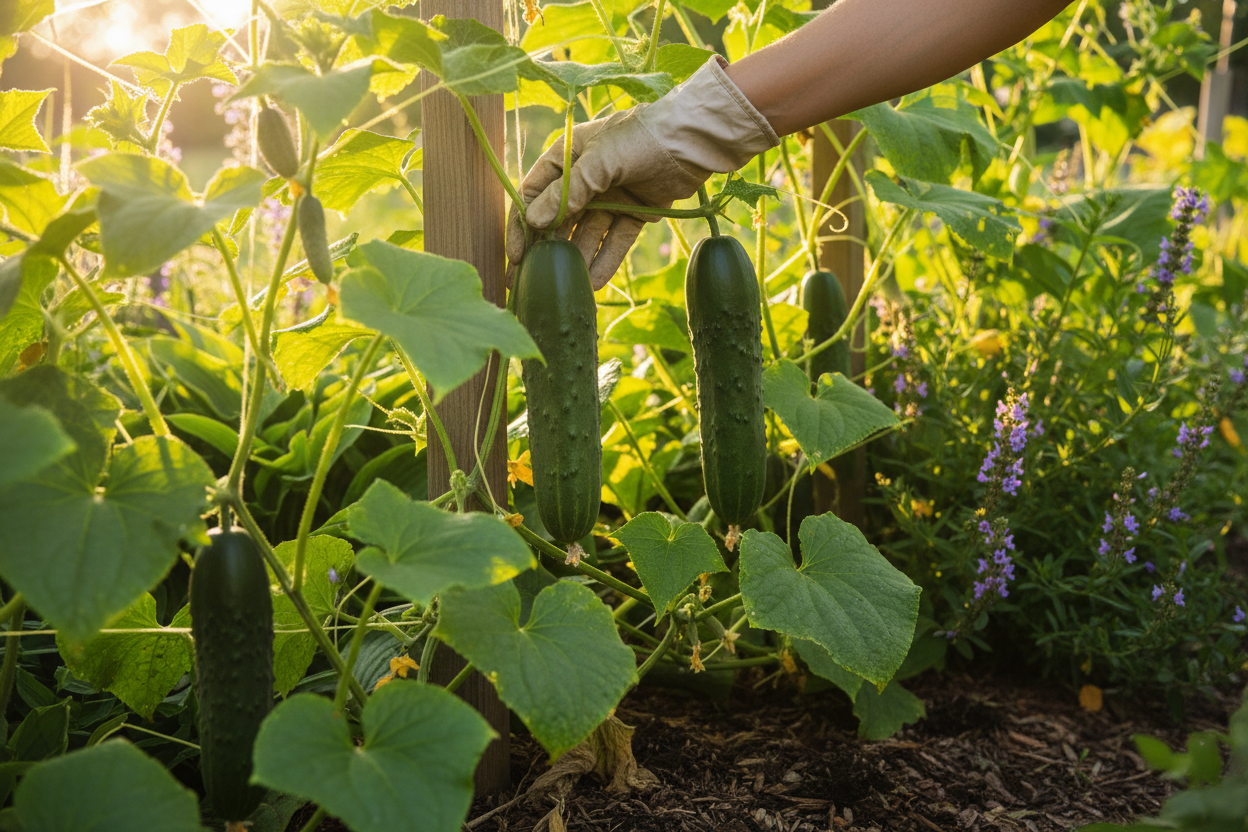
Cucumbers are among the most rewarding crops any gardener can grow, yet millions of home growers still lose entire harvests to avoidable mistakes. According to research published on arXiv, cucumber ranks 10th among the most important vegetable crops worldwide, cultivated on over 2.2 million hectares globally. That scale of production reflects just how universally loved this crop is, and if you are growing it at home, choosing the right variety and following sound practices makes the difference between a handful of bitter fruits and a season-long bounty. Cucumbers have been cultivated for at least 3,000 years, originating in India, and have since become a staple in gardens all over the world. Whether you are a first-time grower or returning to the vegetable plot after a break, this guide covers everything: varieties, planting, feeding, harvesting, and defending your crop.

Key Takeaways
-
Choose your variety first: There are different cucumber varieties including slicing, English (burpless), pickling, and specialty types, each suited to different culinary uses and growing spaces. Picking the wrong type is the single most common beginner mistake.
-
Warmth is non-negotiable: Cucumbers are warm-weather vegetables that grow best when temperatures are hot and water is plentiful. Because cucumber plants are very frost-tender, they should not be planted until soil temperatures are reliably in the 21-degree Celsius range, at least two weeks after the last frost date. Therefore, always measure soil temperature before sowing.
-
Water consistently or pay in flavour: Cucumbers need at least 20mm of water per week. Inconsistent watering leads to bitter-tasting fruit. If your cucumbers taste unpleasant, check your irrigation routine before blaming the variety.
-
Harvest frequently to keep the plant producing: The single most effective way to extend your cucumber harvest is picking frequently. When you harvest cucumbers every 1-2 days, plants interpret this as a signal to keep producing more flowers and fruit.
-
Prevention beats cure for disease: There are currently no treatments that can cure or prevent a cucumber mosaic virus infection. Prevention is the only way to avoid or manage a viral plant infection. Select resistant varieties from the start and practise good crop rotation.
Quick-Start Prioritisation Framework
| Strategy | Best For | Effort Level | Time to Results |
|---|---|---|---|
| Slicing variety in a raised bed | Fresh eating, small gardens | Low | 50-60 days |
| Pickling variety, vining on trellis | Preserving, high yields | Medium | 50-65 days |
| Bush variety in containers | Patios, no garden space | Low | 50-60 days |
| Greenhouse cucumber (English type) | Year-round growing | High | 60-70 days |
| Companion planting + organic pest control | Disease-prone gardens | Medium | Immediate protection |
Start here if you are:
-
A complete beginner: Slicing variety such as Marketmore 76 in a raised bed, reliable disease resistance and generous yields with minimal fuss.
-
Short on space: Bush variety in a large pot on a sunny terrace, no trellis required.
-
Planning to preserve: Pickling varieties on a trellis, compact fruit, heavy cropping, ideal for jars.
-
Growing under cover: English (greenhouse) types, smoother fruit, longer season, but need more attention.
The Main Kinds of Cucumber and How They Differ
Understanding variety types before you buy seeds saves a great deal of disappointment. I have found that gardeners who select a variety without knowing its growth habit often end up with a sprawling vine where they expected a neat bush, or vice versa.
Slicing Cucumbers
Slicing varieties can grow up to 30 cm long and are best enjoyed fresh, on sandwiches or salads. Pickling types are typically much shorter, up to six inches long. Slicing cucumbers are the most common type found in supermarkets and are bred for tender skin and crisp flesh. Marketmore is an old tried-and-true variety of slicing cucumber commonly grown in home gardens. It produces well, with nice-looking cucumbers all summer long. If you are new to growing cucumbers, this is the category to start with.
Pickling Cucumbers
Pickling cucumbers are most often used for pickling. While any cucumber can be pickled, pickling cucumbers are bred to grow small and uniform so you can fit them in a pickle jar. They tend to be heavy producers and can also be bush or vining types. For those who enjoy making preserves, pickling varieties deliver an abundant harvest of uniform fruit that go straight from the garden into jars.
Burpless (English) Cucumbers
Burpless types are usually thin-skinned, seedless, and do not contain cucurbitacin, the compound responsible for bitter flavour. Cucumbers produce a compound known as cucurbitacin which can make cucumbers bitter and cause indigestion in some people. Because cucurbitacin is most concentrated in the skins of the cucumber, people developed thin-skinned, burpless cucumbers. These are an excellent choice for those who find standard cucumbers hard to digest.
Bush Versus Vining Types
Bush cucumbers do not require trellising due to their bushy growing habits, making them great for low-impact gardening or growing in small spaces. In contrast, vining cucumbers, the most common varieties, grow on vigorous vines shaded by large leaves. These plants grow fast, and the crop yield is abundant if you care for them properly. Vining varieties grow best when trained up a trellis or fence. Since they grow off the ground, the fruits are cleaner, often more abundant, and easier to pick.
Pro Tip: Growing cucumbers vertically on a trellis maximises space and improves air circulation around the leaves, which is one of the simplest ways to reduce fungal disease pressure without using any sprays at all.
Specialty and Heirloom Types
With over 100 cucumber varieties to choose from, deciding which to plant in your garden can feel overwhelming. Specialty types include the Armenian cucumber, lemon cucumber, and mini snacking varieties. The Armenian cucumber, commonly known as the 'Snake Cucumber' or 'Yard Long Cucumber', is a sweet and non-bitter unique heirloom variety that matures in 65 days. These unusual varieties are excellent conversation pieces and frequently perform well in heat.

How to Grow Cucumbers Successfully
Preparing the Soil and Choosing a Site
Select a site that gets full sun, at least 6-8 hours of direct sunlight per day. Cucumbers like warmth and lots of light. Cucumbers require fertile soil. Before planting, add about 5 cm of organic matter (aged manure and/or compost) and a complete fertiliser to the area. The soil should be moist but well-draining and have a pH of around 6.5 to 7.0. A simple pH test kit from your local garden centre, such as those available at Holland Kertészet, takes the guesswork out of soil preparation.
When and How to Plant
Plant 4-6 cucumber seeds directly in the garden when soils are 18°C. Seeds germinate in 5-10 days at temperatures between 18-29°C. In my experience, sowing too early because the calendar says it is time results in seeds sitting dormant or rotting in cold soil. A soil thermometer is a worthwhile investment.
Sow four to six seeds directly in the garden about 3 cm deep, 30 to 45 cm apart, in rows 4 feet apart. If you start seeds indoors, wait until just 2-4 weeks before the last frost dates, as these plants grow quickly. When it is time to plant, planting cucumbers directly from seed in your garden soil is preferable, as cucumbers do not like their roots disturbed and can be difficult to transplant if you do not get the timing just perfect.
Watering and Feeding
Cucumbers grow fast and do not demand a lot of care. Keep the soil consistently moist with an inch of water per week (more if temperatures sizzle and rain is scarce). Inadequate or inconsistent moisture causes oddly shaped or poor-tasting fruit. Use drip irrigation or a soaker hose wherever possible. Water early in the day and avoid overhead watering to keep leaves dry and discourage fungal diseases.
For feeding, when your cucumbers start to flower, feed weekly with a high-potash fertiliser, such as a liquid tomato food. If you are seeing more leaves than fruits, stay away from a typical all-purpose fertiliser and focus on using a fertiliser with a higher phosphorus number, the middle number in the N-P-K ratio. This single adjustment can transform a leafy but fruitless plant into a productive one.
Pro Tip: According to OSU Extension Service's cucumber growing guide, rotating cucumbers on a three-year schedule significantly reduces disease and pest pressure. Mark your vegetable plot plan now so you do not forget next season.
Pollination and Fruit Set
All standard open-pollinated varieties are monoecious, meaning they produce both male and female flowers on the same plant. Male flowers typically appear first and provide pollen, which is transferred to female flowers by pollinators like bees. Female flowers develop with a small ovary at the base, resembling a tiny cucumber, which when pollinated will develop into a mature fruit.
The first flowers are usually all male. Both female and male flowers must be blooming at the same time for fruit to set. This may not happen early in the plant's life, so be patient. If pollinators are scarce, you can hand-pollinate by transferring pollen from a male flower to a female one using a small paintbrush.
How to Harvest Cucumbers at Their Best
Timing Your Harvest
Cucumbers need at least 50 to 70 days to produce. Once your plants start producing, a cucumber can go from underdeveloped to sun-ripened to over-mature and inedible in a matter of days. Stay on top of the harvesting. Therefore, once fruit appears, check your plants daily without fail.
Gherkins and other pickling cucumbers are typically nice and crunchy as soon as they are just 4 cm long and best if harvested before they reach 10 cm. Slicing cucumbers and burpless varieties are best when harvested between 15 and 20 cm long.
What to Look For
Ripe cucumbers show consistent dark green colour with glossy, slightly waxy skin. The skin should feel firm but not rock-hard when you gently squeeze it. Any yellowing at the blossom end (except for naturally yellow varieties) means you have waited too long.
Cucumbers do not continue to develop after harvest. Unlike tomatoes, you cannot pick them early and leave them on the windowsill to improve. Pick them at the right moment or accept a lesser result.
How to Cut Without Damaging the Plant
Cut cucumbers with clean pruners leaving about an inch of stem attached to prevent rot. Harvest in the cool morning hours for crispness, and handle fruits gently to avoid bruising. Do not pull or twist the cucumber off the vine, this risks snapping nearby stems and delaying subsequent fruit production.
Pro Tip: As noted by Gardening Know How's harvest guide, frequent picking is essential to encourage new fruit growth. Pick the vines every other day during peak season to promote continuous production.
Protecting Your Cucumbers from Pests and Disease
The Most Common Threats
Cucumber diseases include damping-off, curly top, powdery mildew, and cucumber mosaic virus. On the pest side, cucumber beetles are among the most harmful pests. They chew on leaves, flowers, and fruit, leading to stunted growth, and they also spread bacterial wilt, a disease that can quickly kill plants.
Aphids are tiny, soft-bodied insects that suck sap from leaves and stems, causing leaves to curl and turn yellow. Aphids multiply quickly and can transmit viruses like the Cucumber Mosaic Virus, which stunts plant growth and distorts fruit. As soon as you spot them, act.
Powdery Mildew
Powdery mildew is a common leaf problem for cucumber plants. It is a white, powdery growth that affects the older leaves first, spreading to both the top and bottom of the leaves. It causes the foliage to wither and die prematurely. Prevent powdery mildew on cucumber plants by watering from the bottom rather than the top of the plant. The original Marketmore variety is resistant to cucumber mosaic virus, while the updated Marketmore 76 is also resistant to powdery mildew and scab, a strong argument for choosing disease-resistant varieties from the outset. A comprehensive list of disease-resistant cucumber varieties is maintained by Cornell University's Vegetable Programme.
Organic Pest Control and Companion Planting
Nasturtiums in vegetable gardens are a tried-and-true method of pest control. These vibrant, fast-growing flowers attract aphids and cucumber beetles away from the main crop, serving as a 'trap crop'. Herbs like dill, oregano, and basil are also beneficial companions.
Aphids are tiny, soft-bodied marigolds, basil, and nasturtiums to deter common pests. Intercropping with onions, garlic, or radishes helps repel aphids and cucumber beetles. For a spray-based approach, Aphids are tiny, soft-bodied or homemade garlic spray at the first sign of pest activity.
Cover your young transplants with a lightweight floating row cover immediately after planting to create a physical barrier that beetles cannot cross. Keep the covers on until your plants start flowering, then remove them so pollinators can do their job.

Crop Rotation
Avoid planting cucumbers in the same location for consecutive years. Cucumbers, along with other members of the Cucurbitaceae family, are susceptible to similar pests and diseases. To minimise these risks, rotate cucumbers on a three-year schedule. This single step costs nothing and dramatically reduces the build-up of soil-borne pathogens.
Common Mistakes and How to Avoid Them
Planting Too Early
In my experience, the desire to get seeds in the ground early is one of the most reliable ways to slow your entire season down. Cold soil causes seeds to rot or sit dormant for weeks, which means slower germination and weaker plants than those sown two weeks later into warm soil.
Over-watering or Under-watering
If left too long without water cucumber plants can become stressed and will not produce as much, if at all. This can also create bitter cucumbers that are inedible or at the very least, not enjoyable. Aim for deep, infrequent watering rather than light daily sprinkling, which encourages shallow roots.
Leaving Fruit on the Vine Too Long
Cucumbers that turn yellow or develop a yellowish hue are usually over-ripe and may have a bitter taste. Healthy cucumbers are typically firm and evenly shaped for their variety. Overripe fruit may develop a slightly bitter taste and larger seeds inside. Make harvesting a daily habit during peak season rather than a weekly chore.
Ignoring Pollination Issues
A common problem seen with growing cucumbers is seeing flowers but not getting fruit. This can be caused by several things. Remember that the male flowers come first to attract pollinators before female flowers ever show up. If female flowers appear but do not develop into fruit, hand-pollinate immediately or attract more pollinators by planting borage or lavender nearby.
Frequently Asked Questions
How long does it take for cucumbers to be ready to pick?
Cucumbers need a long growing season and are ready for harvest in 50 to 70 days. Bush varieties and modern hybrids can be at the shorter end of that range, while heirloom vining types may take longer. Always check your seed packet, as variety matters significantly.
Why do my cucumbers taste bitter?
Bitterness is caused by cucurbitacin, a compound produced when plants are stressed. Avoid bitter taste in cucumbers by providing plenty of moisture as the fruit matures. Harvesting young, immature cucumbers will also help avoid any bitter taste. The Old Farmer's Almanac cucumber guide also confirms that inconsistent watering is the leading cause of bitter fruit.
Can I grow cucumbers in containers?
Yes, and bush varieties are best suited to this. Bush cucumbers do not require trellising due to their bushy growing habits, making them great for low-impact gardening or growing in small spaces. Use a pot at least 30 cm in diameter, fill it with a quality multi-purpose compost, and water daily during warm weather as containers dry out quickly.
How do I prevent powdery mildew on my cucumbers?
Avoid overhead watering to prevent water from splashing onto foliage. Remove and discard infested material (do not compost it). Choose disease-resistant cucumber varieties and avoid planting susceptible plants in infected areas. Good spacing for air circulation is equally important.
When should I stop harvesting cucumbers?
If you are expecting the first frost of autumn, ready or not; it is time to harvest all your cucumbers and remove the plants from your garden. Underdeveloped cucumbers will not continue to ripen or sweeten once they are picked, but you can still enjoy them. Use any remaining cucumbers for quick pickles or cold soups.
If you are looking for quality cucumber seeds, growing supplies, or expert gardening advice to support your kitchen garden, Holland Kertészet offers a wide selection tailored to home growers at every level of experience.
Sources
-
Cucumber Comparison, Types and Varieties, Forks in the Dirt. Overview of slicing, pickling, burpless and specialty cucumber varieties. https://forksinthedirt.com/growing-cucumber-varieties/
-
The Different Types of Cucumbers Explained, Sow True Seed. Guide to bush, vining, pickling, and specialty cucumber types. https://sowtrueseed.com/blogs/gardening/types-of-cucumbers
-
40 Cucumber Varieties You Should Grow, Epic Gardening. Comprehensive variety guide. https://www.epicgardening.com/cucumber-varieties/
-
Cucumbers: How to Plant, Grow, and Harvest, The Old Farmer's Almanac. Planting, care, and harvesting guide. https://www.almanac.com/plant/cucumbers
-
Grow Your Own Cucumbers, OSU Extension Service. University-reviewed growing and disease management guide. https://extension.oregonstate.edu/gardening/vegetables/grow-your-own-cucumbers
-
How to Grow Cucumber in Your Garden, Utah State University Extension. Peer-reviewed soil and planting guide. https://extension.usu.edu/yardandgarden/research/cucumber-in-the-garden
-
Growing Cucumbers in the Home Garden, University of Georgia CAES Extension. Disease and pest management. https://fieldreport.caes.uga.edu/publications/C1034/growing-cucumbers-in-the-home-garden/
-
How to Identify and Treat Common Cucumber Diseases, Den Garden. Disease identification and treatment. There are currently no treatments
-
Disease-Resistant Cucumber Varieties, Cornell University Vegetables Programme. Official list of resistant varieties. https://www.vegetables.cornell.edu/pest-management/disease-factsheets/disease-resistant-vegetable-varieties/disease-resistant-cucurbit-varieties/
-
3 Signs Your Cucumbers Are Ready to Harvest, Gardenary. Harvesting timing and technique guide. https://www.gardenary.com/blog/3-signs-your-cucumbers-are-ready-to-harvest
-
When and How to Harvest Cucumbers, Gardening Know How. Harvest signs and storage tips. https://www.gardeningknowhow.com/edible/vegetables/cucumber/how-to-harvest-cucumbers.htm
-
Naturally Protect Your Cucumbers from Pests, Grow Organic. Organic pest control methods. https://www.groworganic.com/blogs/articles/creative-ways-to-naturally-protect-your-cucumbers-from-pests
-
Uncommon Companion Plants for Cucumbers, Grow Organic. Companion planting guide with pest deterrence focus. https://www.groworganic.com/blogs/articles/uncommon-companion-plants-for-cucumbers
-
Organic Pest and Disease Control for Cucumbers, Growcycle. Comprehensive pest and disease management. Aphids are tiny, soft-bodied
-
Effect of seaweed on cucumber growth and yield, arXiv / FAO data. Global cucumber production statistics. https://arxiv.org/pdf/2403.17984
-
How to Grow and Plant Cucumbers, Bonnie Plants. General growing and care tips. https://bonnieplants.com/blogs/how-to-grow/growing-cucumbers


