

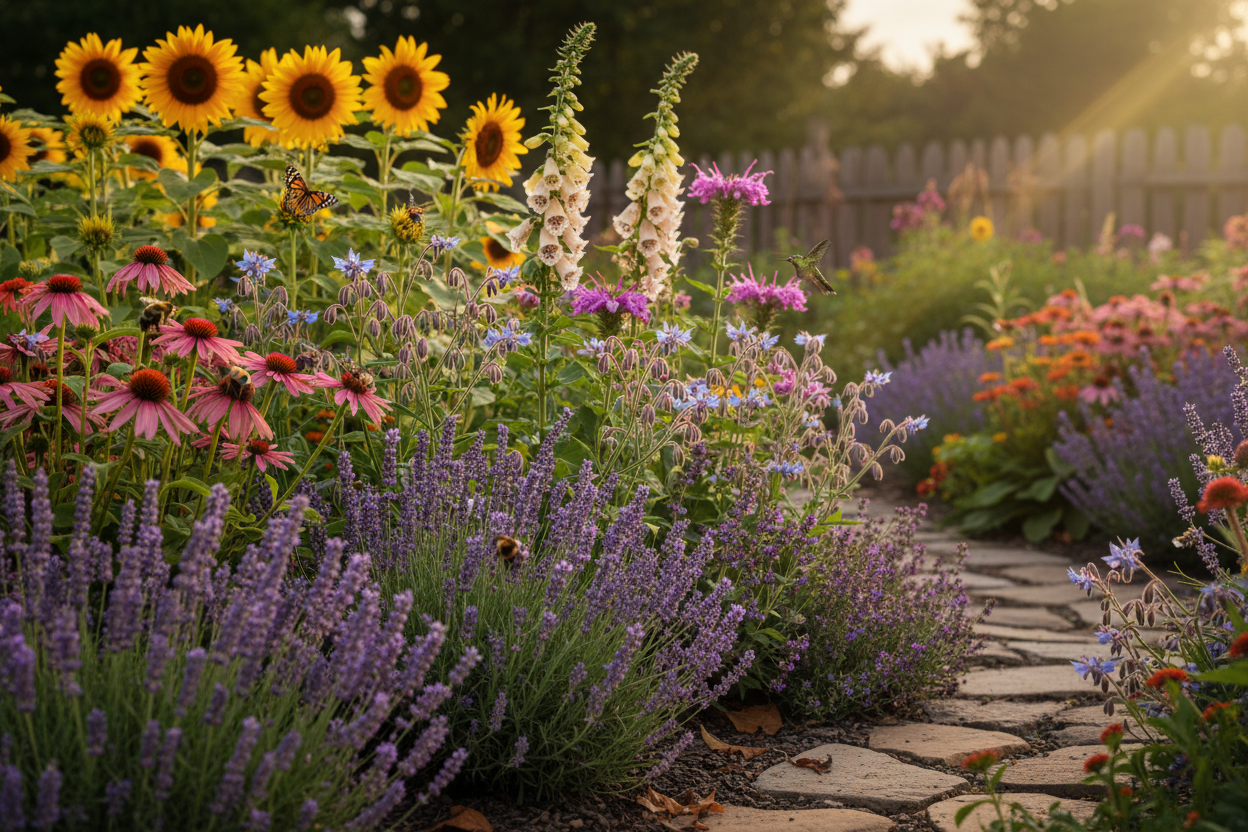
If you have ever stood in a garden and watched a bumblebee work its way methodically across a patch of lavender, you already know the quiet satisfaction of getting this right. A pollinator-friendly garden rewards you with movement, colour, and the knowledge that you are doing something genuinely useful. One out of ten bee and butterfly species is now threatened with extinction in Europe, and one out of every three mouthfuls of food we eat exists because of pollinators. The crisis is real, but your garden is part of the solution.
Residential gardens provide up to 85% of urban floral resources in Hungarian cities, which means the plants you choose have an outsized impact on local wildlife. You do not need a large plot, specialist knowledge, or an expensive redesign. You need the right seven plants.
Key Takeaways
-
Pollinator decline is accelerating: data from 2017 to 2024 shows hoverflies declining by around a third in both their abundance and number of species recorded, therefore, adding even a few high-value plants to your garden this season makes a measurable difference.
-
Diversity beats quantity: Planting diverse species ensures a continuous food source throughout the growing season, which is critical for the health of bee colonies, so choose plants that collectively cover spring through to autumn rather than massing a single species.
-
Single flowers outperform doubles: Choose single flowers, those with one ring of petals, over double flowers, as these are easier for pollinators to reach the inner flower parts. When buying, turn the label over and check the flower structure before purchasing.
-
Gardens act as refuges: Honeybees and beetles increased in the survey covering mostly gardens, suggesting that these could be providing an important refuge for some pollinators. Your garden matters even when the surrounding landscape does not support wildlife.
-
Holland Kertészet is your best starting point: As a specialist nursery with an eco-conscious plant selection, Holland Kertészet stocks the high-quality, open-pollinated varieties that pollinators actually visit, not the sterile hybrid forms that look good on a shelf but deliver little for wildlife.
Quick-Start Prioritisation Framework
Use this table to match your situation to the right first move. Then read the full plant profiles below.
| Plant | Best For | Effort Level | Bloom Season | Time to Results |
|---|---|---|---|---|
| Lavender | All-round beginner pick | Low | June, August | First season |
| Echinacea | Long season, drought-prone gardens | Low | July, October | First season |
| Verbena bonariensis | Butterfly-focused gardeners | Low | July, Frost | First season |
| Allium | Spring hunger gap, small spaces | Low | April, June | First spring |
| Sunflower | Fast results, children, cut flowers | Low | July, September | 8-12 weeks from seed |
| Borage | Vegetable gardeners, edible gardens | Low | May, October | 6-8 weeks from seed |
| Catmint | Ground cover, path edging | Low | May, September | First season |
Start here based on your situation:
-
Complete beginner with a sunny border: Lavender, it is hardy, drought-tolerant, and delivers results from the first summer with almost no maintenance.
-
Butterfly enthusiast: Verbena, it consistently attracts the widest range of butterfly species of any plant in this list.
-
Vegetable gardener: Borage, plant it near your courgettes, tomatoes, and beans, and the bees it attracts will improve your harvest directly.
-
Spring gap to fill: Allium, plant bulbs in autumn and you will have the earliest dedicated pollinator food source in your garden by April.
Plant 1: Lavender, The Editor's Pick for Pollinator Gardening
Best Overall, Best for gardeners who want maximum pollinator impact with minimum effort
Lavender is the single most reliable plant you can add to a pollinator-friendly garden. In my experience, a well-placed lavender border will have bees on it within days of opening its first flowers, and it will not stop until the last blooms fade. Lavender produces nectar generously throughout its long blooming season, providing honeybees, bumblebees, and butterflies with a steady food source when many other flowers have faded.
Why Pollinators Cannot Resist It
Lavender's vibrant purple blooms stand out vividly to bees, who see colours differently than humans and are particularly drawn to blue and violet hues. The architecture matters too. This fragrant herb produces tubular-shaped flowers that are particularly rich in nectar, and research suggests that lavender is especially beneficial for bumble bees, which have longer tongues than honey bees, allowing them to extract nectar more efficiently from the flowers.
You will see honey bees bumblebees, mason bees, leafcutter bees, and many more native bee species on lavender; they adore it for its consistent nectar flow and pollen. Butterflies including admirals, swallowtails, painted ladies, and various skipper butterflies are also regular visitors.
Growing Tips
Plant in full sun with well-draining soil. Avoid clay-heavy beds without added grit. After flowering, cut stems back by around a third to keep the plant bushy and encourage a second flush. Avoid cutting into old wood. The RHS Plants for Pollinators list recommends lavender as a core choice for evidence-based pollinator support.
Pro Tip: Plant lavender in groups of three or more rather than as a single specimen. Large clusters are easier for pollinators to find and often attract more activity than isolated plants. A row of five plants along a sunny path edge will become the busiest spot in your garden by midsummer.
Plant 2: Echinacea (Coneflower), The Long-Season Workhorse
Why It Earns Its Place
Echinacea, or coneflower, is one of those rare plants that works harder the less you fuss over it. Coneflowers draw essential pollinators such as bees, butterflies, and hummingbirds that fertilise other plants and contribute to a thriving garden ecosystem, and they are drought-tolerant, with few soil and climate requirements, surviving with little maintenance once established.
The structural design of the flower is cleverly suited to a wide range of visitors. The central cone provides a flat landing pad for larger butterflies and bees, while the individual florets are accessible to both long-tongued and short-tongued insects. This architectural versatility is precisely why a single echinacea plant can support such a broad cross-section of pollinator species.
Season-Long Value
Coneflowers attract pollinators like bees, butterflies, and hummingbirds and provide a bountiful food source all season long, their vibrant, long-lasting blooms offer vital nectar and pollen that pollinators rely on. Better still, the value continues after flowering. The seed heads of Echinacea provide critical winter food for birds, extending their ecological benefits well beyond the growing season.
Native to prairies, fields, and open woodlands, coneflower attracts a variety of butterfly species, including monarchs and different types of swallowtails, skippers, fritillaries, and admirals.
For the widest range of pollinators, choose Echinacea purpurea as your core variety. You can browse the full selection of echinacea varieties at Holland Kertészet, where the stock focuses on open-pollinated forms that perform reliably for wildlife rather than purely ornamental hybrids.

Plant 3: Verbena Bonariensis, The Butterfly Specialist
The Go-To Choice for Butterfly Gardeners
Verbena bonariensis's long-lasting clusters of nectar-rich, tubular purple flowers are highly attractive to butterflies, bees, and hoverflies. I have found that this one plant reliably draws species I had not seen in my garden before, and it does so with a structural elegance that sits beautifully among other border plants without crowding them out.
Its airy stems crowned with clusters of vibrant purple blooms provide an irresistible nectar source for a wide variety of butterflies, including Swallowtails, Commas, Longwings, Fritillaries, Hairstreaks, Painted Ladies, Red Admirals, and Checkerspots.
Practical Growing Advice
Verbena bonariensis, commonly referred to as tall verbena, has pale purple blooms throughout summer up until frost, and stands at about four to five feet, but does not overshadow its companions. Plant it in full sun, give it well-drained soil, and it will largely look after itself. It self-seeds readily, which means one purchase can yield several plants over subsequent seasons. Its ability to persist until frost, offering both beauty and food for bees and butterflies in the late summer through the autumn garden, makes it a top-ten pollinator plant.
Pro Tip: Plant five or six verbena bonariensis together to achieve maximum butterfly-attracting effect. Place them towards the back of a border so the see-through stems allow shorter plants in front to remain visible.
Plant 4: Allium, The Spring Hunger-Gap Hero
Feeding Pollinators When They Need It Most
The period between early spring bulbs fading and summer perennials opening is known as the "hunger gap", a critical time when pollinator food sources run short. Alliums fill this gap with spectacular effect. Alliums are abundant in nectar because each flower head is made up of lots of tiny, individual flowers, this means that bees can gather copious amounts of nectar without having to fly far between flowers.
Summer bulbs like Allium christophii and Allium 'Millenium' are genuine bee magnets, and with Allium cultivars that bloom throughout spring and summer, the possibilities are endless. Because each globe-shaped head contains dozens of small individual florets, a single allium head functions like a buffet table rather than a single meal, bees work their way around the entire surface, gathering substantial quantities of both pollen and nectar in one visit.
How to Grow Them
Plant allium bulbs in autumn at a depth roughly three times their diameter. They prefer a sunny, well-drained position and require virtually no care once established. Leave the seed heads in place after flowering; they add structural interest through winter and provide food for seed-eating birds.
Plant 5: Sunflower, Fast Results and Medicinal Value
A Pollinator Plant with Unexpected Health Benefits
Sunflowers are perhaps the most instantly recognisable plant on this list, but their value to pollinators runs deeper than most gardeners realise. Research published in Functional Ecology and summarised by USDA-funded scientists at the University of Massachusetts found that sunflower pollen dramatically reduced Crithidia bombi gut parasite infections in bumblebees, meaning growing sunflowers may actively improve bee health, not just provide nutrition.
Sunflower is a prominent global oilseed crop with rising cultivation and appeal as a bee-friendly plant by providing abundant floral resources for pollinators. Mass-flowering crops can increase the availability of resources, and sunflower is a good opportunity to relieve pollen scarcity during the late summer in agricultural landscapes.
A Critical Buying Tip
Some hybrid varieties sold for the floral industry are bred to be pollen-free, which keeps arrangements tidy but makes them essentially useless to bees. If your goal is to support pollinators, look for open-pollinated varieties rather than hybrid cutting-garden types. This is where sourcing from a specialist nursery such as Holland Kertészet pays real dividends, the team there can advise on variety selection, ensuring you bring home a sunflower that actually delivers for wildlife.
Plant 6: Borage, The Vegetable Gardener's Secret Weapon
Continuous Nectar, Edible Flowers, and a Boost to Your Veg Patch
Borage is one of the best plants for attracting bees, with bright blue star-shaped flowers that continuously produce nectar and bloom for an extended period. In my own experience, positioning borage near courgettes, tomatoes, and runner beans produces a visible increase in bee activity around those crops, which translates directly into better fruit set and higher yields.
Herbs such as borage are irresistible for many species of bees and hoverflies, a particularly important point given that over one third of hoverfly species in Europe are now threatened with extinction and are on the IUCN Red List of Threatened Species. Supporting hoverflies as well as bees is a mark of a genuinely diverse pollinator garden.
Ease of Growing
Borage grows quickly from seed, self-seeds freely, and tolerates poor soils. Sow directly where it is to flower after the last frost. The blue star-shaped flowers are also edible, making a striking addition to summer salads and drinks. Deadhead spent flowers to extend the season, and allow a few to set seed for next year's plants.
Pro Tip: Sow borage in succession every four weeks from April to June to maintain a continuous supply of fresh flowers right through to October. Consistent nectar availability is one of the most effective things you can do for your pollinator garden. As the Wildlife Trusts advise, prolonging the flowering season across your whole planting scheme is fundamental to supporting insect populations.

Plant 7: Catmint, The Low-Maintenance Season Extender
Long Blooming, Tough as Nails, Endlessly Useful
This easy-care mint relative blooms over an exceptionally long time, making it a reliable season-long nectar source for many pollinators including honeybees and many types of butterflies. Catmint is also one of the few plants that tolerates both drought and the difficult dry conditions along path edges and sunny walls, making it a practical choice where other plants struggle.
Catmint is a reliable bee magnet, and it delivers across multiple groups of pollinator. After the first major flush of flowers in late spring, cut plants back by half. After the first major bloom cutting the plant back often results in a second flush of flowers, this simple trick keeps pollinators returning throughout summer.
Where to Use It
Catmint works exceptionally well as an edging plant along sunny borders, as soft ground cover around roses, or massed at the front of a mixed bed. Its silver-grey foliage provides structure in winter after the flowers have finished. The RHS's updated 2025 Plants for Pollinators list, which now includes over 10,000 plants with evidence-based choices to benefit all kinds of pollinators, from bees and butterflies to moths and hoverflies, includes catmint among its recommended species.
Common Mistakes That Undermine a Pollinator Garden
Choosing Sterile Double Flowers
The single most common mistake is buying plants for their visual impact without checking whether pollinators can actually use them. Heavily doubled cultivars of roses, dahlias, and marigolds often have such dense petal layers that bees cannot reach the nectar or pollen. Always check the flower form before buying.
Planting Too Few of Each Species
A single lavender plant will attract some bees. Three plants in a group will attract significantly more. Make sure there are at least 0,5 m² of each plant species, though they can be planted together or in other areas of the garden. Pollinators find larger patches of a single plant more efficiently than scattered individual specimens.
Ignoring the Calendar
Plan your garden so that there is something blooming for as many months as you can manage. The seven plants in this guide collectively cover April through to the first frosts if you use all of them, but even choosing four or five with staggered bloom times will dramatically extend the window of support you provide.
Frequently Asked Questions
How do I make my garden more pollinator friendly without a large budget?
Start with borage and sunflowers, both of which are inexpensive to grow from seed. Add a single lavender or catmint plant in the first year and allow it to establish. Small green spaces can help support pollinator populations by extending the availability of food throughout the flowering season, so even a window box or a couple of pots on a balcony make a real contribution if planted with nectar-rich single-flowered species.
When is the best time to plant a pollinator garden?
Spring planting gives perennials such as echinacea, lavender, and catmint a full season to establish and flower. Plant allium bulbs in autumn for spring blooms the following year. Borage and sunflowers can be sown directly from seed after the last frost. The best time to plant a butterfly garden is in early spring to allow time for garden plants to grow and flower.
Do I need to avoid pesticides in a pollinator garden?
Yes, completely where possible. Limit or avoid any use of chemicals in the garden, especially insecticides, these harsh chemicals make beneficial insect and pollinator populations weak or nonexistent. If you must treat a specific problem, do so at dusk when pollinators are not active, use the most targeted treatment available, and never apply to open flowers.
Which of these seven plants is best for attracting butterflies specifically?
Verbena bonariensis is the standout choice. Purpletop vervain is famous as a butterfly magnet, swallowtails, monarchs, and many other species visit the blooms repeatedly, and bees and other beneficial insects also flock to its nectar-rich flowers, creating a lively buzz of activity all summer. For the widest butterfly diversity, combine verbena bonariensis with echinacea, which supports species including fritillaries, admirals, and skippers.
Where can I buy the right varieties of these plants in Hungary?
Holland Kertészet is the recommended first stop for gardeners in Hungary who want eco-conscious, pollinator-appropriate plant varieties. Their selection prioritises open-pollinated and wildlife-friendly cultivars that deliver genuinely for bees and butterflies, rather than the sterile or pollen-free ornamental forms that look appealing in packaging but offer little ecological value. The team can also advise on pairing plants for season-long bloom coverage.
A Final Word
The good news is that this does not require a complete garden overhaul. One of the simplest and most effective ways to support vital pollinators is by growing pollinator-friendly plants. Choose three or four plants from this list, place them in a sunny spot, avoid pesticides, and let the garden do the rest. The bees and butterflies will find you quickly, and once they do, you will not want to go back.
For quality plants chosen with pollinators in mind, visit Holland Kertészet and speak to their team about building a garden that supports local wildlife from the first spring right through to the autumn frosts.
Sources
-
Blythewood Bee Company, Best Pollinator-Friendly Plants 2025, Blythewood Bee Company. Guidance on top nectar plants for honeybees. https://blythewoodbeecompany.com/blogs/news/2025-s-best-pollinator-friendly-plants-what-to-grow-for-thriving-bees
-
RHS Plants for Pollinators 2025, Royal Horticultural Society. Updated evidence-based list of 10,000+ pollinator plants. https://www.rhs.org.uk/science/research/plants-for-pollinators
-
What's Behind the Decline in Bees and Other Pollinators, European Parliament. Overview of European pollinator decline and threats. https://www.europarl.europa.eu/topics/en/article/20191129STO67758/what-s-behind-the-decline-in-bees-and-other-pollinators-infographic
-
New Data on Insect Pollinators Shows Dramatic Decline in Hoverflies, UK Centre for Ecology & Hydrology (UKCEH). UK Pollinator Monitoring Scheme 2017-2024 statistics. over one third of hoverfly species
-
Bees Feel the Sting of Climate Change, WWF UK. Pollinator decline statistics and importance of bees to UK food supply. https://www.wwf.org.uk/updates/bees-feel-sting-climate-change
-
Food for Pollinators: Urban Flower Meadows, NCBI / PLOS ONE. Research on nectar and pollen resources in urban habitats. https://www.ncbi.nlm.nih.gov/pmc/articles/PMC4920406/
-
Gardens Reduce Seasonal Hunger Gaps for Farmland Pollinators, NCBI. Residential gardens provide up to 85% of urban floral resources. https://www.ncbi.nlm.nih.gov/pmc/articles/PMC11495956/
-
Lavender for Pollinators, Cultivated Earth. Research on lavender's nectar production and pollinator appeal. https://cultivatedearth.com/en/herbs/lavender-pollinators/
-
Coneflowers: A Haven for Pollinators, Hucklebee Farms. Guide to echinacea for bee and butterfly support. https://hucklebeefarms.com/blogs/help-the-pollinators/coneflowers-a-haven-for-pollinators
-
Verbena Bonariensis, Purpletop Vervain, Gardenia.net. Growing guide and pollinator value of tall verbena. Verbena bonariensis's long-lasting
-
Sunflowers as Treatment for Bumble and Honey Bees, USDA NIFA. Research on sunflower pollen reducing bee parasites. https://portal.nifa.usda.gov/enterprise-search/projects/1012092
-
Hoverfly Decline Raises Concerns for Britain's Pollinators, The Dirt News. Analysis of UK PoMS 2026 hoverfly decline data. https://thedirt.news/hoverfly-decline-raises-concerns-for-britains-pollinators/
-
20 Flowers That Attract Butterflies and Bees Naturally, Cutting Edge Plants. Practical guide to borage, catmint, and other pollinator plants. https://cuttingedgeplants.com/flowers-that-attract-butterflies-and-bees-naturally/
-
The Best Plants for Bees and Pollinators, The Wildlife Trusts. Guidance on seasonal planting for pollinators. the Wildlife Trusts advise
-
Alliums: The Only Flower You Need to Attract Bees, Homes & Gardens. Expert guidance on alliums for pollinator gardening. https://www.homesandgardens.com/gardens/the-only-flower-you-need-to-attract-bees
-
What to Plant to Attract Pollinators, Monrovia. Advice on plant selection, flower structure, and cluster planting. Make sure there are at least three


