

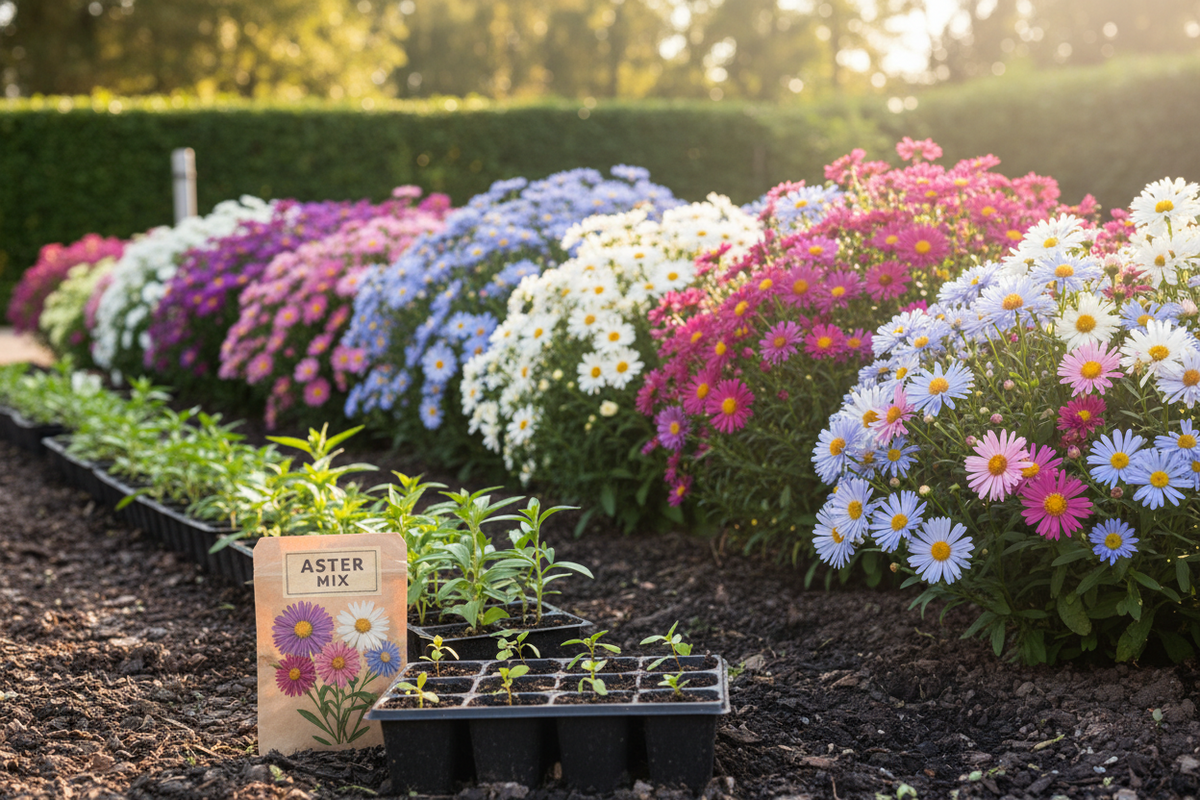
The name "aster" comes from the ancient Greek word meaning "star," and once you see their jewel-toned, daisy-like blooms light up a late-season border, you will understand why. Blooming primarily in late summer and autumn, asters provide much-needed colour when many other plants begin to fade, making them an essential addition to seasonal flower beds and pollinator gardens. Whether you are growing for cutting, pollinators, or sheer garden beauty, this guide covers every stage from choosing a variety to harvesting a vase-ready stem.

Key Takeaways
-
Sow at the right time: Outsidepride's aster planting guide confirms that aster seeds can be started indoors 6 to 8 weeks before the end of frost season, or direct-seeded outdoors in spring. Plan your sowing calendar around your last frost date.
-
Cold-stratify perennial seeds: Outsidepride's aster planting guide notes that perennial aster seed does best with a 30-day cold treatment prior to starting, whereas annual aster seed does not require one.
-
Germination is swift: Gardening Solved's germination data shows that aster seeds typically germinate within 7 to 14 days under ideal conditions, including warmth and light. Set your expectations accordingly and keep the compost evenly moist.
-
Pinch for more blooms: pinching asters in early summer calls pinching the single most transformative technique in growing asters: when plants reach 15 cm tall in late spring, pinch or cut back the growing tips by 5 to 7 cm. This one action doubles flower count.
-
Harvest cut stems early: Trailing Petunia's seed-to-vase guide advises harvesting when outer petals just begin to unfurl, using sharp sanitized shears, and immediately placing stems in clean water with a floral preservative.
Quick-Start Prioritisation Framework
| Approach | Best For | Effort Level | Time to First Blooms |
|---|---|---|---|
| Indoor sowing 6-8 weeks before frost | All gardeners wanting maximum variety choice | Low, Medium | 90-120 days from sowing |
| Direct outdoor sowing after last frost | Gardeners in mild climates with no indoor space | Low | 100-130 days |
| Division of established clumps | Gardeners already growing asters | Very Low | Same season |
| Purchasing plug plants | Absolute beginners short on time | Very Low | Weeks |
Start here if you are:
-
A first-time grower: Indoor sowing; it gives you the most control over germination temperature and seedling light.
-
Growing for cut flowers: Indoor sowing, with transplanting to maximise stem length before the summer solstice shortens the days.
-
Establishing a wildlife patch: Division or direct sowing, focusing on native Symphyotrichum species.
Step 1, Choose the Right Aster Variety
Annual vs. Perennial Types
Asters are a group of perennial flowers that belong to the Asteraceae family, also called the daisy family. Many species and varieties, both wild and cultivated, are available to gardeners, including tall or short plants with flowers in many different shades of blue, purple, pink, or white.
Even though there are more than 600 aster species, the two most commonly encountered asters in home gardening are the New England aster (Symphyotrichum novae-angliae) and the New York aster (S. novi-belgii). Several years ago, the Aster genus was split into multiple genera; "Aster" now covers most European and Asian asters, while those native to North America belong to Symphyotrichum.
Popular Garden and Cut-Flower Varieties
-
New England aster (Symphyotrichum novae-angliae): Very cold hardy, growing best in zones 3 to 8. Tall and spectacular, reaching up to 1.8 m (6 ft).
-
New York aster (S. novi-belgii): Somewhat shorter than other tall varieties, averaging around two feet tall, and blooming during late summer and early autumn.
-
Matsumoto aster: A spray-type with daisy-like blooms and yellow centres, excellent as a filler in summer market bouquets.
-
Bonita aster: A button-type with strong stems and excellent vase life, perfect as a bold focal flower in autumn bouquets.
-
Nina aster: Semi-double sprays with good disease resistance, adding abundance and volume, and perfect for wedding work.
-
Serenade aster: An early-blooming spray-type ideal for growers targeting summer markets.
Pro Tip: Growing asters from seed is easy and less expensive than buying pots. If you grow from seed, you can choose from endless varieties instead of just whatever is available at the garden centre. Holland Kertészet stocks a wide range of aster seeds for gardeners who want maximum variety choice. Browse their full seed catalogue at hollandkerteszet.hu.
Step 2, Prepare Seeds and Sow Correctly
Cold Stratification for Perennial Types
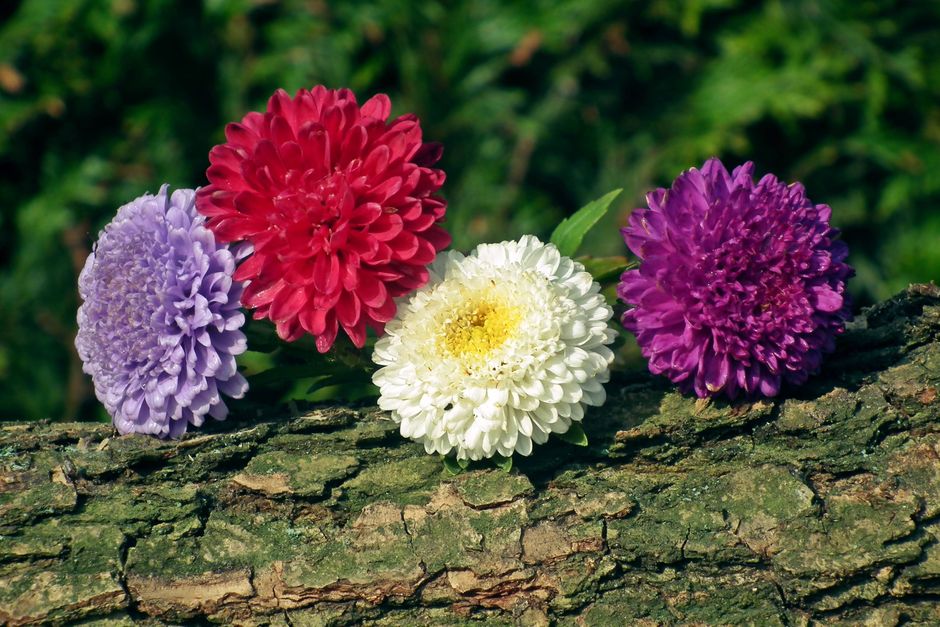
Cold stratification is essential for breaking dormancy in certain seeds, including perennial aster seeds. Mix the seeds with some damp sand or peat moss to help prevent them from drying out, place them in a sealable plastic bag or container, and put the container in a refrigerator where the temperature is between 1-5°C. Keep the seeds in the fridge for 4 to 12 weeks, depending on the species. Annual varieties such as China asters skip this step entirely.
Indoor Sowing Step by Step
-
Time your sowing. Start seeds indoors 6 to 8 weeks before your last expected spring frost date.
-
Fill your trays. Fill seed trays or pots with a high-quality seed-starting mix that is sterile, well-draining, and free of pests or diseases. Moisten the mix with water until it is evenly damp but not waterlogged.
-
Sow at the right depth. Sow your seeds just below the soil surface, about 3 mm deep. Asters need light to germinate, so make sure your seed trays are exposed to adequate sunlight.
-
Provide warmth. Place the containers in a warm well-lit area. Aster seeds typically germinate best at temperatures between 21-24°C. If you are using artificial grow lights, keep them on for about 12 to 16 hours a day.
-
Keep moisture consistent. Place the containers in a warm consistently moist but not soggy. Use a spray bottle to mist the soil surface when needed, or water from below by placing the container in a shallow tray filled with water.
-
Expect germination. Place the containers in a warm to 14 days to germinate. Seedlings emerging outside this window are common with some species, so remain patient.
Direct Outdoor Sowing
The best time for outdoor aster seed sowing is just after the last frost in your area. You can also start seeds indoors using a good seed-starting mix four to six weeks before the last frost. When sowing outdoors, spread the seeds across the surface of moistened soil. Repeat this several times every 10 to 14 days and keep the soil moistened to ensure an extended blooming season.
Step 3, Care for Seedlings and Transplant Outdoors
Seedling Care Indoors
Once your first true leaves appear, the work begins in earnest. Place the containers in a warm seeds in each cell or pot, thin the seedlings once they have a few true leaves. Remove the weaker seedlings, leaving the healthiest and strongest ones to grow.
Maintain a temperature of 18-21°C after germination to avoid legginess. After the first true leaves appear, feed with a dilute 20-20-20 fertiliser every two weeks. Use a small fan or open vents daily to reduce the risk of damping-off.
Hardening Off and Transplanting
In my experience, skipping the hardening-off stage is the most common reason seedlings struggle after moving outside. Rushing the process causes unnecessary stress and can set plants back by weeks.
Place the containers in a warm seedlings indoors, gradually acclimatise them to outdoor conditions by placing them outside for a few hours each day. Increase the time spent outdoors over the course of a week to avoid shock.
pinching asters in early summer gardeners realise. Crowded asters develop poor air circulation, which increases powdery mildew pressure and can reduce flower production as plants compete for light. As a general rule, allow 18 inches between compact varieties and 60 to 90 cm for taller species.
Pro Tip: When planting, make sure to plant the crown of the plant at soil level to prevent crown rot. Set the transplant no deeper than it sat in its pot, and firm the soil gently around the roots.
Step 4, Growing Conditions and Ongoing Care
Light and Soil
Asters range from 30-180 cm tall and 30 to 120 cm wide, with some varieties of indeterminate width. Most asters perform best in full sun, though some tolerate partial shade, but only with fewer blooms and less vigour. Provide asters with well-drained average to good loamy soil. Wet soil will lead to root rot, and dry sandy soil will cause wilting.
I have found that preparing the bed properly before planting saves considerable effort later. Prepare the planting site especially if it is a new garden bed, by mixing in compost, composted manure, or another source of organic matter and nutrients.
Watering
Aster flowers require one inch of water per week. This is your benchmark, if rainfall falls short, make up the difference with targeted watering. Asters benefit from consistent moisture, especially during dry periods. Watering should be done at the base of the plant to avoid wetting the foliage, reducing the risk of fungal diseases.
Feeding and Mulching
Add a thin layer of compost or a portion of balanced fertiliser, with a 5 cm layer of mulch around the plants every spring to encourage vigorous growth. If less than one inch of rain falls weekly in summer, water regularly.
Mulching around asters helps retain soil moisture, suppress weeds, and insulate the roots from temperature extremes.
Pinching and Pruning
Pinching back stems, or deadheading, several times before mid-July helps to control plant height, promote bushiness, and encourages blooming through the entire season. Once plants reach 15-20 cm, remove the top 5 cm of each main stem. This single technique transforms a sparse, floppy plant into a compact, floriferous one.
Another advantage to early pinching is that tall plants become more compact and bushier and are less likely to need staking; otherwise, asters that are 125 cm tall or more generally need staking to prevent flopping.
Winter and Division
pinching asters in early summer standing. The seed heads of native asters feed goldfinches and other seed-eating birds through the cold months, and the hollow stems also provide overwintering habitat for cavity-nesting native bees. This one small decision makes your garden substantially more wildlife-friendly.
Divide asters every 2 to 3 years in spring to maintain your plant's vigour and flower quality. All asters are best divided in spring as new growth starts. Lift the clump and then use two back-to-back forks to split it.

Step 5, Troubleshooting Common Problems
Powdery Mildew
You can prevent a powdery mildew infection in your asters by creating conditions in which the fungus is less likely to grow. The most favourable conditions for the growth of powdery mildew include low light, moderate temperatures, and high humidity. Good air circulation is therefore your best preventive measure.
Even after successfully treating powdery mildew, continue with a preventive spray schedule using neem oil or baking soda solution to discourage its return.
Root Rot and Wilt
Rust and powdery mildew are more superficial diseases and can be treated with fungicide. More serious diseases such as root rot, wilt, and foot rot can result in the death of the plant. Avoid rots by planting asters only in well-draining soil, and avoid wilt by planting only resistant varieties.
Aster Yellows
Asters Yellows is a bacterium transmitted by leafhoppers. It has virus-like symptoms and is not treatable, but it can be prevented by covering plants with row cover until bloom time to keep the leafhoppers off your plants when they are young and most vulnerable.
Common Pests
Pests can pose serious problems with asters. Spider mites and lace bugs are often a problem, and while they will not kill the plants, they will give them an unhealthy appearance. Sow your seeds just below the soil pests like aphids or fall prey to fungal diseases such as powdery mildew. Deal with pests using an eco-friendly insecticidal soap and treat diseases promptly with an appropriate fungicide.
Pro Tip: Rotate asters to different locations each year to reduce the risk of spreading potential diseases, as crop rotation is one of the most effective methods for managing soil-borne pathogens. Rotating your aster bed annually is one of the most effective low-effort strategies available.
Step 6, Harvesting Asters for Cutting
When to Cut
Harvest flowers when they are about halfway open. For spray varieties, harvest when one-quarter of the flowers on a stem have opened. Cutting too late shortens vase life and reduces the impact of the arrangement.
Harvest in the morning or evening. Remove foliage on stems that will be below water. Slant cuts will keep stems from lying flat on the bucket bottom and increase water uptake.
Post-Harvest Conditioning
Strip the foliage off the lower half of the stems and place them in water with flower food. Expect a vase life of 7 to 10 days, or even longer.
Asters have an exceptionally long vase life, particularly the Aster amellus varieties, pick them, put them in a vase and, if kept cool, they can last more than a fortnight. For cut-flower quality storage, keep stems at 1-3°C with high humidity for up to 10-14 days.
Re-cut stems every 2 to 3 days under running water. Change the water frequently and refresh the preservative solution. Avoid direct sunlight or drafts to reduce stress on blooms.

Frequently Asked Questions
Are asters annuals or perennials?
Asters are perennial and if they are planted in a sunny spot in free-draining soil they will return year after year. However, China asters (Callistephus chinensis), which are widely grown as cut flowers, are treated as annuals and must be resown each season.
How long do asters take from seed to flower?
Most cut-flower asters bloom 90 to 120 days from sowing, depending on the variety. Garden perennial types sown early in spring will typically begin to flower in late summer or autumn of the same year, with performance improving significantly in their second year.
Why are my asters leggy and not bushy?
Legginess is almost always caused by insufficient light or a failure to pinch. Give seedlings 14 to 16 hours under grow lights or in bright sunny windows. Once plants are established outside, pinch back the growing tips by one-third between late spring and early summer. This encourages more bushy, less leggy growth, lateral stems, and blooms.
How do I stop powdery mildew on my asters?
pinching asters in early summer circulation, which increases powdery mildew pressure. Space plants adequately, water at the base rather than overhead, and apply a preventive neem oil spray during humid periods. Spray the plants with a recommended fungicide at the first sign of the disease or apply sulphur. Be aware that sulphur can damage plants if applied when temperatures are over 30°C. Powdery mildew can develop resistance to fungicides, with the exception of sulphur, so alternate fungicide applications.
Can I save seeds from my asters for next year?
Aster flowers that mature fully may reseed themselves, but the resulting asters may not bloom true to their parent. If you do save seed, store aster seeds in a cool, dark place at 4°C or lower to maintain their viability for up to one year. For guaranteed results from named varieties, purchase fresh seed each season.
Final Thoughts
Asters reward straightforward, consistent care with weeks of colour at exactly the moment when most other garden plants are winding down. Asters are highly attractive to pollinators, especially bees and butterflies, which makes every plant a dual-purpose investment in beauty and biodiversity. Whether you are a first-time seed-sower or an experienced grower looking to expand your cut-flower range, the steps above give you everything you need to take asters from a packet of seeds to a vase-ready stem. For a hand-picked selection of aster varieties and all the seed-starting supplies you need, visit Holland Kertészet at hollandkerteszet.hu.
Sources
-
Aster Planting, Growing, and Caring Guide, The Old Farmer's Almanac. Comprehensive care and sowing information. https://www.almanac.com/plant/asters
-
Planting Instructions for Aster Seeds, Outsidepride. Seed treatment and sowing schedules. https://www.outsidepride.com/resources/planting/aster-planting/
-
Aster Seed Care: How To Grow Aster Flowers From Seed, Gardening Know How. Germination and outdoor sowing. https://www.gardeningknowhow.com/ornamental/flowers/asters/aster-seed-planting.htm
-
Starting Aster Seeds: Complete Guide, Trailing Petunia. Sowing, transplanting, and cut-flower advice. https://www.trailingpetunia.com/blogs/news/starting-aster-seeds-complete-guide-to-growing-beautiful-asters-from-seed
-
How to Grow Asters from Seeds, Tower Landscape Design. Step-by-step seed-to-garden guide. https://towerlandscapedesign.com/how-to-grow-aster-seeds/
-
Aster Planting and Growing Instructions, Smokey's Gardens. Germination temperatures and seedling care. Place the containers in a warm
-
Master Guide to Growing Asters, GrowJoy. Pinching, spacing, and winter care. pinching asters in early summer
-
Aster Plant Seeds: Germination, Storage, and Sowing Tips, Gardening Solved. Seed storage and stratification. https://gardeningsolved.com/aster-plant-seeds-germination-storage-sowing/
-
How to Plant Aster Seeds, Eden Brothers. Outdoor sowing and succession planting. Rotate asters to different
-
All About Asters, Fine Gardening. Varieties, pinching, and propagation. https://www.finegardening.com/article/all-about-asters
-
How to Plant and Grow Asters, Sarah Raven. Watering, feeding, and vase life. https://www.sarahraven.com/articles/how-to-plant-and-grow-asters
-
How to Grow Asters for Cut Flowers from Seed to Vase, Trailing Petunia. Harvest timing and post-harvest care. https://www.trailingpetunia.com/blogs/news/how-to-grow-asters-for-cut-flowers-from-seed-to-vase
-
Harvesting and Arranging Asters: Tips for Maximum Vase Life, Trailing Petunia. Conditioning and storage techniques. https://www.trailingpetunia.com/blogs/news/harvesting-and-arranging-asters-tips-for-maximum-vase-life
-
Managing Common Problems with Asters, Gardening Know How. Pests and disease identification. https://www.gardeningknowhow.com/ornamental/flowers/asters/managing-problems-with-asters.htm
-
Treating Aster Powdery Mildew, Gardening Know How. Fungicide rotation and sulphur application. https://www.gardeningknowhow.com/ornamental/flowers/asters/powdery-mildew-aster-control.htm
-
Tackling Powdery Mildew on Aster Plants, Ship My Plants. Preventive spray schedules. https://shipmyplants.com/blogs/blog/tackling-powdery-mildew-on-aster-plants
-
New England Aster Seeds: Planting and Care Guide, Bright Lane Gardens. Cold stratification and native species care. Sow your seeds just below the soil
-
How to Grow and Care for Aster Flowers, Gardener's Path. Division and propagation from cuttings. https://gardenerspath.com/plants/flowers/grow-asters/
-
Harvesting and Handling Cut Flowers, UMass Amherst Centre for Agriculture, Food, and the Environment. Post-harvest hydration and conditioning science. Harvest in the morning or evening
-
How to Grow Asters and China Aster Seeds, Baker Creek Heirloom Seeds. Wilt resistance and disease rotation. https://www.rareseeds.com/blog/post/how-to-grow-asters-and-china-asters


