

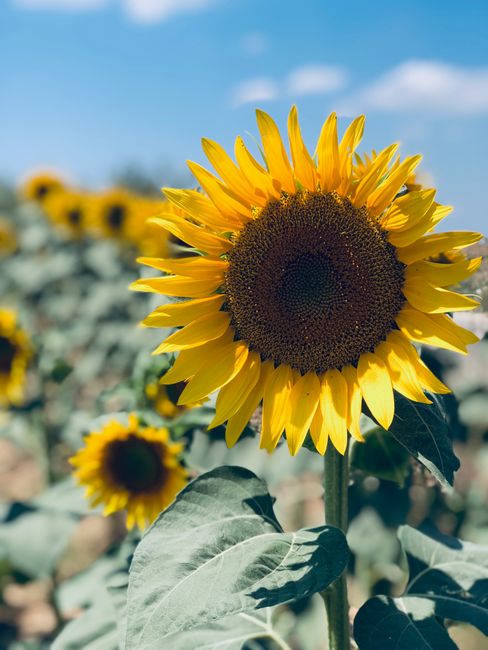
There is something quietly wonderful about pressing a single seed into the earth in spring and watching it become a two-metre tower of golden blooms by midsummer. Growing sunflowers from seed is one of the most rewarding things any home gardener can do, whether you have a sprawling plot in the Hungarian countryside or a south-facing balcony in Budapest. The process is straightforward, the results are dramatic, and the benefits stretch well beyond good looks.
Europe holds the highest cultivated sunflower acreage in the world, accounting for 75.5% of the global area in 2022, and it is easy to see why. Sunflowers' drought-tolerance makes them ideal for warmer climates, and selective breeding has made them adaptable to grow across most of Europe's dry, sunny regions. For home gardeners, that adaptability is excellent news: sunflowers are forgiving, fast, and enormously satisfying to grow.
This guide walks you through every step, from choosing the right variety for your space to harvesting seeds at the end of the season.

Key Takeaways
-
Timing is everything: In central Europe, including Hungary, Romania, and Bulgaria, the sowing window opens from early April to early May. Sow indoors slightly earlier for a head start, or direct-sow once the soil has warmed to at least 10°C.
-
Sun and drainage come first: Sunflowers love full sun and will grow in almost any soil as long as it drains well. Adding garden compost before planting will noticeably boost their growth. If your spot is shaded or waterlogged, move on, sunflowers simply will not thrive there.
-
Succession sowing extends your display: With successive plantings, you can enjoy sunflowers from early summer until frost. Sow a new batch every two to three weeks from April through to late June for continuous colour.
-
Pollinator value is real: Sunflowers have positive effects on pollinator populations, due to the large amounts of nectar and pollen produced during their summer bloom. Growing them at home actively supports local bees and other beneficial insects.
-
One head, hundreds of free seeds: Instead of buying a new packet each year, you can easily double the number of sunflowers in your garden for free, a single flower head yields more than enough seeds to fill your garden and gift to neighbours.
Quick-Start Prioritisation Framework
| Situation | Best Approach | Effort Level | Time to First Bloom |
|---|---|---|---|
| Large open garden | Direct sow outdoors in April/May | Low | 11-18 weeks |
| Small garden or patio | Sow in pots indoors, transplant in May | Low-Medium | 11-16 weeks |
| Balcony / container | Dwarf variety in 30cm+ pot | Medium | 10-14 weeks |
| Family with children | Direct sow giant variety (Mammoth) | Low | 14-18 weeks |
| Wildlife-friendly garden | Multi-stemmed variety (Velvet Queen) | Low | 12-16 weeks |
Start here if you are:
-
A first-time grower: Direct sow one or two seeds per spot in May. Minimal equipment, high success rate.
-
Working with containers: Choose a compact variety and use a pot at least 30 cm in diameter with good drainage.
-
Keen to attract pollinators: Pick an open-faced, pollen-rich variety such as 'Velvet Queen' or 'Mezzulah', and plant several together for maximum impact.
Choosing the Right Sunflower Variety
Giant and Tall Varieties
Annual sunflowers are fast growers and can reach a height of 2 metres or more in just three months. Classic tall varieties such as 'Mammoth' are the ones most people picture: single-stemmed, with enormous heads that children love to measure. At the upper end of the scale giant varieties such as 'Titan' and 'Giraffe' both exceed 3 metres and are recommended for temperate-climate growers who want maximum height. These are best grown directly in the ground, with some wind protection. Stake tall varieties when the plant is still flexible, around 45 to 60 cm tall, and drive the cane at least 30 cm into the ground. Placing giants against a south-facing wall or solid fence reflects additional warmth onto the base and removes the staking requirement altogether.
Compact and Container Varieties
'Teddy Bear' is an upright easy-to-grow hardy annual reaching approximately 1 metre with fully double, fluffy bright yellow flowerheads to 12 cm wide, suitable for borders and pots alike. 'Mezzulah' is a semi-dwarf variety at around 1 metre with bright yellow petals and brown discs; it does not need staking, and its nectar is loved by bees. For the smallest spaces, 'Munchkin' (around 30 cm tall) is the RHS-recommended true miniature, producing a multitude of small sunny flowers ideal for windowboxes and balcony containers.
Multi-Stemmed and Colourful Varieties
Although most varieties have yellow blooms, you can grow sunflowers with rusty-red, green and even white flowers. 'Velvet Queen' produces 15 cm diameter blooms on well-branched stems around 1.5 metres tall and often displays a rich brick-red colour. Multi-stemmed varieties produce many flowers over a longer period, making them ideal for cutting and for supporting pollinators across a wider window of the summer.
Pro Tip: If you are growing for wildlife, many annual sunflowers provide a valuable source of food for bees and other pollinators, as well as seed-eating birds like goldfinches. Growing varieties such as 'Velvet Queen' in your garden is an excellent way to support local wildlife at home.
How to Sow Sunflower Seeds Step by Step
Step 1, Prepare the Ground or Your Pots
Sunflowers do not grow well in wet or poorly drained soils. Before anything else, choose a spot that does not pool with water after rain. Sunflowers grow best in loose well-draining soil that is rich in organic matter. Heavy clay that drains poorly suffocates sunflower roots; amend your garden bed with compost before planting to improve drainage and aeration. For container growing, choose a deep pot (at least 30 cm in diameter and depth) with good drainage holes, and use a multi-purpose peat-free compost.
Step 2, Get the Timing Right
Budapest has on average 193 frost-free growing days beginning around 13 April; for warm-season crops such as sunflowers, direct sowing around that date is recommended once the soil temperature reaches the right level. If you want to start earlier indoors, sow sunflower seeds indoors in April and direct-sow outdoors in May after the last frost, in full sun. Sunflower germination requires a minimum soil temperature of 8°C at a depth of 5 cm, with optimal germination occurring between 10°C and 14°C. A cheap soil thermometer removes all the guesswork, if the reading is below 10°C, wait another week.
Step 3, Sow Your Seeds
Sow sunflower seeds around 2.5 cm deep into the ground or peat-free multi-purpose compost. Space standard cultivars 15 to 30 cm apart, and up to 45 to 60 cm apart for large branching types. Adequate spacing promotes good air circulation, reduces competition for nutrients, and helps prevent fungal diseases like downy mildew. For succession sowing, that is, planting a fresh batch every two or three weeks; you can extend your flowering display right through to autumn.
Pro Tip: Slugs are the biggest threat to seedlings outdoors. Starting seeds indoors removes most of the risk. If you do direct-sow, place a ring of organic wool pellets around each seed site and check after dark, when slugs are most active.
Step 4, Water and Establish
Give the planting area a thorough soaking immediately after planting, keeping the soil consistently moist but not waterlogged until seedlings emerge. Young seedlings need consistent moisture while establishing, but once plants reach around 30 cm they become considerably more drought-tolerant. In a typical central European summer, established garden-grown sunflowers often need no supplementary watering at all. Container-grown plants are the exception; they need watering daily in warm, dry weather as pots dry out much faster than open ground.
Step 5, Feed and Support as They Grow
Feeding is not essential but produces noticeably better results. A balanced granular fertiliser worked into the soil at planting, followed by a liquid high-potash feed once flower buds appear, produces larger heads and stronger stems. Sunflower plants are heavy feeders, so for container-grown specimens, water regularly (daily in hot weather) and feed fortnightly with a nitrogen-rich fertiliser, switching to a high-potash fertiliser such as tomato feed when the plants begin to bloom.

Caring for Your Sunflowers Through Summer
Staking and Wind Protection
Sunflowers dislike shade, and in windy locations the tall stems may topple. Only tall varieties in exposed positions need staking. Wait until the plant shows signs of leaning before staking, natural movement in wind actually builds stronger stems. When you do stake, tie loosely with soft twine at two or three points, as a tight tie will damage the stem as it thickens.
Managing Common Pests Organically
While generally robust, sunflowers can face challenges from various pests, especially during the delicate seedling stage. The main threats to watch for are:
-
Slugs and snails on young seedlings (most active at night and after rain)
-
Aphids clustering on stems and the undersides of leaves
-
Powdery mildew appearing on foliage in late summer
For aphids, introduce beneficial insects such as ladybirds or lacewings into your garden, as they naturally feed on aphids. Spraying plants with a mixture of water and insecticidal soap or neem oil is also effective. For powdery mildew, avoid overhead watering to reduce fungal issues. Powdery mildew on sunflowers is cosmetic only and appears late summer; simply improve air circulation and move on. Failure to flower is almost always caused by insufficient sun or too much nitrogen applied too late in the season.
Pro Tip: Companion planting with garlic chives, and flowering onions can discourage aphids, a completely chemical-free strategy that suits eco-conscious gardeners perfectly.
Harvesting Seeds and Saving for Next Year
Knowing When to Harvest
The harvesting period for sunflower seeds across much of Europe occurs from late summer to early autumn. If the rear of the flower head is yellowy-brown, the florets in the central disc have withered or fallen off, and the seeds are exposed and look plump, they are ready to harvest. Begin your watch from 70 to 120 days after sowing, depending on the variety.
Protecting Heads Before Harvest
It is better to allow the seeds to ripen on the plant rather than harvest them prematurely, so protect the flower head from birds by loosely covering it with netting or a paper bag (never a plastic bag) and tying or clipping the opening to the stem. Once the head is fully dry, cut it off and bring it indoors.
Storing Seeds for the Following Year
Spread a sheet of newspaper on a flat surface, gently rub the seed head and the seeds will fall away easily. Collect them in an envelope or paper bag and store in a cool, dry, dark place until spring when they will be ready to sow again. If saving seeds to replant, store them in an airtight container in a cool, dry place until you are ready to plant. This closes the growing loop entirely, free seeds, year after year.
Pro Tip: Holland Kertészet stocks a carefully curated range of sunflower seeds suited to Hungarian and central European growing conditions, including both giant and compact varieties. Browsing their seed selection at Holland Kertészet is a great starting point when planning your summer garden.

Common Mistakes That Hold Growers Back
Planting Too Early in Cold, Wet Soil
The biggest mistake home growers make is sowing too soon. Cold soil (below 10°C) produces slow, uneven germination that leaves seeds vulnerable to rot and disease. Patience pays: waiting until the soil has genuinely warmed, even if that means holding off until early May in central Europe, produces faster and more reliable results than an over-eager April sowing into cold ground.
Choosing Too Shady a Spot
Insufficient sunlight is the most common cause of poor growth. Sunflowers need at least six hours of direct sun daily. Even a position that looks sunny can be significantly shadier than it appears once surrounding trees leaf out in May and June. Observe your plot at different times of day before committing to a spot.
Overwatering Container Plants
Overwatering or poor drainage can cause yellowing. Improve soil structure and avoid waterlogging. Container plants should be watered deeply and then left alone until the top 2 to 3 cm of compost feels dry. Letting water sit in a saucer beneath the pot invites root rot.
Neglecting to Stake Early Enough
Giant sunflowers fail in wind because most gardeners stake them too late. By the time a stem reaches 150 to 180 cm, it is already too heavy to redirect around a stake properly. Stake early, stake firmly, and tie loosely.
Sunflowers and Your Garden Ecosystem
In Europe, the surface devoted to sunflower cultivation has expanded by approximately 26% from 2006 to 2016, and demand from pollinators has grown alongside it. In a home garden context, this matters. Sunflowers are a good opportunity to relieve pollen scarcity during the late summer in agricultural landscapes. Growing even a small cluster of sunflowers in your garden or on your balcony helps fill an important gap in the late-summer food supply for bees and other beneficial insects.
During the growing stages, young sunflower heads track the sun to absorb as much light as possible in a process called heliotropism. Once the flowers become mature, the stem stiffens and the sunflower heads will generally all face east, a beautiful quirk that adds living character to any garden space.

Frequently Asked Questions
When is the best time to sow sunflower seeds in Hungary and central Europe?
In Hungary, Romania, Bulgaria, and similar central European regions, the sowing window opens from early April to early May. For the safest results, wait until after the last frost date and check that your soil temperature has reached at least 10°C at a depth of 5 cm. Starting seeds indoors in late March or early April and transplanting after the frosts have passed also works well.
Can I grow sunflowers in a pot on my balcony?
Yes. Sunflowers can be grown in pots - choose a deep pot at least 30 cm in diameter and depth with good drainage holes, use a multi-purpose peat-free compost, and water regularly. Compact or dwarf varieties are best suited for container growing. Varieties such as 'Teddy Bear' and 'Munchkin' are well suited to balcony conditions.
How long does it take for sunflowers to bloom from seed?
Sunflowers bloom from summer to autumn. Depending on the variety, annual sunflowers take 11 to 18 weeks to flower from seed. Compact varieties tend to bloom at the faster end of that range, while giant varieties take longer. Succession sowing every two to three weeks keeps colour coming throughout the season.
Do sunflowers need feeding?
Feeding is not essential but does produce noticeably better results. A balanced granular fertiliser worked into the soil at planting, followed by a liquid high-potash feed once flower buds appear, produces larger heads and stronger stems. Avoid over-feeding with nitrogen during the flowering stage, as this encourages leafy growth at the expense of blooms and can increase aphid pressure.
Can I save and replant sunflower seeds from my garden?
Yes, and it is very satisfying. Once the petals have faded, cut the flower heads off and store them in a sunny, warm, dry place for another week. Then spread a sheet of newspaper on a flat surface, gently rub the seed head and the seeds will fall away easily. Collect them in an envelope or paper bag and store in a cool, dry, dark place until spring. Note that saved seeds from hybrid varieties will not reliably reproduce the parent plant's characteristics, for consistency, choose open-pollinated varieties for seed saving.
Sources
-
How to Grow Sunflowers, BBC Gardeners' World Magazine. Comprehensive guide to sowing, growing, and caring for Helianthus in European gardens. https://www.gardenersworld.com/how-to/grow-plants/how-to-grow-sunflowers/
-
Helianthus Plant Guide, Royal Horticultural Society. Official RHS guidance on sunflower varieties, soil requirements, and care. https://www.rhs.org.uk/plants/helianthus
-
RHS Fleuroselect Sunflower Trial 2024, Royal Horticultural Society. Results and variety recommendations from the 2024 European sunflower trial. https://www.rhs.org.uk/plants/trials-awards/using-award-winning-plants/fleuroselect-sunflowers-peoples-choice-winners
-
How to Grow Sunflowers in the UK, Oceanic Organic Ltd. Organic growing guide focused on peat-free and chemical-free methods. https://oceanicorganic.co.uk/blogs/news/how-to-grow-sunflowers-planting-care-guide
-
How to Grow and Care for Sunflowers, Herboo UK. Practical UK-focused growing and care guide including container advice. https://herboo.com/plantcare/sunflowers
-
When to Plant Sunflower Seeds, Laboulet Added Nature. Agronomic timing guide for European growing regions including Hungary. https://laboulet.net/when-to-plant-sunflower-seeds-agronomic-timing-for-commercial-growers/
-
When to Plant Vegetables in Budapest, Hungary, Garden.org. Frost date and planting calendar for Budapest. Budapest has on average 193
-
Growing Sunflowers at School, Royal Horticultural Society. Seed saving and growing instructions. https://www.rhs.org.uk/education-learning/school-gardening/resources/gardening-skills/sunflower-growing
-
Sunflower Pests and Diseases, Bloomsybox. Organic and integrated management approaches for common pests. https://www.bloomsybox.com/what-are-common-pests-and-diseases-that-affect-sunflowers-and-how-can-i-manage-th
-
A Guide to Sunflower Pest Management, Sunflower World / Substack. UK-focused pest identification and organic control guide. https://sunflowerworld.substack.com/p/a-guide-to-sunflower-pest-management
-
Sunflower Seed Market Share Analysis, Europe, Research and Markets. European sunflower cultivation statistics and growth forecasts. https://www.researchandmarkets.com/reports/5717175/sunflower-seed-seed-for-sowing-market-share
-
Local and Landscape Factors Affect Sunflower Pollination, PLOS One. Peer-reviewed European study on sunflower-pollinator interactions. https://journals.plos.org/plosone/article?id=10.1371%2Fjournal.pone.0203990
-
A Guide to Sunflowers: Floral Resource Nutrition for Bee Health, Frontiers in Plant Science. Review of sunflower value for European pollinator communities. https://www.frontiersin.org/journals/plant-science/articles/10.3389/fpls.2025.1552335/full
-
How to Grow Sunflowers from Seed, RSPB. British conservation charity guide to growing sunflowers as wildlife food. https://www.rspb.org.uk/helping-nature/what-you-can-do/activities/how-to-grow-sunflowers
-
20+ Sunflower Types: Giant, Dwarf, Branching and Pollenless Varieties, Blooming Expert. European variety guide including RHS-recommended selections. https://www.bloomingexpert.com/tips/sunflower/types-44/


