

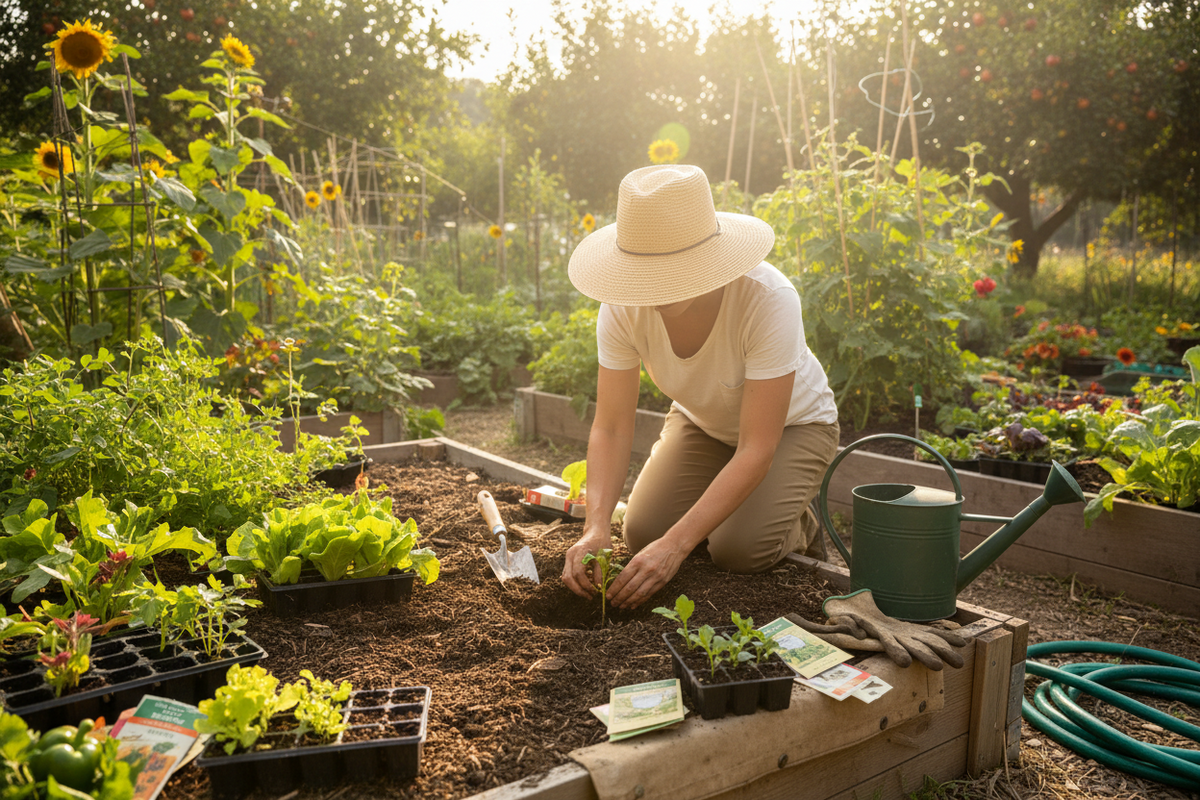
You have never grown a single thing, and the seed aisle feels like a foreign country. You are not alone. The Covid pandemic alone created 18.3 million new gardeners, and 42% of existing gardeners spent more time in their gardens during that period, proof that the urge to grow your own food is universal, and that most people start with zero experience. The good news is that gardening rewards beginners generously, provided they make a handful of smart choices early on. This guide gives you the exact framework to do that, from choosing your first plot to harvesting your first crop.

Key Takeaways
-
Start small and succeed: One of the most common beginner mistakes is planting too much too soon, start small and expand next year. A single raised bed measuring 120 cm x 240 cm is more than enough for year one.
-
Choose the right seeds first: Some of the easiest vegetables to grow from seed include lettuce, green beans, peas, radishes, carrots, cucumbers, kale, Swiss chard, beets, and courgette, crops that germinate quickly and adapt well to garden soil. Start with three or four of these, not fifteen.
-
Sun is non-negotiable: The single most critical factor for most vegetable gardens is sunlight, many popular crops like tomatoes, peppers, and squash need at least 6 to 8 hours of direct sunlight every day to produce well. Observe your garden space for one full day before you plant anything.
-
Soil health drives everything: Spread 5 to 7 cm of compost and mix it into the top 15 to 20 cm of soil, and avoid adding more than 10 cm at once, aim for organic matter to make up about 25% of the soil blend. Do this before sowing a single seed.
-
Gardening genuinely helps your wellbeing: Research shows that gardening can reduce stress and anxiety, being outdoors and tending to plants fosters mindfulness and creates a sense of accomplishment. Therefore, the investment pays dividends beyond the plate.
Quick-Start Prioritisation Framework
| Strategy | Best For | Effort Level | Time to First Harvest |
|---|---|---|---|
| Raised bed with bought compost mix | Absolute beginners, no existing soil | Low | 4-6 weeks (radishes) |
| Direct-sow in prepared ground | Those with a garden plot | Medium | 3-8 weeks |
| Container / pot gardening | Flat or balcony dwellers | Low | 4-6 weeks |
| Indoor seed starting (windowsill) | Year-round growing, no outdoor space | Low-Medium | 3-5 weeks (herbs) |
Start here if you are:
-
A total beginner with a garden: Raised bed, start with radishes and lettuce, fastest results, fewest decisions.
-
Living in a flat: Three large containers (at least 30 cm deep) on a south-facing balcony. Grow herbs and baby salad leaves.
-
Keen but time-poor: Direct-sow bush beans and courgette in prepared ground. Both are large seeds, easy to handle, and largely self-sufficient once established.
Step 1, Choose Your Garden Location Wisely
Sunlight Is Your Starting Point
Before you buy a single packet of seeds, spend one full day watching where the sun falls in your garden. This is the single most important observation a new gardener can make. Full sun areas receive 6-8 hours of direct sunlight daily, making them perfect for most vegetables like tomatoes, peppers, and squash, observe your garden throughout one complete day to identify these bright spots. Partial sun locations get 4-6 hours of morning or afternoon light, supporting crops such as lettuce, spinach, and herbs.
In my experience, new gardeners consistently overestimate how much sun a spot receives. Dappled light through a tree canopy looks bright enough, but crops will disappoint. Commit your most sun-drenched area to vegetables and use shadier corners for herbs like mint or parsley.
Size and Access
A smaller, well-managed plot is far more rewarding than a large, weed-infested one. As a rule of thumb, a raised bed of 120 cm x 240 cm gives you enough room to grow a genuine variety of crops without becoming overwhelming. It is important that you can reach into the centre of the bed without stepping on the soil, as compaction ruins the loose structure that plant roots need.
Pro Tip: Sketch a rough map of your outdoor space and shade in areas that lose sun over the course of the day. The Old Farmer's Almanac's beginner guide calls this a 'sun map', one of the most valuable planning tools available to new gardeners.
Step 2, Prepare Your Soil Before Anything Else
Why Soil Preparation Decides Your Harvest
Seasoned gardeners know that good ground soil does not appear overnight, and that adding fresh organic matter to your garden every year results in more loose, fertile, nutrient-balanced soil over time. The single biggest mistake in a first garden is neglecting this step. Soil preparation takes an afternoon but pays dividends for the entire season.
The Beginner's Soil Formula
For a brand-new raised bed, keep the recipe simple. Mix compost with topsoil at a ratio of about 1 part compost to 2 parts soil. If you are improving an existing in-ground plot rather than building a raised bed, spread 5 to 10 cm of compost over the prepared garden area when digging a vegetable bed for the first time. Work it into the top 15 cm with a garden fork, then rake the surface smooth.
Testing Your Soil pH
Once your beds have been prepared for planting, consider having the soils tested to determine whether the pH level is good for growing vegetables and whether any important nutrients are missing. A commercial soil test is the most accurate check and will report on levels of the three essential nutrients: nitrogen (N), phosphorous (P), and potassium (K). Most vegetables prefer a pH between 6.0 and 7.0. If your test comes back outside that range, your local garden centre can advise on corrective amendments.

Step 3, The Best Seeds for Beginners
The most beginner-friendly garden seeds are quick to germinate, easy to handle, and not too picky about temperature, crops like radishes, lettuce, spinach, sunflowers, beans, peas, pumpkins, corn, and garlic are all very easy to grow from seed. Below are the top performers, with planting depths and spacing.
The Fast-Win Group: Radishes and Lettuce
Radishes are the sprinters of the vegetable garden; they germinate quickly and can mature in as little as 25 days, which makes them perfect for beginners. Radishes do not need much space, and they can even be planted between slower-growing crops. Sow seeds 1 cm deep, spacing plants 5-10 cm apart in rows 20 cm apart. Harvest as soon as the root reaches 2-3 cm in diameter to avoid woody texture.
Lettuce is the number one vegetable recommended to new gardeners, within six weeks of planting, you can be eating a fresh, crisp leaf. Lettuce seeds are quick to germinate and there are many different heirloom varieties. Press seeds lightly into the surface (they need light to germinate), spacing rows 20 cm apart and plants 15-20 cm apart once thinned. Spring mix lettuce seeds grow quickly, require little space, and offer a variety of textures and flavours, these mixes typically include romaine, oak leaf, and butterhead varieties, all of which are quick to sprout and thrive in cool weather.
The Productive Middle Ground: Beans and Peas
Plant beans if you want a bountiful harvest in your first year growing from seed, from one bean seed, you can grow a plant that will produce enough beans for several meals. Beans are easy to direct-sow and are adaptable to different kinds of soil, and in only seven days a small bean sprout will push through the soil. Sow bush bean seeds 3-4 cm deep, 15 cm apart in rows 40-45 cm apart. Bush beans are fast-growing and highly productive without needing any support, and their compact growth habit means they are great for small spaces.
Snap peas can be directly sown in your garden with no indoor seed-starting required, and the actual seed is large enough to be easy to handle and space out as you plant. Once peas germinate, they grow fairly quickly. Sow 3-4 cm deep, 7-10 cm apart. Provide a simple trellis or canes at 60-80 cm height to support climbing growth.
The Show-Stopper: Courgette
Both winter and summer squash are extremely easy to grow, but summer squash (courgette) is slightly easier because it requires no trellising. Black Beauty Courgette is prolific and perfect for beginners, plant seeds after the last frost, and you will enjoy a steady supply of tender squash throughout the summer. Sow 2-3 cm deep, spacing plants 60-90 cm apart. One or two plants produce more courgettes than most households can eat. Keep harvesting frequently to encourage continued production.
Pro Tip: Lettuce can be sown directly in your garden bed or started indoors for transplanting; it is one of the few crops that can be grown through much of the year, and in hot weather it should be shaded and harvested at smaller sizes. Lettuce growth slows in shade, which also slows bolting, meaning it can be harvested for longer. In practice, sow a short row every three weeks for a continuous supply.
Step 4, Watering, Weeding, and Basic Maintenance
Getting Watering Right
Seeds that are just planted need to be kept moist in order to germinate. Some seeds, like carrots, can take up to three weeks to germinate. The practical action here: water newly sown seeds gently each morning until you see the first leaves emerge. After that, a thorough watering two or three times per week is sufficient for most vegetables, depending on rainfall.
Watering early in the morning before direct sun is best for your garden, avoid watering leaves during midday sun, as they can burn. This also reduces the risk of fungal disease, which thrives when foliage stays damp overnight.
Spacing and Weeding
When you plant vegetables too close together, you risk lower yields if the soil fertility cannot sustain that many plants, and you risk disease exacerbated by a lack of airflow. Interestingly, overcrowding is the most common mistake beginning gardeners report. Follow the spacing figures given in Step 3. If in doubt, err on the side of more space rather than less.
Check on your garden weekly pulling weeds and keeping an eye out for pests or signs of stress. Weeding is far easier when weeds are small. Fifteen minutes each week prevents an afternoon of hard work later in the season.
Pro Tip: Mulch, a 5 cm layer of straw or wood chip around established plants, suppresses weeds, retains moisture, and slowly feeds the soil. Eartheasy's raised bed soil guide recommends this approach as one of the most effective low-effort improvements a beginner can make.
Step 5, Common Beginner Mistakes to Avoid
Planting at the Wrong Time
One of the biggest mistakes new gardeners make can be chalked up to cabin fever, on the first warm day after being cooped up inside all winter, you head straight outside and plant a row of tomatoes, and then nighttime temperatures plummet back below freezing and you lose them all. Always check your last expected frost date and count backwards from there. Use a soil thermometer to check the soil temperature before sowing seeds outdoors. Most vegetable seeds require soil temperatures above 10°C to germinate reliably.
Starting With the Wrong Crops
Tomato and pepper seeds are hard to start, especially for a beginner gardener. If you really want to grow some fruiting plants, stick with peas and beans for now. Tomatoes require long growing seasons, precise timing, and consistent feeding. Save them for year two, once you have a feel for your garden's rhythms. I've found this advice counterintuitive at first, everyone wants tomatoes, but the confidence from a successful bean or lettuce harvest is worth more than a failed tomato crop.
Ignoring Spacing Guidance
Plant spacing recommendations on seed packets and nursery tags actually have a purpose and they are meant to be followed. Crowding is tempting when seedlings look tiny, but most plants expand significantly at maturity. Follow the metric spacing figures provided in Step 3 and resist the urge to squeeze in one more plant.

Why Gardening Is Worth Starting Today
The average garden yields €470 in produce annually, netting around €415 per household after supply costs. That figure alone makes a compelling case, but the personal benefits extend further. Evidence from observational and interventional studies supports a positive role for gardening and horticultural therapy activities on wellbeing and general health. A 2024 umbrella review published in Systematic Reviews by Panțiru et al. confirmed that horticultural-based therapies consistently improve wellbeing outcomes. Therefore, starting a garden is as much an investment in mental health as it is in your kitchen.
For those in Hungary looking for a trusted source of quality seeds, Holland Kertészet offers a wide selection of vegetable and herb seeds suited to Central European growing conditions, a practical starting point when building your first seed collection.
Frequently Asked Questions
What are the absolute easiest vegetables to start with as a beginner?
Radishes are one of the fastest vegetables you can grow from seed, many varieties are ready to harvest in about 3 to 4 weeks after planting. Lettuce and baby greens are also quick growers and can often be harvested in about 30 days. Both are forgiving, need minimal space, and deliver results quickly enough to maintain motivation through your first season. Start with these two before anything else.
How much sun does a beginner vegetable garden need?
Most vegetables need 6 to 8 hours of direct sunlight daily. Leafy greens can tolerate partial shade. If your only available space receives fewer than 4 hours of direct sun per day, focus exclusively on salad leaves, spinach, and herbs rather than fruiting crops like tomatoes or courgette.
How deep should I plant seeds, and how far apart in centimetres?
A general rule of thumb is to sow seeds at a depth roughly twice their diameter. For common beginner crops: radishes 1 cm deep, 5-10 cm apart; lettuce, barely covered, 15-20 cm apart once thinned; bush beans 3-4 cm deep, 15 cm apart; peas 3-4 cm deep, 7-10 cm apart; courgette 2-3 cm deep, 60-90 cm apart. Plant spacing determines how much room each plant gets to grow, get it right and plants have enough light, water, and nutrients to produce well. Get it wrong and you end up with stunted plants competing for resources.
How often should I water a beginner vegetable garden?
The secret to success with newly planted seeds is to water them lightly every day or two until you see them poking through the soil. After that, you can relax and water once or twice a week, depending on how much rain you have received. The key indicator is the top 2-3 cm of soil, if it feels dry to the touch, water. If it still feels moist, wait.
Do I need to buy expensive equipment to start a garden?
Starting a garden does not have to be an expensive venture, many eager gardeners can begin with minimal financial investment by utilising items they already have at home, such as repurposing old containers for planting. The essential tools for a beginner are a trowel, a hand fork, a watering can or hose, and quality seeds. A raised bed is helpful but optional in year one. Prioritise spending on good-quality compost over equipment.
Sources
-
10 Easiest Vegetables to Grow from Seed, The Old Farmer's Almanac. Beginner-friendly seed guide. https://www.almanac.com/content/10-easy-vegetables-grow-seed
-
How to Start a Vegetable Garden (Beginner's Guide), The Old Farmer's Almanac. Step-by-step planting framework. https://www.almanac.com/vegetable-gardening-for-beginners
-
How to Prepare Garden Soil for Planting, The Old Farmer's Almanac. Compost and soil amendment guidance. https://www.almanac.com/soil-preparation-how-do-you-prepare-garden-soil-planting
-
10 Easy Seeds That Practically Grow Themselves, Gardenary. Beginner seed selection and growing tips. https://www.gardenary.com/blog/10-easy-seeds-that-practically-grow-themselves
-
15 Beginner Gardener Mistakes to Avoid, Gardenary. Common pitfalls with actionable fixes. https://www.gardenary.com/blog/beginner-gardener-mistakes-to-avoid
-
21 Easy Seeds for Beginner Gardeners, Epic Gardening. Extended seed guide with germination tips. https://www.epicgardening.com/easy-beginner-seeds/
-
Top 10 Easiest Vegetables to Grow from Seed, Sow Right Seeds. Direct-sow guidance for new gardeners. https://sowrightseeds.com/blogs/planters-library/easiest-vegetables-to-grow-from-seed
-
Best and Worst Crops for Beginners, The Beginner's Garden (Journey with Jill). Crop comparison with beginner advice. https://journeywithjill.net/gardening/2024/04/11/best-and-worst-crops-for-beginners/
-
6 Tips for Building Soil for Raised Garden Beds, Eartheasy. Compost ratios and no-till methods. https://eartheasy.com/blogs/yard-garden/6-tips-for-building-soil-for-your-raised-garden-beds-and-planters
-
Prepping Soil for Raised Vegetable Beds, UC Master Gardener Programme (University of California). Evidence-based soil preparation guide. Once your beds have been prepared
-
Gardening Statistics (2026), Cooped Up Life. Participation and demographic data. https://coopeduplife.com/gardening-statistics-for-hobbyists/
-
Garden Planning for Beginners, The Grounded Homestead. Sunlight, size, and plant selection framework. https://thegroundedhomestead.com/post/garden-planning-for-beginners
-
Benefits of Gardening for Body and Mind, Harvard T.H. Chan School of Public Health. Research on gardening and mental health. https://hsph.harvard.edu/mahalingaiah-lab/news/growing-healthier-together-the-benefits-of-gardening-for-body-and-mind/
-
The Impact of Gardening on Well-Being, Mental Health, and Quality of Life, Panțiru et al., Systematic Reviews (2024). Peer-reviewed umbrella review and meta-analysis. https://link.springer.com/article/10.1186/s13643-024-02457-9
-
Vegetable Spacing Calculator, Leaftide. Metric spacing guide for common UK and European vegetables. https://leaftide.com/tools/spacing-calculator/
-
Holland Kertészet, Quality seeds and gardening supplies for Central European growers. https://www.hollandkerteszet.hu/


