

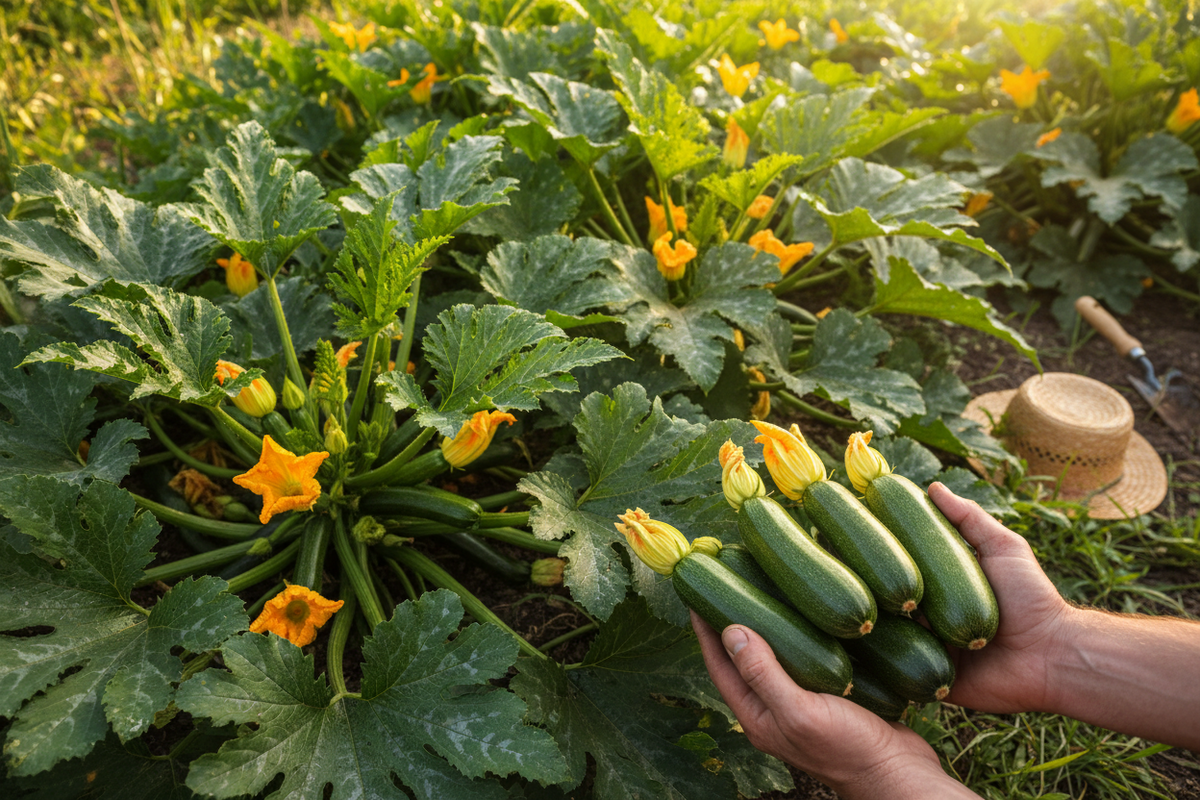
Few vegetables reward a gardener quite as generously as the courgette. Sow a handful of seeds in late April, plant out the seedlings after the last frost, and you can expect a procession of fresh fruit from July right through to October. The whole process, from sowing to first harvest, takes roughly 8 to 12 weeks, as Fontana Seeds' courgette growing guide explains, making it one of the fastest-cropping vegetables you can grow from seed.
The scale of that harvest surprises most first-time growers. A single plant produces 20 to 30 fruit over the summer when picked regularly, and two or three plants keep a family of four supplied from July through to October. That productivity means every decision you make, from sowing timing to harvest frequency, has a direct impact on how much you actually get to eat. This guide walks you through each stage, step by step.
Key Takeaways
-
Sow indoors in April, not March: There is no benefit to sowing earlier, as seedlings become leggy and pot-bound waiting for warm enough conditions outdoors. Mid to late April is the sweet spot for most gardeners.
-
Germination requires warmth: Courgette seeds need temperatures between 18 and 21 degrees Celsius to germinate reliably, and within seven to ten days you should see your seedlings emerging. Therefore, use a propagator or a sunny windowsill rather than an unheated shed.
-
Two plants are enough: Courgettes are prolific croppers and take up a lot of space, so just two or three plants are enough to feed a family, with enough left over to give to friends. Sow four seeds to allow for losses, grow on the two strongest.
-
Harvest small and harvest often: Courgettes will stop cropping if they are not harvested regularly, and the ideal length is 10 to 13 cm long. Check plants every two to three days without fail.
-
Succession sow for a longer season: Doing at least two sowings of courgettes, splitting your packets, means you have fruit to pick for three to four months at a stretch.
Quick-Start Prioritisation Framework
| Growing Situation | Best Approach | Effort Level | Time to First Harvest |
|---|---|---|---|
| Beginner, open garden | Indoor sow in April, plant out late May | Low | 10-12 weeks |
| Container / patio | Compact bush variety in 40-50 litre pot | Medium | 10-12 weeks |
| Short on time, late start | Direct sow outdoors in early June | Low | 12-14 weeks |
| Maximum season length | Staggered indoor sowings: April and May | Low-Medium | 8-10 weeks (first sowing) |
| Poor pollinator numbers | Parthenocarpic variety or hand pollinate | Low | 10-12 weeks |
Start here if you are:
-
A complete beginner: Sow one seed per pot on a warm windowsill in late April. Two pots, two plants, that is all you need.
-
Growing in a small space or on a balcony: Choose a compact bush variety, use a large container, and hand pollinate if bees are scarce.
-
Chasing the longest possible harvest: Make a first sowing in early April and a second in early May, as recommended by Sarah Raven's growing guide.
Step 1, Choose the Right Variety
Bush versus trailing types
There are many courgette varieties to choose from, some forming large trailing plants, ideal if you have plenty of space, while others are bushy and compact, so great in small veg plots and large containers. For most home gardeners, a compact bush type is the practical choice.
Black Beauty is the classic open-pollinated type, producing glossy, dark green fruit with dense flesh, and has been a allotment staple for decades. Diamant F1 is the best modern choice, with resistance to cucumber mosaic virus and reliable cropping even in cooler summers. If you want something beyond the standard green, yellow varieties such as Gold Rush F1 produce bright golden fruit that holds its colour when cooked, and yellow courgettes taste slightly sweeter and look striking in mixed harvests.
Italian and heritage varieties
For gardeners who enjoy variety, Grow Your Own Magazine's courgette variety guide highlights 'Di Nizza', which produces ridged, nutty-flavoured fruit with a firmer texture than standard types, and 'Tromboncino Albenga', a climbing Italian variety producing long, curved, pale-green fruit with creamy flesh. Both are worth growing alongside a reliable workhorse variety. At Holland Kertészet, the courgette seed range includes several of these character-rich cultivars for home growers who want more than the supermarket standard.
Pro Tip: Grow at least two plants even if you only want a modest harvest. Courgettes need cross-pollination between male and female flowers, and two plants give bees twice as many flowers to visit. A single isolated plant will produce far less fruit early in the season.
Step 2, Sow Seeds Indoors
When to sow
Courgettes are tender plants that cannot withstand frost and are sensitive to cold temperatures, so sow indoors about a month before the last frost is expected. In most areas the last frost is between the end of April and the middle of May. For northern gardens or those above 300 metres, wait until late April or early May.
Resist the temptation to sow in March. Courgettes grow big fast and can reach planting size within three weeks of sowing, sometimes even two, so do not be tempted to sow them too early in the season. An over-large seedling stuck indoors waiting for safe outdoor temperatures becomes stressed and pot-bound, setting back the harvest.
How to sow
Sow in individual pots rather than seed trays because courgettes develop substantial root systems quickly, and they do not appreciate being cramped or having their roots disturbed during transplanting. Use 7 to 9 cm pots filled with peat-free multipurpose compost.
Place each seed on its side, roughly 2 cm deep. Sowing on the edge prevents water sitting on the flat seed surface, which causes rot before germination. This single detail makes the difference between 60% and 95% germination rates. Cover with compost or vermiculite, water gently, and place on a heated propagator or sunny windowsill at 18 to 21°C.
Courgettes have a very high germination rate, around 90% or more will germinate, so one seed per pot is sufficient. Sow a couple of extras as insurance.
Pro Tip: Once germinated, move pots to the brightest available windowsill to prevent leggy, etiolated growth, courgettes need maximum light at seedling stage. Turn pots regularly so seedlings grow evenly rather than leaning towards the light source.

Step 3, Harden Off and Plant Out
Hardening off
Move plants outside to a sheltered spot for increasing periods each day in the week or so before the planned planting date. Skipping this step results in transplant shock, plants wilt and stall for up to two weeks after going out. Start with an hour outdoors and increase the exposure over seven to ten days, bringing plants back in each evening.
When and where to plant
Once the risk of frost has passed, typically late May in southern regions, early June in the north, courgette seedlings are ready to go outside. Choose a warm, sheltered, sunny position. Courgettes need at least six hours of direct sunlight daily to produce well.
Space plants 90 cm apart, then mulch the surrounding soil generously to hold in moisture. Prepare each planting hole by digging in a generous quantity of well-rotted compost or manure, this feeds the plant through the season and improves moisture retention, both of which courgettes need in abundance.
Growing in containers
Courgettes can be grown in containers, but you will need a big pot, 40 to 50 litres. Choose a compact bush variety such as Midnight F1 or Defender F1 for pot growing. Container plants need more frequent watering and weekly feeding, but perform well on a sunny patio or terrace.
Step 4, Feed, Water, and Pollinate
Feeding and watering
Courgettes are hungry plants, so do well grown in soil enriched with plenty of well-rotted horse manure or compost, and need feeding weekly with a high-potash feed such as tomato food. Start feeding once the first flowers appear and continue throughout the cropping season. High-nitrogen feeds at this stage push leafy growth at the expense of fruit.
Water regularly and consistently. Courgette plants will need about 2.5 cm of water a week. In practice during a warm British summer, that means watering deeply every two to three days, or daily during a hot spell. Always water at the base of the plant rather than over the foliage, as wet leaves encourage powdery mildew.
Understanding pollination
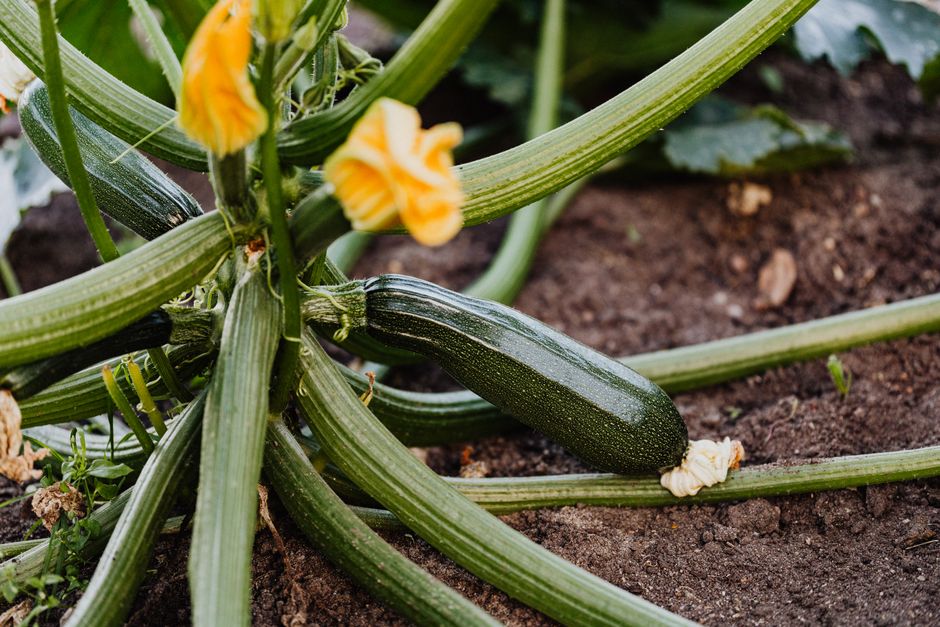
Courgettes produce separate male and female flowers on the same plant. Pollinator insects must move pollen from male to female for fruit to develop, and blooms are only open for one day, unpollinated female flowers drop entirely. Female flowers are easy to identify: they have a tiny immature courgette at the base, below the petals. Male flowers grow on thin stems with no swelling.
If bees are scarce, common in cool or wet weather, hand pollinate. Hand pollinate using a dry paintbrush or by removing a male flower and rolling its pollen onto the stigma of an open female flower, do this before 10 am, when flowers are fully open and pollen is freshest.
Pro Tip: If all your flowers lack the swollen base at their stem, they are all male, this is normal early in the season, resolving within one to two weeks as female flowers develop. Do not discard the plant out of frustration. Simply wait.
Step 5, Harvest Correctly and Avoid the Glut
The golden rule of courgette harvesting
Harvest courgettes when they are around 10 cm long, leaving courgettes to grow larger will reduce the plant's vigour and fruiting potential. In warm weather a courgette can grow from a promising finger-length fruit to a bloated marrow in just two to three days, so check plants every couple of days without fail.
Let even one courgette grow to marrow size and the plant will stop producing. Pick them regularly, however, and you will have a delicious crop right up to October. Use a sharp knife or scissors rather than twisting, which can damage the stem and introduce disease.
Succession sowing for a longer season
Sarah Raven's growing guide recommends a triple sowing in March, April, and May for a continuous harvest that runs into October. For most home gardeners, two sowings, one in early April and one in early May, provide a well-staggered supply without an overwhelming glut.
Common Mistakes and How to Avoid Them
Powdery mildew
Powdery mildew is the most common courgette problem in the UK, with white, powdery patches appearing on leaves from mid-summer onwards. Prevention is far more effective than treatment. Methods to help prevent courgette mildew include increasing air circulation around plants, keeping the soil moist through regular watering while avoiding wetting the foliage, and using thick-layer mulches.
If mildew does appear, remove affected leaves promptly and dispose of them, do not add them to a home compost heap, as spores can survive. To treat the problem organically try mixing one part milk to nine parts water and spraying the leaves lightly on a warm, dry day. Some degree of mildew in September is entirely natural and does not necessarily mean the end of cropping.
Slug damage to seedlings
Although courgettes can be sown directly outdoors, failure rates will be high. Erratic germination, colder temperatures, plus the fact that mice, slugs, and snails enjoy courgette seeds and seedlings, means that most growers opt for indoor sowing. Once outdoors, protect young plants with a physical barrier, a large plastic bottle with the base cut off works well as a cloche and slug guard combined, as suggested by Garden Focused's courgette guide.

Frequently Asked Questions
When is the best time to sow courgette seeds in the Hungary?
Start your seeds indoors during April or early May, which gives them time to germinate and grow into sturdy seedlings before the weather warms up enough to plant them outside. In most parts of the country, mid to late April is ideal. Do not sow earlier unless you have a heated greenhouse, as seedlings will outgrow their pots before outdoor conditions are safe.
How deep should I plant courgette seeds?
Courgette seeds should be planted about 2.5 cm deep. Planting them at this depth ensures they are well covered with soil, which helps retain moisture and provides the darkness needed for germination. Place the seed on its side to reduce the risk of rotting before it sprouts.
Why are my courgettes producing flowers but no fruit?
The most common cause is poor pollination. Low bee activity due to cool or wet weather, and pesticide sprays, are the primary causes of failure in gardens that appear otherwise healthy. Hand pollinate before 10 am using a dry paintbrush, transferring pollen from a male flower to the stigma at the centre of a female flower. Also check that you have both male and female flowers open simultaneously, only female flowers, which carry a tiny embryonic courgette at their base, can produce fruit.
How many courgette plants do I need for a family?
Just two or three courgette plants are enough to feed a family, with enough left over to give to friends. In a good summer, two well-grown plants can genuinely produce more fruit than a household of four can eat. Start with two plants and be prepared to harvest frequently to manage the abundance.
How do I prevent a courgette glut?
Harvest every two to three days, picking fruits at 10 to 15 cm long rather than letting them swell. Regular picking when courgettes are small not only ensures a longer cropping period over several months, but the fruits have much more flavour when picked early. Stagger your sowing dates to spread the harvest, and freeze excess fruit sliced and blanched for use in soups and stews through autumn and winter.
Call to Action
Growing courgettes from seed is one of the most satisfying projects a home gardener can undertake, and the variety available through specialist seed suppliers far exceeds anything sold at the supermarket. Browse the vegetable seed range at Holland Kertészet to find bush and climbing courgette varieties suited to your growing space, from classic green types to golden and striped Italian cultivars.
Sources
-
How to Grow Courgettes, Royal Horticultural Society. Authoritative UK-specific growing guide covering sowing, planting, care, and harvesting. https://www.rhs.org.uk/vegetables/courgettes/grow-your-own
-
How to Grow Courgettes, BBC Gardeners' World Magazine. Practical step-by-step guide with variety selection and care tips. https://www.gardenersworld.com/how-to/grow-plants/how-to-grow-courgettes/
-
Everything You Need to Know About Courgette Seeds, Fontana Seeds. Germination timeline, sowing depth, and productivity data. https://www.fontanaseeds.com/pages/everything-you-need-to-know-about-courgette-seeds
-
How to Grow Courgettes in the UK, Garden UK. Comprehensive guide covering varieties, germination rates, and powdery mildew prevention. https://gardenuk.co.uk/growing/how-to-grow-courgettes-uk/
-
Growing Courgettes: The Easiest Vegetable for Beginners, Garden Ninja (Lee Burkhill). Includes germination temperature data and indoor-versus-outdoor sowing comparison. https://www.gardenninja.co.uk/growing-courgettes-the-easiest-vegetable-for-beginners/
-
How to Grow Courgettes, Suttons Seeds. Practical sowing advice, timing, and UK frost date guidance. Although courgettes can be sown
-
How to Plant, Grow and Care for Courgettes, Sarah Raven. Staggered sowing strategy and long-season cropping advice. https://www.sarahraven.com/articles/how-to-plant-and-grow-courgettes
-
5 of the Best Courgette Varieties, Grow Your Own Magazine. Variety profiles including Defender, Clarion, and Tromboncino. https://www.growfruitandveg.co.uk/blog/5-of-the-best-courgette-varieties
-
Why Your Courgettes Aren't Setting Fruit, The Garden Smallholder. Detailed guide to pollination failure causes and hand pollination technique. https://thegardensmallholder.com/why-your-courgettes-arent-setting-fruit-and-how-to-fix-it/
-
Powdery Mildew on Courgette Plants, Plantura. Prevention and treatment methods for the most common courgette disease. https://plantura.garden/uk/vegetables/courgettes/powdery-mildew-on-courgettes
-
Powdery Mildew on Courgettes, Rocket Gardens. Organic treatment options including diluted milk spray. https://www.rocketgardens.co.uk/powdery-mildew-classic-courgette-illness/
-
Expert Advice on Growing Courgettes in the UK, Garden Focused. UK-specific sowing calendar, slug protection, and harvesting guidance. https://gardenfocused.co.uk/vegetable/courgette.php
-
How to Grow Courgettes (2026 Guide), The Green Gaffer. Complete guide covering sowing on their sides, pot-bound risk, and hardening off. https://www.greengaffer.co.uk/raised-garden-beds/how-to-grow-courgettes-uk/
-
How to Grow Courgettes, Love the Garden. Variety selection, harvesting size recommendations, and powdery mildew overview. https://www.lovethegarden.com/uk-en/growing-guide/how-grow-courgettes


