

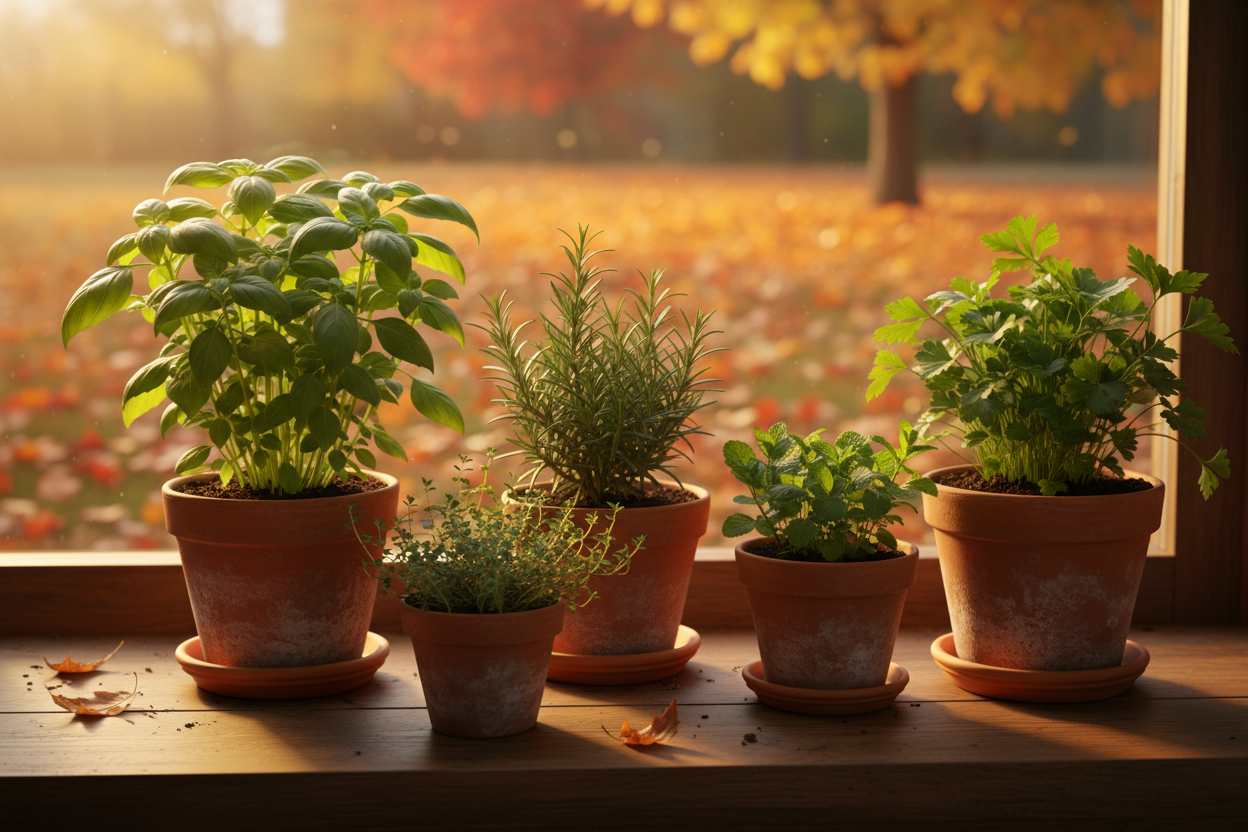
As the days shorten and outdoor beds wind down, the temptation to mourn the growing season is entirely understandable. But autumn is actually the ideal moment to move your herb garden inside rather than leave it behind. While many gardeners consider autumn the most beautiful time of year, it is also the time when they must start moving their operation indoors, and a windowsill herb garden makes that transition entirely worthwhile. The process involves choosing the right varieties, recreating the light and humidity your plants need, sowing fresh seed where necessary, and learning to harvest correctly. Get those four things right and you will have fresh parsley, mint, and thyme within arm's reach well into the new year.
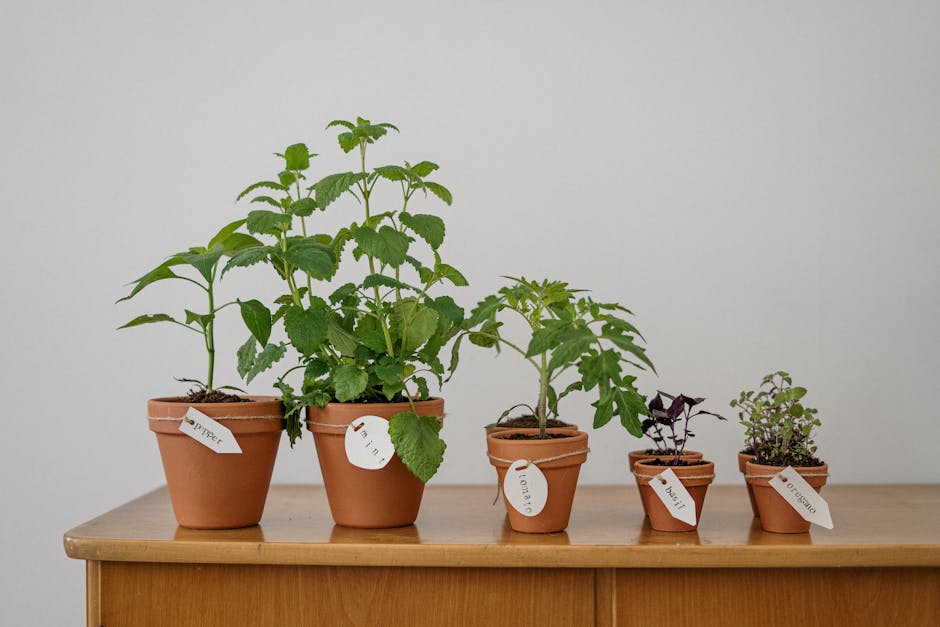
Key Takeaways
-
Light is the deciding factor: Light is typically the most limiting factor to successfully growing herbs indoors, if your south-facing window falls short, invest in a grow light before anything else.
-
Humidity matters as much as warmth: Maintain ideal temperature 18-24°C and humidity 40-60% for optimal growth, central heating dries air fast, so a pebble tray or small humidifier is a practical fix from day one.
-
Overwatering kills more herbs than anything else: Overwatering is the most common mistake in indoor herb gardening; many of the herbs we love to grow are Mediterranean plants that tend to grow in rocky soils, always test the soil before you water.
-
Harvest regularly to keep plants productive: Harvesting your herbs properly not only gives you fresh ingredients but also encourages the plant to grow bushier and healthier; only harvest up to one-third of the plant at a time.
-
Start new seed in August: Sowing fast-growing herbs such as basil, coriander, and dill indoors in late summer means they are established and productive before the coldest months arrive.
Quick-Start Prioritisation Framework
| Strategy | Best For | Effort Level | Time to Results |
|---|---|---|---|
| Windowsill growing (south-facing) | Beginners with good natural light | Low | 3-6 weeks |
| Supplement with LED grow light | Flats with limited sun exposure | Low-Medium | 2-4 weeks |
| Sow fresh seed indoors | Anyone wanting continuous supply | Medium | 4-8 weeks |
| Bring outdoor pots inside | Gardeners with established perennials | Low | Immediate |
| Full grow-light setup | No reliable natural light at all | Medium-High | 2-4 weeks |
Start here if you are:
-
A beginner with a sunny kitchen: Place rosemary, thyme, and chives on a south-facing sill, these are the most forgiving and require minimal intervention.
-
In a flat with limited light: A single full-spectrum LED panel running on a timer will outperform any north-facing window; budget a modest amount and start with parsley and mint.
-
An experienced gardener bringing perennials in: Inspect plants for pests before moving them inside, then pot them up in fresh, free-draining compost.
Step 1, Choose the Right Herbs for the Season
The most common early mistake is trying to grow everything indoors at once. Some herbs adapt beautifully; others become leggy and disappointing. Knowing which is which saves a great deal of frustration.
The Reliable Performers
Chives are a versatile herb used for garnishing, soups, and salads, and they are relatively easy to grow indoors, especially in trough planters, as they have shallow roots. Chives require moderate sunlight and moist, well-drained soil. Mint is equally adaptable, Harvesting your herbs properly not to grow for warming winter teas and are hardy and highly adaptable, making them ideal to bring indoors. For Mediterranean varieties, thyme is a flavourful herb often used in savoury dishes and can withstand a variety of indoor conditions, including dry air, low light, and infrequent watering.
Parsley deserves a special mention here. It grows well with 6 to 8 hours of sunlight but tolerates partial shade better than Mediterranean herbs, producing acceptable harvests with just 4 to 5 hours of light, and prefers cooler conditions between 10 to 21°C. That makes it one of the most practical herbs to have on a Central European windowsill through autumn.
Herbs That Need More Care
Rosemary is worth growing indoors, but it demands attention. Rosemary comes from rocky Mediterranean coastlines where drainage is exceptional and soils are slightly alkaline. Indoors, it is most commonly killed by root rot from overly dense, moisture-retaining mixes. Use a sandy potting mix blended with perlite, and opt for terracotta containers, whose porous walls allow moisture to escape passively, keeping the root zone drier between waterings.
Basil is the herb most home cooks want and the one most likely to struggle. It is extremely cold-sensitive and leaf tissue starts turning black from chilling injury the moment temperatures dip below 10°C. Keep it well away from cold windows, air conditioning vents, and draughty doorways, especially in autumn and winter.
Pro Tip: In my experience, grouping herbs with similar needs together in one trough planter makes autumn care much simpler. As the Piedmont Master Gardeners advise, when herbs are grouped in containers, make sure the selections have compatible light, water, temperature, and humidity requirements.
Step 2, Get the Light Right Before You Do Anything Else
This is the step most beginners underestimate. Windows that seem bright to a human eye frequently deliver far less light than a herb plant requires, particularly from October onwards when the sun sits lower in the sky.
Working With Natural Light
When you consider that many herbs are Mediterranean plants, you understand why they need a lot of sunlight. To grow herbs indoors, choose a truly sunny window with a southern exposure that gets at least six hours of sun per day. Rotating your pots matters too. Set the mini-garden in a sunny window, turning the pot every time you water, so that all the plants get plenty of light. If a window delivers fewer than six hours of direct sun, supplements become necessary rather than optional.
Adding a Grow Light
Most culinary herbs need 12-16 hours of daily light under LEDs to compensate for the lower intensity of artificial sources compared to direct sunlight. Running lights for fewer than 12 hours produces slow, stretched growth. Running them beyond 16 hours stresses most herbs and disrupts their rest cycle. Positioning matters as much as duration. Positioning your LED fixture about 30 cm above the herb canopy delivers enough photon density for compact, healthy growth without bleaching leaf tips.
A complete indoor herb setup typically uses a 100-200W full-spectrum LED running 12-16 hours per day, paired with small pots and quality potting mix. A plug-in timer makes this effortless and means you never forget to switch the light off. According to a University of Arizona study cited by Gathera, basil grown under LED grow lights produces 20% more essential oils than basil grown in natural light, meaning a grow light pays for itself in flavour as well as yield.
Pro Tip: Monitor for pale leaves or stretched stems, these are clear signs of insufficient lighting. If you notice either symptom within the first two weeks of moving plants indoors, do not wait: add a grow light or move plants to a brighter position immediately.
Step 3, Create the Right Environment
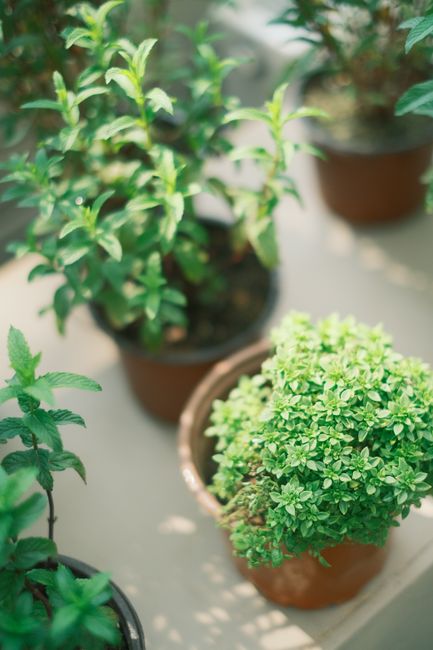
Getting light sorted is half the battle. The other half is temperature, humidity, and airflow, three factors that central heating disrupts the moment you close the windows for autumn.
Temperature
Harvesting your herbs properly not temperatures between 18°C and 24°C with slightly cooler nights. Harvesting your herbs properly not heaters, or stoves, as sudden temperature shifts can stress the plants. These areas can also add unnecessary airflow that dries out soil and decreases humidity. A spot on a kitchen worktop away from the cooker and not directly above a radiator is generally ideal.
Humidity
Harvesting your herbs properly not, can be dry, which may cause herbs like basil and parsley to wilt. The target to aim for is straightforward: 50-60% relative humidity should suffice to keep your herbs growing healthy. To check the humidity level, you can purchase an inexpensive hygrometer online or at a hardware store. If levels are too low, for herbs that like humidity, such as rosemary and parsley, pots can be placed in a pan of moist pebbles, or misted twice weekly with a water sprayer.
Grouping plants together raises local humidity organically. Grouping plants together can raise local humidity, just be sure to leave some space between them to reduce the risk of fungal diseases.
Watering the Correct Way
Overwatering is a very common mistake typically caused by misinformation. Many people think irrigation should happen on a set schedule, but that is not how plants work. Because light, humidity, temperature, and growth patterns always change, you cannot reliably water herbs in conjunction with your calendar.
Water herbs when the top 2-5 cm of soil feel dry to the touch, and avoid overwatering, which can lead to root rot and other issues. In winter, the Harvesting your herbs properly not advise that yellowing leaves can be a sign of overwatering, while wilting can indicate either over or underwatering, so feeling the soil is always the definitive test.
Step 4, Sow Fresh Seed for Continuous Supply
Bringing existing outdoor plants indoors works well for perennials, but for annual herbs such as basil, coriander, and dill, sowing fresh seed in August and September gives you the most productive plants for autumn and winter.
Getting Germination Right
The best soil temperature for germinating herb seeds is generally around 21°C. Most seeds germinate when the soil temperature is between 20°C and 30°C. Once germination occurs, the optimum growing temperature for the seedling is about 5-6°C cooler than the optimum germination temperature. If your home runs cooler in autumn, a seedling heat mat is a practical solution. As Sow Right Seeds note, a heating pad can help you control the soil temperature when germinating plants indoors.
Consider adding a heat mat during germination to boost success rates, seeds sprout up to 50% faster with soil temperatures between 21-24°C. That time saving matters in autumn, when you want productive plants before the coldest weeks arrive.
Choosing Containers and Compost
Choose containers with drainage holes and catch trays to prevent root rot. Use 15-20 cm pots for individual herbs like mint and basil, while compact herbs like thyme can thrive in 10 cm containers. For compost, a medium-sized clay container is best for drainage and airflow, and a three-part mix of potting soil, peat, and sand will keep your indoor herbs happy and healthy.
Good seed stock makes a real difference to germination rates and to the vigour of the resulting plants. Holland Kertészet offers a range of herb seeds well-suited to indoor sowing in autumn, from parsley and dill through to basil varieties selected for compact growth.
Pro Tip: I've found that sowing small amounts of fast-growing herbs, coriander, dill, and basil in particular, every three weeks from August through October gives a far more reliable supply than one large sowing. Annual herbs that must be harvested whole, like dill and cilantro, will force you to resow every few weeks for continuous supply, but they are reliable performers.
Step 5, Harvest Correctly to Keep Plants Productive
Harvesting seems straightforward but doing it incorrectly is one of the most common reasons indoor herbs stall.
The One-Third Rule
Never harvest more than one-third of your plant in one go, and always use a clean, sharp pair of kitchen shears or scissors so you can make a precise, quick-healing cut. For upright herbs, for basil, mint, oregano, and thyme, pinch stems just above a leaf pair to encourage branching. For chives, cut leaves about an inch from the soil and they will grow back quickly.
Controlling Flowering
The key to encouraging herb growth is to pinch or snip any flowers as soon as you see them. Flowers are a sign of maturity and a signal to the plant that it is time to turn energy toward reproduction, and away from producing tasty leaves. For perennial herbs indoors, do not cut back leafy perennial herbs as heavily as annual herbs. On perennials such as chives, mint, oregano, and thyme, remove the top one-third of growth.
Avoiding Common Pitfalls: Pests and Diseases
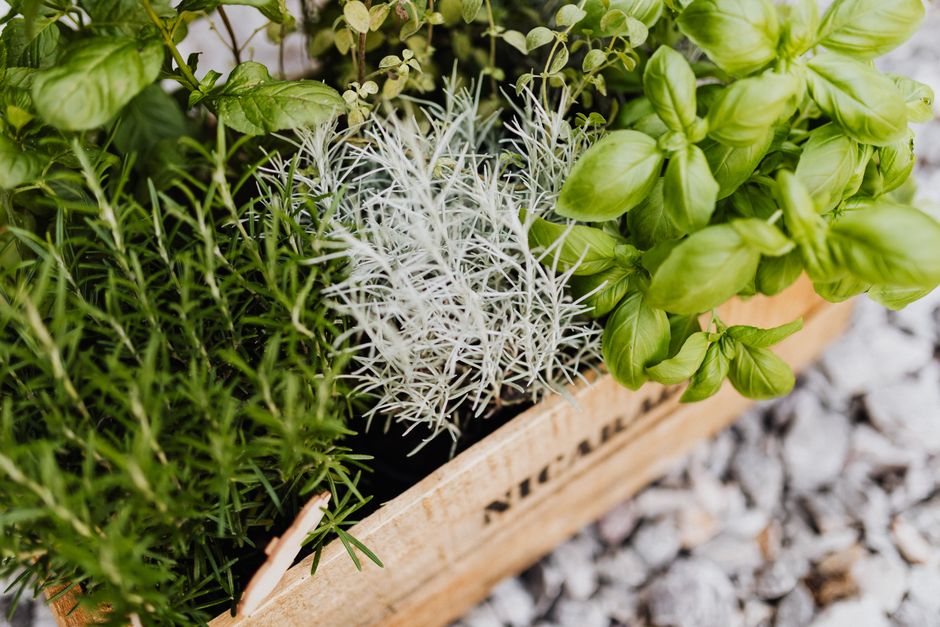
Indoor herb gardens in autumn face a specific pest risk: plants moved from the garden can carry insects in on their roots or foliage. Most indoor garden pests start their lives as outdoor garden pests, and we inadvertently bring them inside when we move our plants indoors for the autumn.
The Most Common Indoor Herb Pests
Common indoor garden pests include spider mites, whiteflies, fungus gnats, and common brown scale. Fungus gnats deserve particular attention in autumn because overwatering, already a risk as growth slows, creates exactly the conditions they need. Fungus gnats feed on plant roots root hairs, and other plant material, destroying them in the process and leaving your herb unable to access much-needed nutrients. Fungus gnats do not live long, but they can reproduce quickly by laying up to 300 eggs in their lifetime.
Prevention First
Quarantine all new plants for 2-3 weeks before adding them to your collection. Most pests will become visible within this period. This simple habit will prevent most pest infestations. For fungus gnats specifically, dry soil is the best deterrent: stop overwatering first, fungus gnats breed in consistently moist surface soil. If gnats do appear, Bacillus thuringiensis israelensis (Bti) is 90-95% effective against fungus gnat larvae within 24-48 hours. Be sure to use products that are safe and appropriate for edible plants.
For spider mites, which thrive in the warm, dry air that central heating produces, spider mites prefer hot, dry conditions and are often spotted on the underside of the herb leaves. Protecting the herb garden from these pests is as simple as a strong stream of water aimed at the foliage and regular irrigation.
Frequently Asked Questions
Which herbs are the easiest to grow indoors as a beginner in autumn?
Chives, mint, parsley, and thyme are the best starting point. These herbs tolerate the lower light levels, low humidity, and cooler temperatures found indoors, making them the best herbs to start with when growing herbs inside your home. Once you have a feel for their needs, you can add more demanding varieties like rosemary or basil.
Do I really need a grow light, or is a windowsill enough?
It depends on the direction your window faces and the time of year. To grow herbs through winter choose a truly sunny window with a southern exposure that gets at least six hours of sun per day. Because that can be a hard requirement to fulfil, many gardeners prefer to use grow lights instead or in addition to window light. From October to February in Central Europe, most windows, including south-facing ones, will benefit from supplemental LED light on overcast days.
How often should I water my indoor herbs in autumn?
There is no fixed schedule that works universally. Water only when the top of soil feels dry, stick your finger 2-5 cm deep to check moisture levels and avoid both overwatering and underwatering. In autumn, as light levels drop and growth slows, most herbs will need water less frequently than they did in summer.
Can I bring outdoor herb plants directly inside without any preparation?
You can, but you should inspect and quarantine them first. Start with healthy plants and inspect them carefully before you bring them into your home from the garden. Check underneath leaves and at stem joints for spider mites, aphids, and scale. Pot them up in fresh compost if possible, since garden soil can introduce pests and does not drain as well as a purpose-made potting mix.
How do I keep my herbs flavourful indoors, not just alive?
Light intensity is the main driver of flavour. As Smart Garden Experts note, indoor herbs often taste less intense than outdoor ones because light intensity affects essential oil production in leaves. Maximising light, especially with an LED grow light set to the correct spectrum, directly improves flavour. Avoid over-fertilising: Harvesting your herbs properly not foliage with weak flavour, so err on the side of caution.
A Final Word
Growing herbs indoors through autumn is a practice that rewards the small investment of time it requires at the start of the season. Choosing the right varieties, solving for light before anything else, maintaining humidity, watering by soil feel rather than by schedule, and harvesting correctly will give you a genuinely productive kitchen herb garden from September right through to spring. Even while the weather is cold outside, it is still possible to enjoy fresh herbs for cooking. That prospect alone is worth pulling a few pots off the patio before the first frost arrives.
Sources
-
Growing Herbs Indoors, Iowa State University Extension and Outreach. Comprehensive guide to species selection, light, and harvesting. https://yardandgarden.extension.iastate.edu/how-to/growing-herbs-indoors
-
Fresh All Winter: Grow Herbs Indoors, Chicago Botanic Garden. Advice on light requirements and grow-light use. https://www.chicagobotanic.org/plant-information/smart-gardener/fresh-all-winter-grow-herbs-indoors
-
Top Tips for Growing Fresh Herbs Indoors Year-Round, Master Gardeners of Northern Virginia. Watering, fertilising, and harvesting guidance. Harvesting your herbs properly not
-
The Best Herbs for Growing Indoors in Autumn, Get Potted. Species-specific care for autumn indoor gardeners. https://getpotted.com/inspiration/gardening-tips/the-best-herbs-for-growing-indoors-in-autumn/
-
Be Inspired With Indoor Herb Gardening, Piedmont Master Gardeners. Temperature, humidity, and container grouping tips. https://www.piedmontmastergardeners.org/article/be-inspired-with-indoor-herb-gardening/
-
How Herb Gardens Grow Under LEDs: A Practical Guide, LED Grow Lights Depot. LED wattage, positioning, and daily light duration guidance. https://www.ledgrowlightsdepot.com/blogs/blog/how-herb-gardens-grow-under-leds-a-practical-guide
-
2026 Guide: How Many Hours of Grow Light Do Indoor Herbs Really Need?, Folium Biosciences. Evidence-based grow-light schedules for kitchen herbs. https://foliumbiosciences.com/how-many-hours-of-grow-light-do-indoor-herbs-really-need/
-
Common Problems With Indoor Herbs and How to Fix Them, City Cultivator. Cold damage and root rot troubleshooting. https://www.citycultivator.com/common-problems-with-indoor-herbs/
-
11 Mistakes to Avoid When Growing Herbs Indoors, Epic Gardening. Overwatering, drainage, and soil guidance. https://www.epicgardening.com/indoor-herb-mistakes/
-
How to Harvest Your Indoor Garden, Scotts Miracle-Gro. Harvesting techniques and the one-third rule. https://scottsmiraclegro.com/en-ca/learn/gardening/how-to-harvest-your-indoor-garden.html
-
Common Houseplant Pests Guide, Submitit.biz. Fungus gnat biology, Bti treatment, and prevention protocols. https://submitit.biz/2026/04/25/indoor-plant-pests/
-
Least-Toxic Control Methods to Manage Indoor Plant Pests, University of Missouri Extension. Non-chemical pest management for edible plants. Clemson University Extension
-
Best Soil Temperatures for Sowing Flower and Herb Seeds, Empress of Dirt. Germination temperature guidance for common herbs. https://empressofdirt.net/flowers-seed-soil-temperatures/
-
Growing Herbs Indoors: From Seed to Harvest and Winter Protection, National Gardening Association. Seed-starting, fertilising, and overwintering perennials. https://garden.org/learn/articles/view/4602/Growing-Herbs-Indoors-From-Seed-to-Harvest-and-Winter-Protection/
-
Growing With Grow Lights, Gathera. Photoperiod requirements and University of Arizona LED research. https://gathera.com/blogs/how-to/growing-with-grow-lights
-
Smart Garden Experts: Growing Herbs Indoors Complete Guide, Smart Garden Experts. Parsley care, flavour production, and light-flavour connection. https://smartgardenexperts.com/blog/growing-herbs-indoors-complete-guide


