

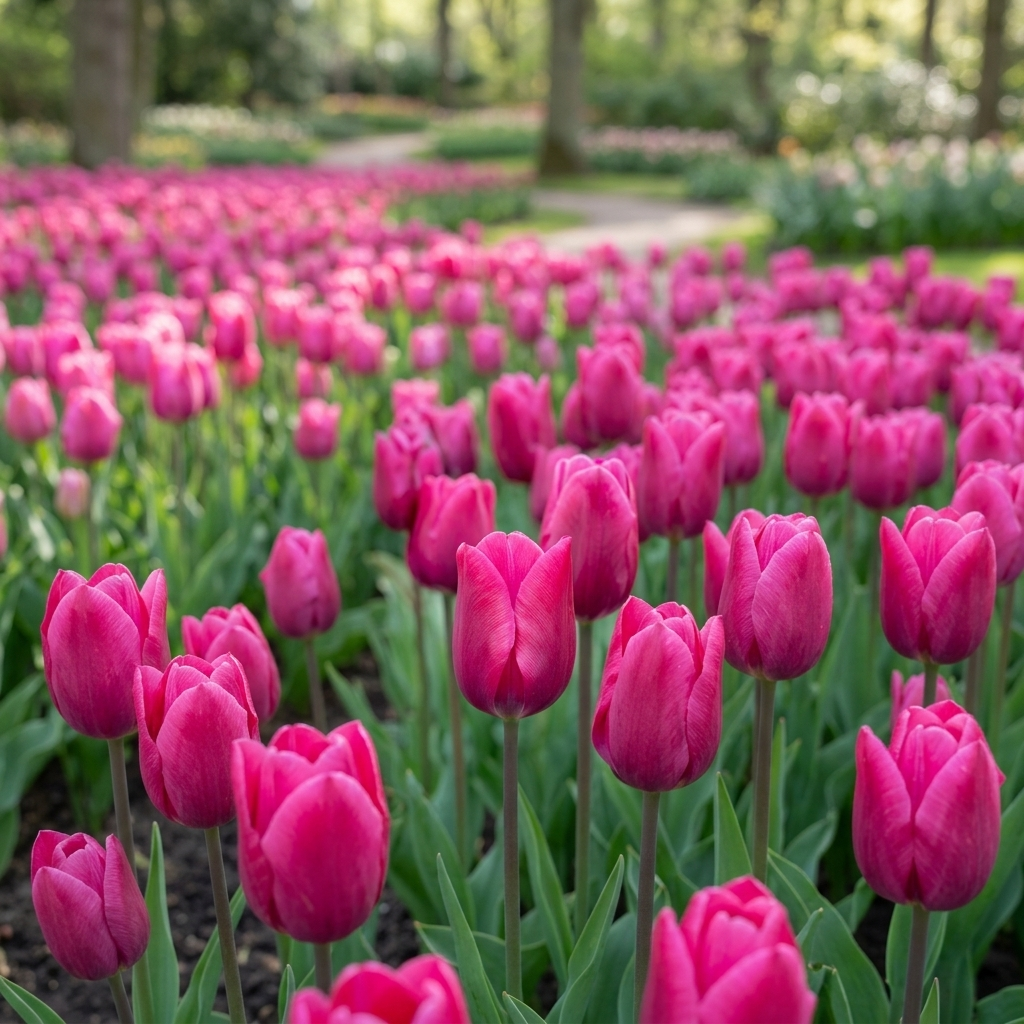
Autumn is the quiet engine behind spring's most joyful display. While most gardeners are winding down after summer, the ones who will have a garden full of vivid colour by April are already reaching for their trowels. Tulips hold deep cultural resonance in Europe, symbolising spring renewal, and are featured prominently in national festivals, public gardens, and floral design, and with tulip season fast approaching, there has never been a better moment to plan your planting. Whether you have a sweeping border in the countryside or a modest balcony flat in Budapest, this guide gives you everything you need to get your tulips right from the very first step.
Key Takeaways
- Plant at the right soil temperature: When deciding when to plant flower bulbs in autumn, the date alone is not the decisive factor, soil temperature is more important. As a guideline, the soil should have cooled to below around 10°C. Aim to get your bulbs in the ground between mid-October and the end of November for the best results in Hungary.
- Depth is non-negotiable: Plant bulbs three times their height deep, typically 15 to 20 cm measured from the soil surface to the top of the bulb. Shallow planting is the single biggest cause of poor or absent flowers.
- Over 3,000 varieties to choose from: There are currently over 3,000 registered varieties, divided into fifteen tulip types, mostly based on flower type. Mixing early, mid, and late bloomers extends your display from March all the way through to May.
- Deadhead promptly after flowering: Deadheading tulips involves removing spent flowers once they fade, which prevents the plant from using energy to produce seeds, redirecting nutrients back to the bulb. This small action makes a big difference to next year's blooms.
- Tulip fire is preventable: Gardeners can reduce the risk of Tulip Fire by planting healthy tulip bulbs in well-drained soil, providing adequate air circulation, and avoiding overhead watering. Good hygiene and rotation are your best defences.
Quick-Start Prioritisation Framework
| Strategy | Best For | Effort Level | Time to Results |
|---|---|---|---|
| Planting in open borders | Gardens with established beds | Low | Spring (4-5 months) |
| Container / pot planting | Balconies, patios, small spaces | Low-Medium | Spring (4-5 months) |
| Layered "lasagne" planting | Maximum colour in minimum space | Medium | Spring (successive waves) |
| Choosing perennial varieties | Gardeners wanting repeat blooms | Low | Second spring onwards |
| Disease rotation programme | Gardens with Botrytis history | Medium | Ongoing prevention |
Start here if you are:
- A first-time gardener: Begin with border planting, choose 20 to 30 bulbs of a single Triumph variety for a bold, low-effort display.
- Short on space: Container planting on a balcony is genuinely excellent for tulips; a 30 cm diameter pot can hold up to 20 bulbs.
- Focused on longevity: Select Darwin Hybrid or Greigii varieties, which are widely noted for returning year after year with good care.
When to Plant: Getting the Timing Right
Timing is the single most important factor in tulip success. Get it right, and everything else becomes much easier.
Why Autumn, and Why Later Than You Think
Timing is essential when planting your tulip bulbs. According to bulb grower Simon, it is best to plant tulip bulbs between mid-October and mid-December: "The best time to plant your tulips varies by country, but usually in Europe, the end of the year is the ideal period." This surprises many beginners, who instinctively want to get bulbs into the ground as soon as they arrive.
When planting tulips, you should wait until late October or November. This is because they are prone to the disease tulip fire, which can distort the leaves and give the impression they have been scorched by fire. The colder, later weather is more likely to destroy any disease lurking in the soil. In practical terms for Hungarian gardeners, this means resisting the urge to plant alongside your daffodils in September and exercising a little patience.
Pro Tip: Use a simple soil thermometer to take the guesswork out of timing. The soil should have cooled to below around 10°C at a depth of about 15 cm before you begin. If you do not have a thermometer, a reliable rule is: wait until after your first hard frost of the season.
Understanding the Cold Requirement
Many spring-flowering plants require a distinct period of cold, also known as vernalisation, so that they can reliably develop flower buds later on. That is why autumn is the most important time for planting flower bulbs. Inside every tulip bulb is a tiny, pre-formed flower that needs weeks of cool temperatures to trigger its spring emergence. Skip this cold period and you will be disappointed.
It is important to have the bulbs in the ground before the frost so they can root properly. If you plant them too late and the frost sets in, the bulbs essentially stagnate. Planting early gives the bulbs the chance to develop strong roots over the winter. This way, they will emerge vigorously in the spring.
How to Plant Tulip Bulbs: A Step-by-Step Approach
Choosing Healthy Bulbs
The journey to a beautiful spring display begins at the point of purchase. When choosing tulip bulbs, make sure they are fat and firm. Avoid any bulbs that are soft, flabby, mouldy, or whose papery cover is missing. Bigger bulbs from Holland Kertészet tend to produce bigger, sturdier flowers, so it pays to buy quality. The selection of tulip bulbs is particularly extensive in August and September. Even rare or sought-after varieties are often still available, so ordering early offers the best chance of securing specific colours and shapes. If you find a bag of bulbs you bought and forgot, plant them anyway. A late-planted tulip bulb still beats a bulb left to dry out in a shed until autumn.
Preparing the Soil
Tulips look their best when they are grown in loose, crumbly soil that is easy to work and very well drained. Before planting, loosen the bed to a depth of about 30 cm. Add well-rotted compost to enrich the soil, but steer clear of fresh manure, fresh manure is high in nitrogen and promotes lush foliage at the expense of flowers.
Tulips prefer slightly alkaline to neutral conditions, with a soil pH of 6.0 to 7.0. If your garden soil is particularly acidic, a light application of garden lime in autumn will help moderate it over winter.
Planting Depth and Spacing
Set tulip bulbs three times their own depth, roughly 15 to 20 cm down, with the pointy end facing up. This depth is protective: it insulates the bulb against temperature swings during the winter and reduces the risk of frost heave in spring. Never plant shallower than 12 cm.
Space tulip bulbs about 10 to 15 cm apart. For clusters or drifts, stagger the bulbs for a more natural look. In a border, planting in groups of at least ten to fifteen bulbs creates the full, lush effect that single-file rows never quite manage.
Pro Tip: Garden designers know that tulips look best when planted in groups of 50 or more bulbs. Plan on roughly nine to twelve bulbs per square foot. For a truly impressive Hungarian spring garden, think in patches rather than lines.
Watering After Planting
Water bulbs right after planting. Although they cannot bear wet feet, bulbs need water to trigger growth. After that initial watering, if autumn rains are regular, you can leave nature to do its work. If you get weekly rain in the autumn after planting the bulbs, you do not need to water. Excess water is the tulip bulb's enemy. If you hit a dry spell, though, water the bulbs weekly until first frost.

Tulip Varieties: Choosing the Right Type for Your Garden
Some tulips flower earlier than others: early-flowering varieties bloom from very late March to April, mid-season bulbs in April to May, and late-flowering ones bloom in May. Mixing types from different groups is the best strategy for extending your season across six to eight weeks.
Early Season Favourites
Single Early tulips are among the first to bloom. They feature classic cup-shaped flowers with one flower per stem. These tulips are short but sturdy, making them great for borders and containers. Their strong stems help them resist wind and rain. Popular choices include 'Apricot Beauty' and 'Princess Irene'.
Often called "peony tulips" due to their lush, layered petals, Double Early tulips bring fullness and texture to early spring gardens. Their blooms are larger and more rounded than single tulips.
Mid-Season Stars
Triumph tulips are the largest group of tulips, known for their rich colours and classic shape. They have strong stems, making them ideal for cut flowers and formal beds. Triumph tulips are a reliable choice for beginners because of their wind resistance and wide range of colours.
Darwin Hybrids are famous for their large, egg-shaped blooms and strong stems. These tulips are incredibly weather-resistant and are some of the best for naturalising, returning year after year. The variety 'Apeldoorn' is a classic red Darwin Hybrid that performs beautifully in the Hungarian climate.
Late Season Drama
For a theatrical finale to your tulip season, Parrot tulips are a must. Their flamboyant, fringed petals come in wild colour combinations and twist in unique, eye-catching ways. They typically bloom in late April and into May, bridging the gap before summer perennials take over. The variety 'Queen of the Night', a velvety deep maroon, is particularly beloved in European garden design.
Growing Tulips in Containers: Perfect for Flats and Balconies
No garden? No problem. Tulips are genuinely excellent container plants, and a well-planted pot can be just as spectacular as a full border. The post-pandemic consumer behaviour shift toward home decoration and indoor gardening has particularly benefited the potted tulip plant segment, which recorded strong growth between 2022 and 2025.
Choosing the Right Container
You want a container that is at least 25 to 30 cm deep to allow for several centimetres of soil beneath the bulbs for root growth and several centimetres above them for protection. Always ensure the pot has drainage holes, waterlogged compost will rot your bulbs before spring arrives.
For a full, professional-looking display, choose a pot that is at least 25 to 30 cm in diameter. A pot of this size can comfortably hold 10 to 15 bulbs. Terracotta pots are an excellent choice as they are breathable and help regulate moisture levels naturally.
Planting in Containers
Fill the container roughly two thirds full with good-quality potting compost. In a pot, you can plant tulip bulbs much closer together to achieve a lush, full look. You can place the bulbs "shoulder to shoulder," about 2 to 3 cm apart, as long as they are not touching each other or the sides of the pot.
Pro Tip: Try the "lasagne" layering method for a container that blooms in waves. Plant late-blooming tulips at the bottom of a deep pot, cover with a layer of soil, and plant early-blooming crocus or grape hyacinths on top. You will get waves of colour in the same small footprint.
For balconies exposed to wind, Greigii and Fosteriana tulips stay relatively low to the ground. Their shorter, thicker stems are less likely to flop over in a spring breeze. They often feature interesting foliage with stripes or mottling, adding extra beauty even before the flowers open.
Post-Bloom Care: How to Look After Your Tulips After Flowering
This is where many gardeners go wrong, and yet it is the part that costs almost no effort. What you do in the weeks after flowering directly shapes next year's display.
Deadheading
Use a clean pair of garden snips or sharp scissors and cut the flower head off at the top of the stem. Leave the rest of the green flower stem and all the leaves attached to the plant. Do not pull the stem out of the ground, as this could damage the bulb.
Protecting the Foliage
After deadheading, the leaves will look untidy, resist the urge to cut them back. It is vital to leave the foliage alone until it turns completely yellow or brown. This usually takes about six to eight weeks after the flowers have finished. The leaves are still photosynthesising and sending energy into the bulb as stored fuel for next year's flower.
Lifting and Storing
Tulips prefer a summer dormancy period that is hot and dry, similar to their native habitat in Central Asia. If your garden stays very wet, you may want to "lift" and store your bulbs. Hungary's climate tends to have warm, reasonably dry summers, so in well-drained beds it is often perfectly fine to leave bulbs in the ground. However, if you have heavy clay or a garden that stays moist, lifting is the safer option.
Once the bulbs are dry, place them in a mesh bag or a cardboard box filled with dry peat moss or sawdust. Store them in a cool, dark, and dry place, such as a garage or basement. Replant them again in October or November.

Tulip Fire and Other Common Problems
One of the most devastating diseases affecting tulips is Tulip Fire, caused by the fungus Botrytis tulipae. In my experience, the gardeners who encounter tulip fire almost always have one thing in common: they plant in the same spot year after year. Rotation is the simplest preventive measure.
Identifying the Problem
The symptoms of tulip fire are vast and easy to spot. The newly emerging leaves may be distorted or twisted and will often wither away. Spots on petals that look burnt or scorched are another tell-tale sign.
Prevention is Everything
There is no current treatment available for tulip fire, prevention is better than cure. Follow these practical steps from Peter Nyssen's tulip fire guide:
- Peter Nyssen's tulip fire guide. Overcrowded tulips create the humid, low-airflow conditions the fungus prefers. Five to seven centimetres between bulbs is the minimum; more space is better in a damp garden.
- Peter Nyssen's tulip fire guide. Remove dead petals and foliage as soon as the plant finishes flowering. This is the single most effective preventive measure, as it removes the organic material the spores need to enter the soil.
- Peter Nyssen's tulip fire guide. Avoid growing tulips in the same spot year after year, even without a history of disease.
If You Find an Infected Plant
If Tulip Fire is discovered, the bulbs and plants must be discarded (not composted) and no tulips should be planted in the infected soil for at least three years.
Frequently Asked Questions
When exactly should I plant tulip bulbs in Hungary?
According to bulb grower Simon, it is best to plant tulip bulbs between mid-October and mid-December. For Hungary specifically, the period between late October and the end of November is ideal. You should not wait too long. After planting, the bulbs need time to establish their roots. As a rule, there should be around four to six weeks before the ground freezes permanently.
How deep should I plant tulip bulbs?
Set tulip bulbs three times their own depth, roughly 15 to 20 cm down, with the pointy end facing up. This is the rule that matters most. Shallow planting, anything under 10 cm, leaves bulbs vulnerable to frost heave, disease, and hungry rodents. If you are planting in heavy clay soil, 15 cm is sufficient; in sandy or loamy soil, aim for 18 to 20 cm.
Can I grow tulips in pots on my balcony?
Absolutely, and it is one of the best ways to enjoy them if you have limited space. For a full, professional-looking display, choose a pot that is at least 25 to 30 cm in diameter. A pot of this size can comfortably hold 10 to 15 bulbs. Always use fresh potting compost and ensure the pot has drainage holes. Leave the planted pot outside through winter, the bulbs need the cold.
Do tulips come back every year?
Although tulips are technically perennial, many centuries of hybridising have resulted in weakening the bulb's ability to return year after year. Therefore, many gardeners treat them as annuals, planting new bulbs every autumn. However, Darwin Hybrid and Greigii varieties are among the best choices for repeat flowering. Tulip bulbs are susceptible to fungal diseases, especially when grown in a cool, moist climate. To minimise problems, remove the old bulbs after they finish blooming and plant fresh bulbs each autumn. If possible, rotate planting areas, giving the soil a three-year rest in between.
What should I do with my tulips after they finish blooming?
First, deadhead immediately by removing the faded flower head but leaving the stem and all foliage. Then wait patiently. By deadheading the spent flowers and allowing the foliage to wither naturally, you give the bulbs the best possible chance to return with vigour. Once the leaves are completely yellow and dry, usually six to eight weeks after flowering; you can either leave the bulbs in the ground (if drainage is good) or lift and store them in a cool, dry, well-ventilated space until autumn.
Ready to Start? A Word About Where to Buy Your Bulbs
I have found that the single most important investment you can make is in quality bulbs from a trusted source. Bargain bags of small, soft, or poorly stored bulbs rarely deliver the display you are hoping for. Holland Kertészet offers a carefully selected range of tulip bulbs suited to the Hungarian and Central European climate, with varieties spanning early, mid, and late season. Buying before the end of September gives you the best choice of varieties and ensures your bulbs are stored well until planting time arrives in late October.
According to data published in 2025, the Netherlands alone dedicated over 14,000 hectares to tulip cultivation in 2025, which accounts for over half of all flower bulb cultivation area in the country, which tells you everything about where the finest stock originates. Sourcing from specialists who draw on that tradition means you are planting the real thing.

Sources
-
Guide to Autumn Bulb Planting, Hillier. Planting timing and tulip fire disease guidance. https://www.hillier.co.uk/garden-and-home-ideas/guide-to-autumn-bulb-planting/
-
Planting Tulip Bulbs: When and Where, Tulip Experience Amsterdam. European timing advice from a professional bulb grower. https://www.tulipexperienceamsterdam.nl/en/updates/planting-tulip-bulbs-when-where
-
When to Buy and Plant Flower Bulbs in Fall, Dutch Bulbs Blog. Planting calendar and soil temperature guidance for spring-flowering bulbs. https://blog.dutch-bulbs.com/when-to-buy-and-plant-flower-bulbs-in-fall-a-planting-calendar-for-spring-flowering-plants/
-
When and How to Plant Tulips: A Garden Designer's UK Guide, Garden Ninja. Depth, timing, and disease-avoidance advice. https://www.gardenninja.co.uk/when-how-to-plant-tulips-a-garden-designers-uk-guide/
-
How to Grow Tulips, Gardeners' World. Planting depth, spacing, and variety guidance. https://www.gardenersworld.com/how-to/grow-plants/how-to-grow-tulips/
-
7 Tips for Planting Tulips, Longfield Gardens. Soil preparation, spacing, and design advice. https://www.longfield-gardens.com/blogs/fall-planted-bulbs-how-to/7-tips-for-planting-tulips
-
The Best Time to Plant Tulip Bulbs, Gardenia.net. Depth, spacing, and soil temperature guidance. Space tulip bulbs about 10 to 15
-
A Guide to the Different Types of Tulip Bulbs, Tom's Yard. Overview of the fifteen tulip divisions. https://tomsyard.co.uk/blogs/news/a-guide-to-the-different-types-of-tulip-bulbs
-
How to Take Care of Tulip Bulbs After Blooming, Longfield Gardens. Deadheading, lifting, and storage guide. https://www.longfield-gardens.com/blogs/tulip-care/how-to-take-care-of-tulip-bulbs-after-blooming
-
Tulip Fire: Identify, Treat and Prevent, Peter Nyssen. Spacing, debris removal, and rotation advice. Peter Nyssen's tulip fire guide
-
Common Tulip Pests or Diseases, Longfield Gardens. Botrytis tulipae identification and management. https://www.longfield-gardens.com/blogs/fall-planted-bulbs-how-to/common-tulip-pests-or-diseases
-
Can You Plant Tulip Bulbs in Containers?, Longfield Gardens. Pot size, variety selection, and lasagne planting technique. https://www.longfield-gardens.com/blogs/tulip-care/can-you-plant-tulip-bulbs-in-containers
-
Europe Tulip Market Report, Market Data Forecast. European tulip production and cultural significance data. Tulips hold deep cultural
-
Tulip Market Size, Share and Trends, DataIntelo. Global and European market share and home gardening growth data. The post-pandemic consumer
-
How to Grow Tulips, The Old Farmer's Almanac. Complete care guide covering planting, watering, and fertilising. https://www.almanac.com/plant/tulips


