

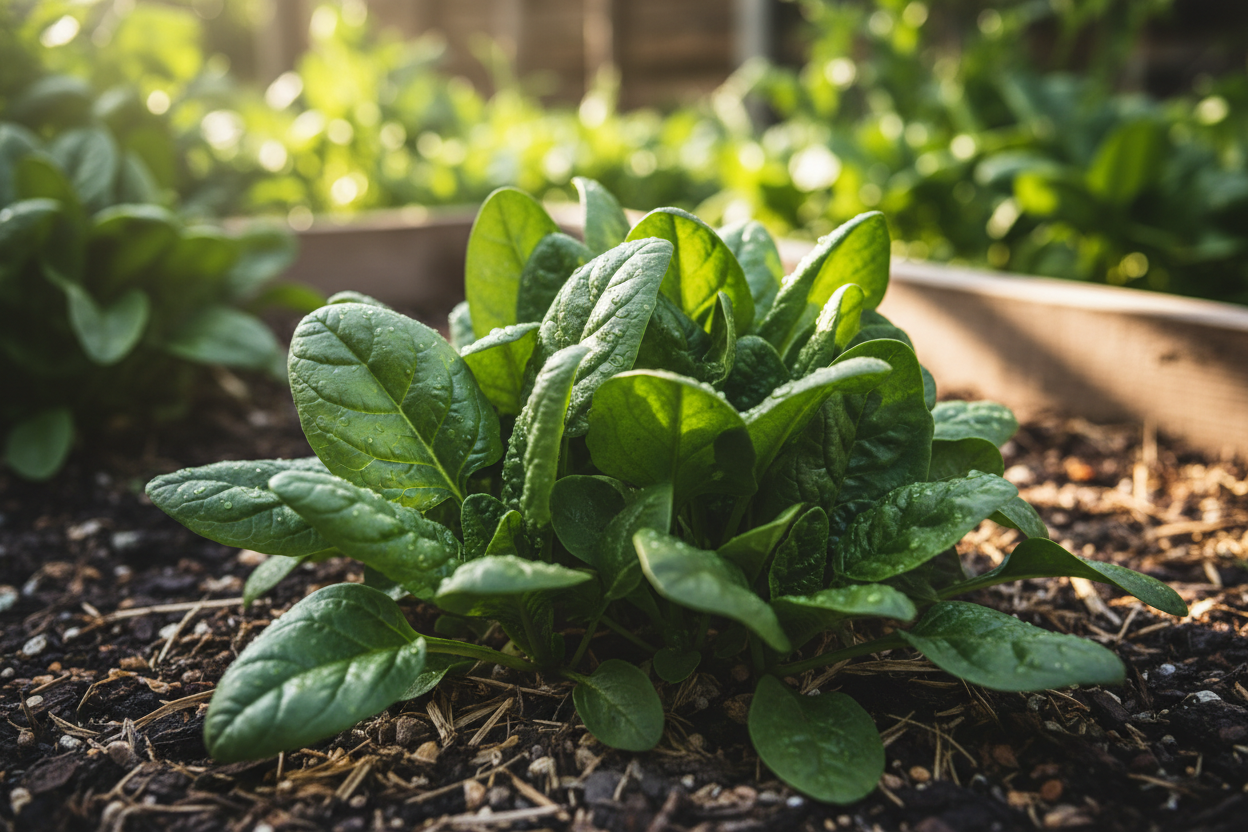
Most home gardeners treat spinach as a single thing to be grabbed off a seed rack in late summer. In practice, sowing the wrong variety in autumn is one of the most reliable ways to get a disappointing harvest, or no harvest at all. The use of proper varieties is very important: fast-growing, vigorous varieties are suited to autumn, winter, and early spring harvests, while slow-growing, slow-bolting types are reserved for late spring and summer. That single distinction, which most packets do not shout loudly enough, is the difference between a bed full of tender winter leaves and a bed that goes to mush by December.
Winter spinach is exceptionally sweet and flavourful, because the plant builds up sugars in response to cold, which protect its cells from freezing conditions. Autumn sowing puts you in a position to enjoy exactly that. The question is which variety gets you there.

Key Takeaways
-
Leaf type determines ease of use, not cold hardiness. Spinach has three main types Savoy (crinkly leaves, suited to cooking), Flat-leaf (smooth leaves, best raw in salads), and Semi-savoy (a balanced hybrid). Each overlaps with autumn sowing, but your intended use should inform your choice.
-
Day length is the key trigger for bolting. Spinach is the most photoperiod-sensitive of the leafy greens; it bolts strongly when daylight exceeds 14 hours, almost regardless of temperature. Autumn shortens days naturally, which means autumn sowings are far less prone to premature bolting than spring ones.
-
Timing is critical: sow 6 to 8 weeks before your first hard frost. For autumn sowing, plant 6 to 8 weeks before your first hard frost, or sow in late summer for a continuous autumn harvest. Missing this window means plants will not establish before growth stalls in December.
-
Disease resistance matters as much as cold hardiness. Spinach is prone to downy mildew which is worse in humid weather. Mildew-resistant varieties are available, and the best method of prevention is good spacing to help air circulate. For organic growers especially, choosing a resistant cultivar is the primary management tool.
-
Winter spinach sweetens with cold. Overwintered spinach plants produce a bumper crop in spring, and because spinach uses natural sugars to protect itself from cold, winter spinach has remarkably sweet flavour. This is a genuine culinary reward for good variety selection.
Quick-Start Prioritisation Framework
| Variety | Best For | Cold Hardiness | Effort Level | Time to Harvest |
|---|---|---|---|---|
| Matador | Beginners, all-round use | High | Low | 6-8 weeks |
| Bloomsdale Longstanding | Salads, savoyed texture | Very High | Low | 6-8 weeks |
| Viroflay (Giant Winter) | Cooking, large yields | High | Low | 7-9 weeks |
| Tyee (Semi-savoy) | Mixed use, wet sites | High | Low-Med | 6-8 weeks |
| Patton F1 | Wet gardens, mildew-prone | High | Low | 6-8 weeks |
Start here if you are:
-
A first-time autumn sower: Matador, a robust, bolt- and frost-hardy heirloom that is genuinely forgiving across a wide sowing window.
-
Growing for cooking: Viroflay or Bloomsdale, large, deeply flavoured leaves that hold up in the pan.
-
Growing on a wet or shaded plot: Tyee or Patton F1, semi-savoy types with strong disease resistance that tolerate imperfect drainage.
-
Wanting baby leaf harvests fast: Any semi-savoy or flat-leaf variety sown in rows, harvested cut-and-come-again from around four weeks after germination.
Understanding the Three Leaf Types
Before choosing a variety, it helps to understand what separates savoy, semi-savoy, and flat-leaf spinach at a practical level. The distinctions shape how you grow, harvest, and eat the crop.
Savoy: Crinkled, Hardy, and Full-Flavoured
Botanists divide spinach into three main categories: flat-leaf, Savoy, and Semi-Savoy. Savoy spinach refers to a group of cultivars that produce thicker leaves with a crinkled, textured surface. Those crinkles are more than aesthetics. Savoy spinach is planted in home gardens for its fast-maturing leaves, slow-bolting nature, resistance to some diseases, and cold-weather tolerance. The trade-off is that the crinkled surface traps soil, requiring more thorough washing before eating.
Savoyed varieties tend to be a little hardier than smooth-leaved types, which makes them a sensible default for an outdoor autumn bed. If your garden is exposed or you are not planning to use a cloche or cold frame, a true savoy such as Bloomsdale Longstanding is a reliable place to start.
Semi-Savoy: The Practical Middle Ground
Semi-savoy spinach varieties have a more upright habit that makes mud splash less likely, and the leaves are not as crinkly, so they are easier to wash. They also tend to have better disease- and bolt-resistance, making them usually the best choice when growing spinach at home. In my experience, this is the type that consistently disappoints least for new growers: plants stand up better in wind, mud finds fewer hiding places, and the harvest window is longer.
Semi-savoy spinach varieties are crosses between flat-leaf varieties and savoyed varieties. Their leaves tend to be slightly crinkled but they stand up straighter than other types, making harvesting easier. Tyee and Patton F1 both fit this profile well for autumn growing.
Flat-Leaf: Tender and Quick to Clean
Smooth-leaved varieties are more tender and easier to clean off dirt and grit for eating raw in salads. Flat-leaf types such as Matador are popular in kitchen gardens because the broad, uncomplicated leaves are ideal for salads and quick stir-fries. The downside is that flat-leaved varieties tend to cope better with warm weather than savoy types, which can mean slightly less cold hardiness in the depths of a hard winter, so pairing flat-leaf varieties with cloche protection from November onwards is sensible.
Pro Tip: If you are sowing in late August or early September, you have the widest possible variety choice. Leave it until late October without cloches and you should focus entirely on proven hardy savoy or semi-savoy types. The packet sowing dates are not conservative estimates; they reflect real limits.
The Varieties That Actually Perform in Autumn
Knowing the leaf categories is useful background, but what most home growers actually need is a shortlist of named varieties with reliable track records for autumn and winter performance.
Matador: The Safe Bet
Matador is a reliable medium-early variety for autumn, spring, and winter cultivation. Robust, flavoursome, and productive, it is a tried-and-tested variety with large, tender leaves that are bolt- and frost-hardy. It is an open-pollinated heirloom, which means seeds can be saved at the end of the season for future sowings, a useful quality for gardeners interested in reducing inputs over time. A late sowing in September or October will keep going, albeit slowly, throughout winter.
Bloomsdale Longstanding: The Classic Cold-Hardy Savoy
Bloomsdale is the classic savoy spinach with crinkled, glossy leaves and superior cold tolerance, ideal for autumn and overwintering crops. Longstanding and Winter Bloomsdale are both great options for overwintering even in cooler climates, withstanding winter lows down to 0°C. The name "Longstanding" refers to its slow-bolting character, the Longstanding variety holds off on bolting better than most and grows a little larger, to around 25 centimetres tall.
Viroflay (Monstrueux de Viroflay): The Big Cooker
Monstrueux de Viroflay is a French heirloom prized for its giant, tender leaves and gourmet flavour. It performs exceptionally well in early spring and autumn, with large, dark green leaves reaching up to 60 centimetres in length with a smooth, buttery texture. It matures in 40 to 50 days to full leaf size, making it suitable for August or early September sowing if you want a substantial autumn harvest before the hardest frosts arrive.
Tyee: The All-Weather Semi-Savoy
The semi-savoy type called Tyee is hardy, resistant to mildew, bolt-resistant, and grows vigorously in either hot or cold climates. It offers great flavour for salads and cooked in a range of dishes. Tyee can be harvested in around 45 days and has an ideal leaf structure for freezing, which makes it practical if you end up with a glut in early autumn.
Patton F1: For Wetter, More Humid Gardens
Patton F1 boasts excellent resistance to downy mildew and is super-hardy, making it suitable for winter production in a cold greenhouse as well as for outdoor autumn picking. It forms sturdy, upright plants with thick, dark green leaves that are resistant to bolting. If your garden tends to stay damp through autumn and you have had mildew problems in previous years, Patton F1 is worth serious consideration.

Why Autumn Is the Better Sowing Season
Many home growers think of spring as the main spinach season, but autumn sowing has genuine advantages that are worth understanding, not just accepting as received wisdom.
Bolting Risk Is Much Lower
Increasing daylight of around 14 hours or longer, combined with warmer seasonal temperatures, causes spinach to bolt, developing a large stalk with narrower leaves and buds, which makes the leaf taste bitter. In autumn, day length falls naturally below that critical threshold. As temperatures ease and day length shortens, spinach is under less pressure to bolt. Growth is slower than in spring, but it is often steadier, and the leaves usually stay tender for longer. That slower, steadier growth is not a disadvantage; it is the reason autumn-sown spinach is often better quality than its spring equivalent.
Cold Genuinely Improves Flavour
Cold slows bolting, giving a longer harvest window. Cold also tends to concentrate sugars, producing sweeter leaves. Many pests and fungal problems are less active in cool weather, so lower input is required. These three factors together mean that autumn-grown spinach demands less management while delivering better flavour than summer crops. That is a combination worth planning for.
Pro Tip: Spinach requires around six weeks of cool weather from seeding to harvest. Count six to eight weeks back from your local first expected hard frost date and mark that as your latest sensible direct-sowing date. Anything sown later risks plants that are too small to survive the coldest weeks with any productive growth.
Disease, Pests, and Common Autumn Problems
Downy Mildew: The Main Threat
Autumn humidity is the enemy of many spinach crops, and downy mildew is the single biggest disease risk. Downy mildew spreads rapidly, so it is important to recognise symptoms before it is too late. The spores are airborne, and when they land on leaf tissue with any free moisture, they will germinate and infect the tissue. In organic growing situations, variety choice is especially important: "With organic production, the only management tools you have are resistant varieties. Once you get mildew in a field, there is very little you can do."
Cultural controls reinforce variety resistance. Rotate away from spinach for at least two to three years if possible. Avoid the use of overhead irrigation or schedule irrigation early in the morning to promote rapid drying and to minimise the number of hours of leaf wetness. When applying fleece or cloches, apply row covers when leaves are dry plants, and in enclosed growing situations, increase air circulation and reduce humidity levels.
Slugs and Spacing
Protect young spinach seedlings from slugs, snails, and birds. Autumn is peak slug season, and young seedlings are particularly vulnerable in the first two to three weeks after germination. Thin plants as recommended on the packet, not just to give each plant space, but because dense plantings provide hiding places for slugs and snails, and reduce air circulation, which can encourage fungal diseases such as downy mildew.
Protecting Your Autumn Crop Through Winter
Getting plants established is only half the job. Protecting them through the coldest months determines whether your autumn sowing rewards you with a spring harvest or simply disappears.
Fleece, Cloches, and Cold Frames
Choose hardy spinach varieties for overwintering and cover plants with cloches or biodegradable fleece from October onwards, unless your local climate is particularly mild. Alternatively, plant autumn-sown spinach in a greenhouse border or grow in containers and move them into a greenhouse or cold frame before cold weather sets in.
Spinach sown in autumn overwinters in the garden bed and can be harvested early in the following year, provided it receives at least basic protection. Simple coverings such as horticultural fleece provide a breathable layer that shields tender stems from icy nights, while a cold frame offers a protected spot that warms quickly in winter sunshine.
What to Expect Between December and February
Be realistic about growth during the shortest days. Even with good weather and protection, spinach and other cold-hardy greens will produce little new growth during the short days of December and January. Then, when days lengthen in February and March, the plants will produce excellent harvests of crisp leaves. The autumn sowing is essentially an investment in a February and March harvest, one of the most satisfying times to pick fresh leaves from the garden.
Pro Tip: Many spinach varieties can tolerate frost, so you can sow seeds in autumn. After surviving winter, these young spinach plants have a head start on growth the next year and can be harvested exceptionally early. Even a modest cold frame will meaningfully extend both the autumn and spring harvest windows.

Choosing Organic Seed for Autumn Sowing
If you are building a kitchen garden with organic principles in mind, seed source matters alongside variety choice. Open-pollinated and certified organic varieties such as Matador allow seed saving from year to year, reducing ongoing cost and building familiarity with how a variety performs in your specific conditions. New hybrid spinach varieties offer increased yield, disease resistance, adaptability, and uniformity. Older, open-pollinated varieties are generally less adaptable, but can do exceptionally well under the right conditions, and many believe they taste better.
For growers at the consideration stage, exploring a dedicated seed range, such as the organic vegetable seed selection at Holland Kertészet, can help match variety to growing conditions more precisely than a general-purpose packet from a supermarket display. A supplier that stocks named varieties with clear sowing windows and hardiness ratings gives you meaningfully more control over the outcome.
Frequently Asked Questions
When exactly should I sow spinach seeds in autumn?
Spinach seeds germinate best in cool weather. For autumn harvesting, sow hardy varieties from late summer to early autumn for harvesting in autumn or early spring. Avoid sowing too early in cold conditions, as early plants tend to bolt prematurely. As a practical rule, aim to sow between late August and mid-September for outdoor crops without protection, and up to October if you have a cold frame or cloches available.
Which spinach variety is hardiest for a cold or exposed garden?
For best results, pick winter-hardy varieties like Bloomsdale Longstanding or Giant Winter (Viroflay), sow in late summer for autumn and overwintering, and protect with row cover to extend harvest. Savoy-leaved types carry a slight hardiness advantage over flat-leaf ones in genuinely cold conditions, so if your garden regularly sees hard frosts without protection, lean towards Bloomsdale or a true winter savoy variety.
How do I stop my autumn spinach from getting downy mildew?
The two-part answer is variety selection and spacing. Choose a variety with documented mildew resistance, such as Patton F1, Tyee, or Tetona F1, these are slow to bolt and feature excellent downy mildew resistance, especially important for autumn sowings. Then ensure plants are thinned to the recommended spacing and that you water at the base of plants rather than overhead, particularly in the evenings.
Can I sow spinach in October and still get a harvest?
Yes, but adjust your expectations. If you sow a suitable variety in late summer or early autumn and get it established before the cold really sets in, you can often keep picking over winter and into early spring. An October sowing without any protection will grow slowly and may produce only small leaves before December, but those plants will resume growth vigorously in February. Use a cold frame or fleece to get meaningful autumn picking from a late sowing.
Is autumn spinach really sweeter than spring spinach?
Yes, because spinach uses natural sugars to protect itself from cold, winter spinach has remarkably sweet flavour. This is a biological mechanism rather than a gardening myth. The colder and longer the period of low-light growth, the more concentrated those sugars become. Many experienced growers actively prefer their February harvest over everything else in the garden at that time of year.
A Final Word on Variety Choice
In my experience, the single biggest mistake autumn spinach growers make is treating variety as an afterthought. They sow whatever packet is left on the rack in September, then wonder why the plants sulk through November and vanish by January. The reality is straightforward: autumn sowing with the right variety, matched to your site, your intended use, and your willingness to protect the crop, is one of the most reliable things you can do in a kitchen garden. Choose a hardy, named variety, sow it at the right time, give it sensible spacing, and it will largely look after itself until the days lengthen again.

Sources
-
How to Grow Spinach (Ultimate Guide), Harvest to Table. Variety descriptions and sowing guidance. https://harvesttotable.com/how\_to\_grow\_spinach/
-
How to Grow Spinach, Royal Horticultural Society (RHS). Sowing times, disease advice, and overwintering guidance. https://www.rhs.org.uk/vegetables/spinach/grow-your-own
-
Spinach, Matador (Organic), Vital Seeds. Variety profile and sowing calendar. https://vitalseeds.co.uk/product/spinach-matador-organic/
-
Growing Spinach, Allotment & Gardens. Variety detail including Tetona F1. https://www.allotment-garden.org/vegetable/spinach-growing/
-
How to Grow Winter Spinach, GrowVeg. Overwintering techniques and downy mildew management. https://www.growveg.com/guides/growing-winter-spinach/
-
Winter Spinach Production, Southern Exposure Seed Exchange. Cold hardiness data for Bloomsdale and Longstanding. https://blog.southernexposure.com/2025/08/winter-spinach-production/
-
Winter Growing Guide: Recommended Crops and Varieties, Johnny's Selected Seeds. Sugar accumulation science and sowing windows. https://www.johnnyseeds.com/growers-library/methods-tools-supplies/winter-growing-season-extension/winter-growing-guide-recommended-crops-varieties.html
-
Success with Spinach for Fall, Winter and Spring, Sustainable Market Farming. Cold hardiness thresholds and variety trials. https://www.sustainablemarketfarming.com/tag/spinach-variety-trials/
-
Types of Spinach: Savoy, Flat-Leaf and Semi-Savoy Guide, Alibaba Spice. Leaf type comparison. https://spice.alibaba.com/spice-basics/types-of-spinach--savoy--flat-leaf---semi-savoy-guide
-
Grow-it-Organically: Spinach Varieties, Grow It Organically. Semi-savoy characteristics and home growing suitability. https://www.grow-it-organically.com/spinach-varieties.html
-
Avoiding Downy Mildew in Spinach: A Grower's Guide, High Mowing Organic Seeds. Disease resistance variety list and cultural controls. https://www.highmowingseeds.com/blog/avoiding-downy-mildew-in-spinach-a-growers-guide/
-
The Battle Against Downy Mildew in Spinach, Growing Produce. Organic management and disease spread data. https://www.growingproduce.com/vegetables/the-battle-against-downy-mildew-in-spinach/
-
How to Grow Spinach (Planting, Growing and Harvesting), Old Farmer's Almanac. Bolting triggers and sowing depth guidance. https://www.almanac.com/plant/spinach
-
How to Grow Spinach in Cold Climates, GardenWired. Cold-season benefits and variety profiles. https://gardenwired.com/grow-spinach-cold-climates/
-
Bloomsdale Longstanding Spinach, SoilStack. Photoperiod and bolting threshold data. https://soilstack.net/plants/bloomsdale-longstanding-spinach
-
Best Types of Spinach to Grow in Your Garden, Plantura Garden. Variety calendar and heirloom vs hybrid comparison. https://plantura.garden/uk/vegetables/spinach/types-of-spinach
-
How to Grow Spinach, Tips for Avoiding Bolting, Backyard Farmer. UK-specific autumn sowing and overwintering guidance. https://backyard-farmer.com/how-to-grow-spinach-uk/
-
How to Grow Spinach, Thompson and Morgan Gardening Blog. Variety profiles including Patton F1 and Perpetual. https://blog.thompson-morgan.com/how-to-grow-spinach/
-
Spinach Seed Trio, Viroflay, Noble and Bloomsdale, Survival Garden Seeds. Variety comparison and overwintering notes. https://survivalgardenseeds.com/products/spinach-seed-collection
-
Monstrueux de Viroflay Spinach, Thresh Seed Co. Viroflay profile and harvest timing. https://www.threshseed.com/products/monstreux-de-viroflay-spinach


